Deconstruction of Persona and Identity
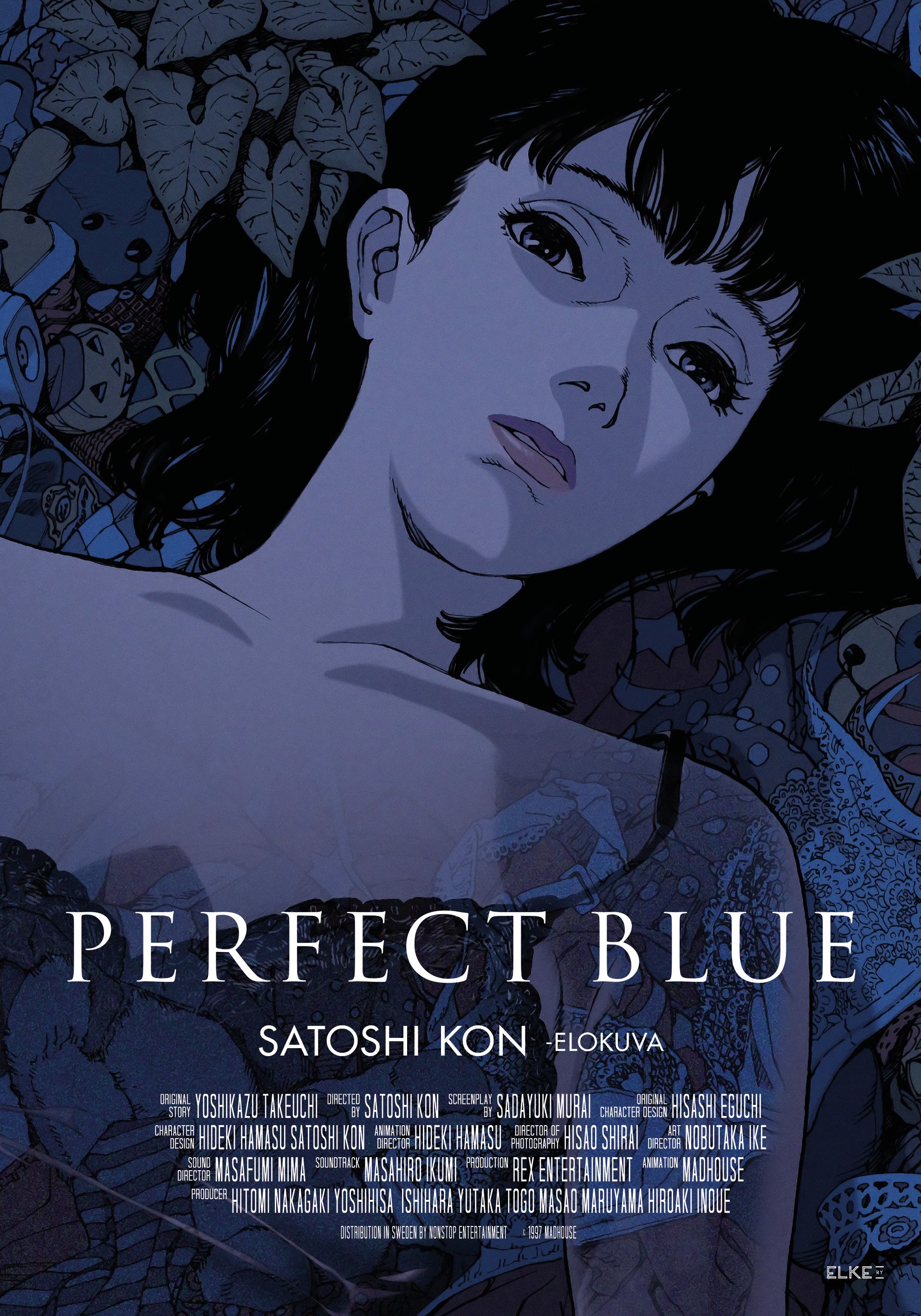
The core theme of Perfect Blue—the deconstruction of persona and identity—explores the psychological breakdown of protagonist Mima as she passes through three fabricated selves: the idol, the actress, and the object of a stalker's gaze. The film sharply interrogates the violent collision between 'the real self' and 'the social image,' asking how media-manufactured gazes commodify and destroy an individual's identity.
The Collapse of Persona: The Clash Between 'Perfect Image' and 'The Real Me'
The deepest theme embedded in Perfect Blue is 'Persona.' A persona is the mask-like self that an individual presents to the outside world, shaped by social roles and the expectations of others. Mima passes through three fabricated personas—member of idol group CHAM, actress in the drama Double Bind, and object of a stalker's surveillance—progressively losing her original identity. The film visually embodies the extreme psychological chaos that erupts from the gaps between these three personas.
1. Mima's Three Personas and Their Violence
The identity confusion Mima experiences is not merely role-playing; it is a struggle for survival. Her life is composed of the following personas, each seeking to suppress or replace the others.
- Idol Mima (The Idol): Mima as leader of CHAM is a perfectly packaged product called 'Mima-rin.' This persona feeds on the adoration and expectations of the public. But in the face of the group's disbandment and her career pivot to acting, this persona is already showing cracks.
- Actress Mima (The Actress): As an actress, Mima commodifies herself in pursuit of 'success.' Coerced by agency president Tadokoro into high-exposure roles—including a rape scene and nude photo shoots—she subordinates her body and image to capitalist logic. In this process she acquires the professional persona of 'actress,' but at the cost of her human self.
- Victim/Culprit Mima (The Subject): Caught up in a stalker's obsession and a series of murders, Mima endlessly questions whether she is the victim, a witness, or the perpetrator of all this tragedy. This 'doubting subject' persona is the most unstable, collapsing the boundaries between reality and delusion, between performance and reality.
2. The Violence of 'The Gaze': How External Coercion Destroys the Self
The film's central critique concerns 'The Gaze.' Everyone surrounding Mima—fans, the agency, cameramen, the stalker—seeks to 'observe' and 'define' her. This gaze endlessly imposes an 'ideal self' on Mima, which functions as violence.
This mechanism of 'gaze-mediated self-formation' is treated similarly in other artistic works. As seen in the anime adaptation of the novel No Longer Human (F2), protagonist Yozo Oba constructs a 'weirdo' persona to maintain relationships because of his fear of others' gazes. In the same way, social pressure forces individuals to wear a 'mask,' and when that mask crumbles, extreme identity confusion follows.
In Mima's case, this gaze is even more overt and capitalist. Her body is treated as a 'commodity,' and her private life is recorded and controlled in the online space of 'Mima's Room.' Through this process Mima loses her agency and ultimately experiences the collapse of every false self she had constructed.
3. Conclusion: The Final Moment of Reclaiming Agency
The film's final scene is the moment Mima breaks free from all these false personas and declares her 'true self.' Visiting Rumi in the psychiatric hospital, she comes to understand that all the confusion and madness she endured was in fact a defence mechanism to protect herself. The scene in which Mima looks in the rearview mirror and declares 'No—I'm the real one' symbolises the moment she reclaims her agency as a self defined not by an external gaze or social role, but by her own will. This goes beyond merely solving the mystery—it delivers a powerful message about how individuals in contemporary society can defend their own identity.
Why It Matters
This theme goes far beyond a mere plot device in a mystery thriller—it determines the identity of the work because it contains a critical interpretation of late 20th-century popular culture and media. The trauma and murders Mima experiences are not an external threat so much as an internal explosion caused by the collision between social coercion to maintain a 'perfect image' and the individual's resistance to that coercion. The film makes audiences realise how violent a power structure 'the gaze' itself—the way we look at others—truly is. Mima's madness is interpreted as a desperate struggle to protect her own subjectivity, her 'true self.'
Other Reading dives2
- arrow_outward
Critique of the Violence of The Gaze
The central theme of Perfect Blue, 'The Gaze,' goes beyond the physical act of someone watching you—it signifies the violent mechanism by which modern capitalism and media consume and control the lives of individuals as 'observable content.' The film sharply dissects how various forms of gaze—the obsession of idol fandom, the coercive demand for exposure from the press, the voyeuristic fixation of a stalker—'objectify' protagonist Mima and ultimately destroy her.
- arrow_outward
The Tragedy of Capitalism and the Entertainment Industry
Perfect Blue, set in the entertainment industry, sharply dissects the tragedy of modern capitalism in which commercial profit takes precedence over artistic value. The body and image of protagonist Mima are treated endlessly as 'sellable commodities,' and in this process human dignity is eroded and Mima experiences catastrophic confusion between reality, fantasy, and her own identity.
Back to the title
Perfect Blue
15 deep dives in total