arrow_back
Pulp Fiction
Pulp Fiction
Film

Pulp Fiction

Pulp Fiction

Directed by Quentin Tarantino · 1994-09-10 · 154 min · Miramax

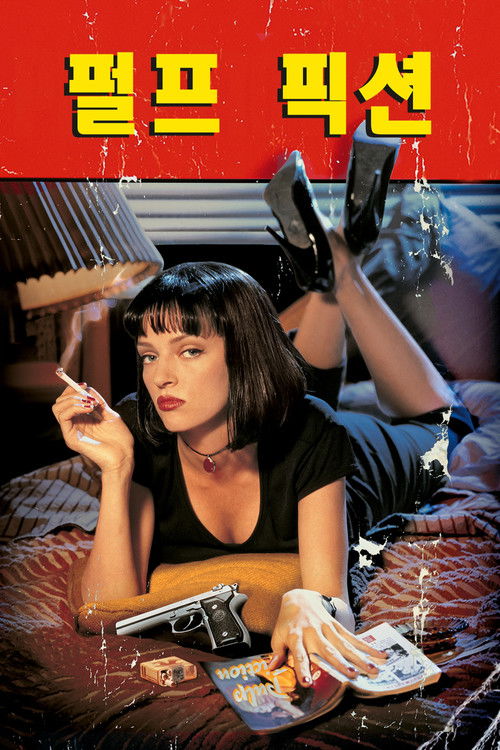
This film dismantles the very concept of chronological order. The violent lives of gangsters, their pleasure-seeking conversations, and three accidentally intertwined incidents are scattered in disarray—yet those fragments, gathered together, complete one colossal black comedy. Transcending the simple crime film, this work fuses the cultural codes of the 1990s with a postmodernist narrative structure, posing fundamental questions to its audience about 'the order of stories' and 'human pride.' From a conversation about hamburgers to the citation of scripture, every element is steeped in a grand pop-cultural playfulness.

Synopsis

Set against the world of gangsters, the film weaves together the fragmented incidents of several characters in an anthology format. The inciting elements are the conflict over a gold briefcase owned by gang boss Marsellus Wallace and a gold watch belonging to failed boxer Butch Coolidge. Gang enforcers Vincent Vega and Jules Winnfield have their respective moral codes and pride put to the test through the events that unfold. Meanwhile, the boss's wife Mia Wallace is drawn into a dangerous situation amid pleasure and addiction, and all these incidents are bound together by unpredictable dialogue, violence, and unexpected coincidences. The ending offers no clear resolution, leaving the audience to reassemble the fragments on their own.

Cast6

V

Gang enforcer, Marsellus's henchman · John Travolta

Originally a gang enforcer, he remains stubbornly loyal to his own pride and desires throughout the events of the film. His careless, bumbling nature causes endless trouble for those around him, yet he serves as the central axis driving the film's key incidents. His end arrives, ironically, in the most absurdly anticlimactic way imaginable.

J

Gang enforcer, Vincent's partner · Samuel L. Jackson

A man who possesses overwhelming charisma and devout religious conviction in equal measure. He has lived believing the gang life is divinely ordained, but after a pivotal event he entirely restructures his beliefs and moral compass. Throughout the film he commands every scene with explosive wit and an overpowering presence.

M

Wife of gang boss Marsellus · Uma Thurman

A former bit-part actress whose down-to-earth, free-spirited charm belies her status as the boss's wife. Established as a cocaine user with remarkable dancing ability, she creates a crucial turning point in the narrative through her relationship with Vincent.

B

Boxer, Marsellus's former associate · Bruce Willis

A boxer who fought under Marsellus's orders only to win against instructions and then flee, placing himself at the center of the conflict. Losing a cherished gold watch—a precious family heirloom—traps him between the rules of the gang world and his own personal pride.

M

Gang boss · Ving Rhames

The organization's boss, radiating formidable charisma. He wields absolute power over his subordinates, yet the events that befall him are far removed from the archetypal noir boss image. Betrayed by Butch and subjected to a deeply degrading ordeal, he is a three-dimensional character in whom grotesque menace and absurdity coexist.

W

Fixer · Harvey Keitel

A consummate professional dispatched to handle body disposal and scene cleanup after violent incidents. Despite minimal screen time, his relaxed, expert professionalism cranks the film's tension to its absolute peak. His presence underscores the 'aftermath' dimension of the story.

Credits

Screenplay
Quentin Tarantino
Production
Miramax · A Band Apart · Jersey Films
Chapter 02

Dig Deeper

Dig Deeper
Cardarrow_outward

The Title's Meaning and Structural Characteristics

The film's title and core structure—'Pulp Fiction'—refers to the serialized fiction in cheap pulp magazines of the early 20th century, a metaphor that extends beyond a simple genre backdrop to signify the film's entire narrative structure. The film adopts a non-linear anthology format, deliberately deconstructing chronological order, focusing not on the causes and effects of incidents but on the trivial conversations and chance encounters of its characters. This fragmented structure completes a black-comedy game posing fundamental questions about 'the order of stories' and 'the true protagonist.'

Characterarrow_outward

Marsellus Wallace

Marsellus Wallace is a three-dimensional character who intentionally shatters the archetype of the typical noir gangster boss. He wields absolute power while simultaneously enduring humiliation and mockery—a figure in whom grotesque menace and absurdity coexist. His presence symbolizes the violent and pleasure-seeking world the film explores, and the cold truth about life concealed beneath.

Cardarrow_outward

Items That Symbolize Power and Pride

The two key symbolic items—the 'gold briefcase' and the 'gold watch'—go beyond mere props to form the fundamental axis of conflict in the gangster world. The briefcase signifies the overwhelming 'power' and 'domination' of gang boss Marsellus Wallace, while the watch represents the 'personal pride' and 'past glory' of failed boxer Butch Coolidge. The process of these two symbols colliding shows that the violent lives of the gangsters ultimately reduce to the all-too-human question of pride.

Cardarrow_outward

The Interrogation Scene Where Faith and Violence Collide

The scene in which Jules Winnfield interrogates the small-time hoods as a gang enforcer goes far beyond mere violence—it is an iconic set piece in which scripture is used to display moral superiority and deeply held conviction. It captures the collision between the gangster world's violence and the religious authority used to justify it, and serves as the key narrative device that brings about Jules's fundamental shift in conviction.

Readingarrow_outward

The Contrast Between Redemption and Damnation

Pulp Fiction explores the philosophical themes of 'redemption' and 'damnation' through the starkly contrasting fates of Vincent Vega and Jules Winnfield. While Jules chooses the path of faith after witnessing a miraculous event, Vincent—perpetually placing his desires and pride above all else—meets his end in the most absurd fashion. This contrast demonstrates paradoxically that true redemption arises not from external violence or force, but from inner reflection and moral choice.

Readingarrow_outward

The Clash of Pride and Moral Boundaries

Pulp Fiction is not merely a crime drama but a philosophical black comedy exploring the collision between human pride—the most primal motivator—and moral boundaries. Every act of violence and coincidence in the film is an expression of the characters' desire to protect their honor, possessions, or convictions; this collision of pride ultimately generates the narratives of destruction and redemption.

Characterarrow_outward

Winston Wolf

Winston Wolf is a consummate professional fixer who handles the violent, chaotic aftermath of the film's incidents. He is more than a mere cleaner—a figure who imposes order and control on the crime scene. Despite his brief screen time he cranks the film's tension to its absolute peak. His presence symbolizes the realistic, cold-eyed dimension of 'cleanup' that remains after the gangsters' violent lives.

Characterarrow_outward

Butch Coolidge

Butch Coolidge is the quintessential antihero torn between the rules of the gangster world and his personal pride. Beginning as one of Marsellus Wallace's hired fighters, he defies orders—winning a rigged fight—and is plunged into the center of the conflict. His story is a black comedy tragedy showing how the 'freedom' and 'honor' an individual tries to protect within the violent gangster life can produce a catastrophic outcome.

Characterarrow_outward

Jules Winnfield

Jules Winnfield goes beyond a simple gangster to become a figure who agonizes between violence and conviction. Armed with overwhelming charisma and devout faith, he symbolizes the gangster's violence, yet through decisive events he entirely restructures his beliefs and moral compass. His journey is a black comedy narrative: from believing gang life to be 'divinely ordained,' to grasping the true meaning of that ordination and finding redemption.

Cardarrow_outward

The Fictional Brand That Unites a Shared Universe

The 'Red Apple' cigarettes in the film are more than a prop—they are a core fictional brand running through the cinematic universe of director Quentin Tarantino. This brand recurs across numerous Tarantino works—'Pulp Fiction,' 'Kill Bill,' 'Inglourious Basterds,' and more—implying that all his films share one vast, stylish universe. This offers audiences the pleasure of discovering a 'hidden code,' while reminding them that the world in which the characters exist is itself one great pop-cultural stage.

Cardarrow_outward

The Film's Structural Achievement and Artistic Quality

The most distinctive and important element of Pulp Fiction is its anthology narrative structure, which dismantles the very concept of chronological order. The film weaves together the gangsters' violent, fragmented incidents in disarray, yet those fragments combine to complete one colossal black comedy. Going far beyond a simple crime film, it demonstrates through its postmodernist narrative structure an artistic achievement that poses fundamental questions about 'the order of stories' and 'human pride.'

Characterarrow_outward

Vincent Vega

Vincent Vega is a gang enforcer who, in his essential nature, is the 'protagonist of chance'—bumbling and careless. Through drug dealing, a hedonistic encounter with Mia Wallace, and ultimately his absurd death at the hands of Butch Coolidge, he is the character who most dramatically embodies the film's black-comedy fate and the theme of human pride.

Characterarrow_outward

Mia Wallace

Mia Wallace is a complex character in whom addiction and free-spiritedness coexist, her glamorous setting as the gang boss's wife notwithstanding. She serves as the catalyst that ignites the film's key events, and through her encounter with Vincent Vega she presents pleasure, danger, and an unexpected human connection. Her presence breathes pop-cultural playfulness and unstable beauty into the violent gangster world.

Readingarrow_outward

The Deconstruction of Time Through Non-Linear Narrative

The aesthetic core of Pulp Fiction lies in its non-linear narrative structure, which deliberately dismantles chronological order. This poses fundamental questions: what is 'truth,' and must the causal chain of events be linear? The story is presented in fragmented anthology form, yet it is precisely in the gaps between those fragments that the most intense, black-comedy-inflected meaning arises.
Things worth knowing5

The Title's Meaning and Structural Characteristics

The film's title, 'Pulp Fiction,' refers to the serialized fiction that appeared in cheap pulp magazines of the early 20th century—a genre designed to hook readers with sensational content rather than literary depth. The film's scrambled chronology mirrors this structure: like a pulp magazine, it can be 'read' in any order and still deliver its pleasures.

This non-linear narrative structure constantly forces the audience to ask who the true protagonist is and what causes and effects are at play. Rather than following the flow of time, the film trains its focus on the trivial, everyday conversations the characters share—privileging mundane chatter over conflict and incident alike.

Items That Symbolize Power and Pride

The two items that trigger the film's violence are the gold briefcase and the gold watch. The briefcase, belonging to gang boss Marsellus, symbolizes 'the power of the strong,' while the watch, belonging to failed boxer Butch, symbolizes 'the position of the weak.' The film locates the root cause of violence in the 'clash of pride' between the powerful and the powerless.

These symbolic objects go beyond mere props to visually represent the characters' social standing and inner conflicts. The gold watch in particular is revered as a precious family heirloom; the incident of Butch losing it inflicts a devastating wound on his pride.

Key Scenearrow_outward
The Interrogation Scene Where Faith and Violence Collide

The scene in which Jules interrogates the small-time hoods as a gang enforcer is one of the film's most iconic set pieces. He recites a scripture passage to overwhelm his targets and delivers devastating lines such as 'Does he look like a bitch?' The scene is depicted not as simple violence but as an act of flaunting moral superiority and deeply held conviction.

Subsequently, Jules comes to believe his survival was 'divine intervention,' resolving to leave the gang. This dramatic shift in conviction becomes the catalyst for him to choose a new life of 'redemption,' stepping off the gangster's path.

Behind the Scenesarrow_outward
The Fictional Brand That Unites a Shared Universe

The 'Red Apple' cigarettes that appear in the film are a fictional brand shared across Quentin Tarantino's cinematic universe. This brand recurs throughout many of the director's works—'Pulp Fiction,' 'Kill Bill,' 'Inglourious Basterds,' and more—demonstrating that all of Tarantino's films inhabit one vast, interconnected world.

There is also a behind-the-scenes anecdote: the waiter at Jack Rabbit Slim's—where Vincent and Mia have dinner—was played by Steve Buscemi, a role Tarantino had originally intended to play himself before scheduling conflicts intervened.

The Film's Structural Achievement and Artistic Quality

The film won the Palme d'Or at the 1994 Cannes Film Festival, attracting enormous attention. Though it looks at first glance like a B-grade genre crime picture, it earned critical acclaim for its sophisticated camerawork and a narrative structure with a clearly defined arc. This is neatly summed up by the label 'an A-grade film masquerading as B-grade.'

The film is structurally bookended by a restaurant setting: it poses a question at the opening and provides its answer at the close. This structural device is the core mechanism that sustains the viewer's immersion throughout.

Chapter 03

Aftermath

Aftermath

Legacy

Pulp Fiction had an enormous impact on 1990s cinema, going on to serve as a reference point for countless crime films and comedies. In particular, it popularized the approach of combining 'dialogue-driven narrative' with 'genre parody.' The film's success was significant for presenting a new cinematic grammar—the ability to elevate violent subject matter through black comedy and witty dialogue.

Trivia2