Items That Symbolize Power and Pride
The two key symbolic items—the 'gold briefcase' and the 'gold watch'—go beyond mere props to form the fundamental axis of conflict in the gangster world. The briefcase signifies the overwhelming 'power' and 'domination' of gang boss Marsellus Wallace, while the watch represents the 'personal pride' and 'past glory' of failed boxer Butch Coolidge. The process of these two symbols colliding shows that the violent lives of the gangsters ultimately reduce to the all-too-human question of pride.
The Symbols of Power and Pride: The Gold Briefcase and the Gold Watch
The core elements that provide the film's violent incidents with their momentum are two symbolic objects: the 'gold briefcase' and the 'gold watch.' These are not mere props—they visually represent the characters' social standing, inner conflicts, and the moral collapse of the gangster world.
1. The Gold Briefcase: The Power and Control of the Strong
- Owner and Symbolism: It belongs to gang boss Marsellus Wallace. This briefcase symbolizes the vast capital, violence, and absolute 'power' possessed by the gang organization. It reveals the way Marsellus uses this briefcase to maintain his dominance and compel the obedience of his subordinates.
- Role in the Incident: At the film's outset, Vincent and Jules's mission begins with retrieving this briefcase—immediately the first test showing what position gang enforcers must occupy within the boss's power structure. The conflict surrounding the briefcase promptly generates tension between 'the boss's orders' and 'individual survival.'
2. The Gold Watch: The Pride and Past Glory of the Weak
- Owner and Symbolism: It is held by failed boxer Butch Coolidge. This watch symbolizes the 'glory' Butch once possessed and the 'personal pride' lost within the gangster system. The watch is revered as a precious family heirloom, holding a meaning for Butch that goes far beyond a simple object.
- Role in the Incident: Butch losing this watch, or being drawn into events surrounding it, inflicts a devastating wound on his pride. This wound becomes the decisive catalyst for him to rebel against the gangster system and ultimately collide head-on with Marsellus.
3. The Collision of Symbols: The Contest of Pride
The film secures its greatest humor and tragedy at the point where these two symbols collide. Gangster violence is not simply about claiming money or territory—it is a fight over 'who has the greater pride.'
- The Strong vs. the Weak: Marsellus's power (the briefcase) is absolute and vast, but Butch's pride (the watch) is small and fragile. Yet it is precisely this fragility that becomes the driving force propelling him to resist the system.
- The Meaning of the Denouement: The process of Butch overpowering Marsellus shows the collapse of vast power before individual tenacious pride. This paradoxically demonstrates that even in the violent gangster world, the most powerful weapon is ultimately the emotional dimension of human beings—pride itself.
Why It Matters
These two symbols are the core devices proving that Pulp Fiction is not a simple crime film but a postmodernist black comedy. The film dismantles chronology and adopts an anthology structure, but these symbolic objects bind all the fragments into one theme: 'power and pride.' Gangsters' lives are wrapped in pleasure and violence, yet at the very foundation lies the question: 'Who am I?' The gold briefcase and the gold watch ask the audience what 'true value' is and what the most essential thing a human being tries to protect within a violent life really is—serving as the film's philosophical anchor.
Other 설정 dives4
- arrow_outward
The Title's Meaning and Structural Characteristics
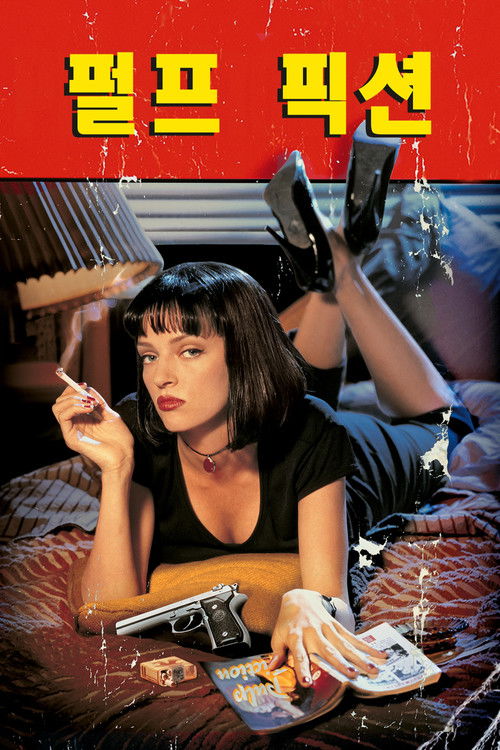
The film's title and core structure—'Pulp Fiction'—refers to the serialized fiction in cheap pulp magazines of the early 20th century, a metaphor that extends beyond a simple genre backdrop to signify the film's entire narrative structure. The film adopts a non-linear anthology format, deliberately deconstructing chronological order, focusing not on the causes and effects of incidents but on the trivial conversations and chance encounters of its characters. This fragmented structure completes a black-comedy game posing fundamental questions about 'the order of stories' and 'the true protagonist.'
- arrow_outward
The Interrogation Scene Where Faith and Violence Collide
The scene in which Jules Winnfield interrogates the small-time hoods as a gang enforcer goes far beyond mere violence—it is an iconic set piece in which scripture is used to display moral superiority and deeply held conviction. It captures the collision between the gangster world's violence and the religious authority used to justify it, and serves as the key narrative device that brings about Jules's fundamental shift in conviction.
- arrow_outward
The Fictional Brand That Unites a Shared Universe
The 'Red Apple' cigarettes in the film are more than a prop—they are a core fictional brand running through the cinematic universe of director Quentin Tarantino. This brand recurs across numerous Tarantino works—'Pulp Fiction,' 'Kill Bill,' 'Inglourious Basterds,' and more—implying that all his films share one vast, stylish universe. This offers audiences the pleasure of discovering a 'hidden code,' while reminding them that the world in which the characters exist is itself one great pop-cultural stage.
Back to the title
Pulp Fiction
14 deep dives in total