The Clash of Pride and Moral Boundaries
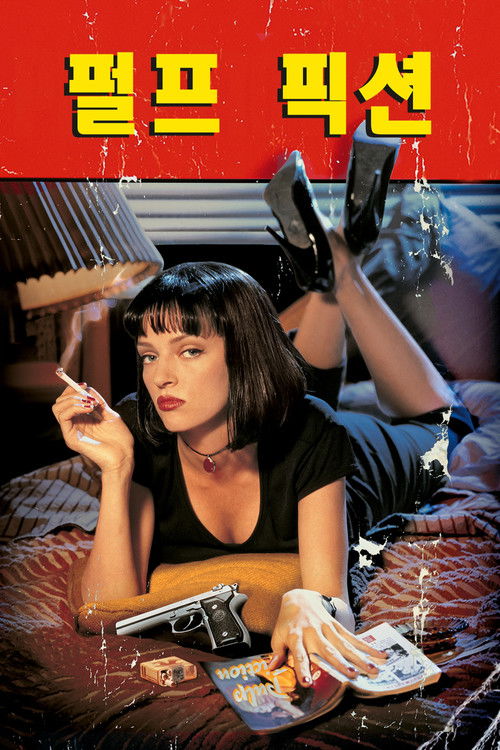
Pulp Fiction is not merely a crime drama but a philosophical black comedy exploring the collision between human pride—the most primal motivator—and moral boundaries. Every act of violence and coincidence in the film is an expression of the characters' desire to protect their honor, possessions, or convictions; this collision of pride ultimately generates the narratives of destruction and redemption.
Pride: The Most Powerful Force in Pulp Fiction
The central theme running through this film is not violence or money, but 'pride.' The gangster world is a place where honor and hierarchy are directly tied to survival; characters act ceaselessly to protect their pride, and the consequences are often tragic.
1. Pride Projected Onto Objects: Butch Coolidge and the Gold Watch
One of the story's most important catalysts is Butch Coolidge's gold watch. This watch is not merely an object—it is a medium symbolizing his life and identity. Marsellus Wallace coveting the watch is a violent attempt to suppress Butch's pride and freedom. Butch defies Marsellus's orders and fights to keep what is most cherished—confronting Marsellus head-on. This goes beyond a struggle for survival; it is closer to a declaration of self: 'I am not your subordinate.'
2. Faith and Moral High Ground: Jules Winnfield's Transformation
Jules Winnfield's journey most dramatically illustrates the collision of pride. He is placed in the violent gangster environment, yet within him exists a powerful moral boundary—his Christian convictions. At first he appears to go along with the gang's violence, but after witnessing 'divine grace,' his pride is restructured in the direction of claiming 'moral high ground.' He ultimately refuses the gang's life and chooses a new one. His transformation shows that pride can be reconstructed not through external compulsion, but through inner conviction.
3. Incompetence and the Need to Show Off: Vincent Vega's Tragedy
Vincent Vega struggles to maintain the pride of a gang enforcer, yet his actions are always governed by 'carelessness' and 'the need to show off.' He momentarily displays heroism in saving Mia, but ultimately commits the fatal mistake of killing Marvin while trying to maintain his vigilance. His death presents the cynical conclusion that no matter how skilled an assassin, the failure to control one's pride will lead inevitably to destruction.
4. The Boss's Authority and Vulnerability: Marsellus Wallace
Marsellus Wallace symbolizes absolute power and pride. He appears to control everything, yet the pawnshop incident reveals how fragile his pride truly is. The assault he endures shows in extremis how easily the 'boss' persona he has constructed can be shattered—paradoxically proving that the essence of power lies not in physical force, but in the 'confidence' to sustain it.
5. Conclusion: The Dismantling of Pride and Black Comedy
Through all these collisions, the film shows that pride is ultimately the most powerful shackle binding human beings. The violent incidents blended in anthology format complete a black comedy because all these tragic actions are ultimately transmuted into a pop-cultural game consumed amid great coincidence and meaningless hedonism. The moment characters set down their pride, they finally achieve a measure of freedom.
Why It Matters
This theme explains why Pulp Fiction transcends the simple genre film. The film locates the cause of violence not in 'evil' or 'money' but in 'pride'—the most fundamental and private of human emotions. This asks the audience: 'Why do we act like this?'—elevating every scene into the realm of philosophical interpretation. The way the film explores 'moral boundaries' against the extreme gangster backdrop has the power to make audiences reconsider their own everyday moral choices. It is thanks to this interpretation that Pulp Fiction established itself as a cultural icon possessing a postmodernist narrative structure.
Other Reading dives2
- arrow_outward
The Contrast Between Redemption and Damnation
Pulp Fiction explores the philosophical themes of 'redemption' and 'damnation' through the starkly contrasting fates of Vincent Vega and Jules Winnfield. While Jules chooses the path of faith after witnessing a miraculous event, Vincent—perpetually placing his desires and pride above all else—meets his end in the most absurd fashion. This contrast demonstrates paradoxically that true redemption arises not from external violence or force, but from inner reflection and moral choice.
- arrow_outward
The Deconstruction of Time Through Non-Linear Narrative
The aesthetic core of Pulp Fiction lies in its non-linear narrative structure, which deliberately dismantles chronological order. This poses fundamental questions: what is 'truth,' and must the causal chain of events be linear? The story is presented in fragmented anthology form, yet it is precisely in the gaps between those fragments that the most intense, black-comedy-inflected meaning arises.
Back to the title
Pulp Fiction
14 deep dives in total