The Title's Meaning and Structural Characteristics
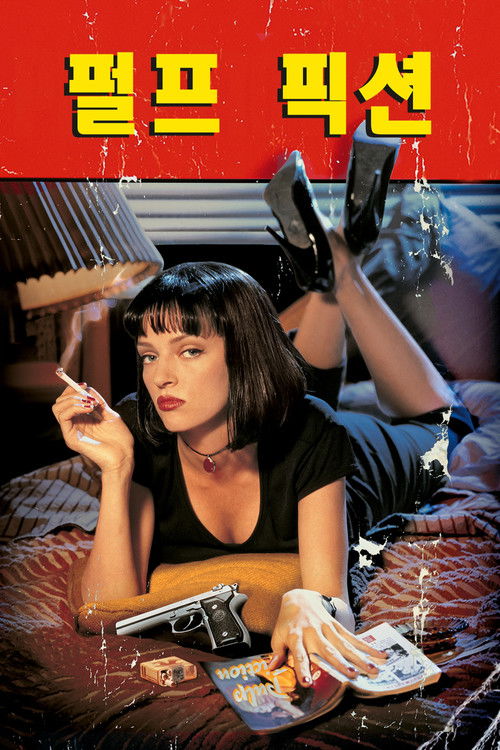
The film's title and core structure—'Pulp Fiction'—refers to the serialized fiction in cheap pulp magazines of the early 20th century, a metaphor that extends beyond a simple genre backdrop to signify the film's entire narrative structure. The film adopts a non-linear anthology format, deliberately deconstructing chronological order, focusing not on the causes and effects of incidents but on the trivial conversations and chance encounters of its characters. This fragmented structure completes a black-comedy game posing fundamental questions about 'the order of stories' and 'the true protagonist.'
Pulp Fiction: The Genre Metaphor and Structural Deconstruction Embedded in the Title
The film's title, Pulp Fiction, goes far beyond a simple genre label—it is a core metaphor that runs through the work's entire narrative direction. 'Pulp fiction,' which became popular in cheap pulp magazines of the early 20th century, denoted serialized stories crafted to hook readers with sensational, stimulating content rather than deep literary reflection. This concept precisely aligns with what the film pursues.
The film is set against the dark, violent world of gangsters, yet the way it weaves together those events is close to a light, pop-cultural playfulness. Like pulp fiction in a magazine, the story is not constrained by the logical order of time—it scatters fragmented events in disarray. This structure compels the audience to actively reassemble the flow of time and find meaning in those fragments.
How the Non-Linear Narrative Structure Works
The film's most prominent characteristic is this non-linear narrative structure. Events do not unfold in chronological order; instead, multiple independent chapters (or episodes) are arranged in parallel, like an anthology. This structure maximizes immersion by posing the following questions:
- The Ambiguity of Cause and Effect: It ceaselessly raises the question of whether event A is the cause of event B, or merely a background that happens to overlap.
- Defining the Protagonist: Who is the true protagonist? Is it gang boss Marsellus, or Vincent Vega—tangled in trivial conversations? Rather than focusing on a specific character, the narrative trains its focus on the 'situation' the characters experience.
This structural device declares that the film is not a simple crime thriller but a postmodernist work—one that deconstructs and plays with the medium of 'story' itself.
The Black-Comedy Fusion of Violence and Dialogue
The appeal of Pulp Fiction lies in the extreme contrast between the intensity of its violence and the tone of its dialogue. Even the most brutal, violent scenes (Marsellus's degrading experience at the pawn shop, Vincent accidentally shooting Marvin) are surrounded by the most mundane, hedonistic dialogue.
- The Power of Everyday Conversation: The conversation Vincent and Mia share at 'Jack Rabbit Slim's,' or the talk of hamburgers and cocaine, shows how much gangsters' lives are governed by pleasure, addiction, and ordinary conversation. These conversations shed the weight of violence and coat the entire film in a layer of black comedy.
- Irony Through Humor: The composure Butch displays when he realizes a gang is lying in wait in his house, or the humiliation Marsellus endures at the pawn shop, comically and ironically subverts the solemnity of the noir genre.
Ultimately, this film reconfigures the gangster's life not as a 'serious crime drama' but as a 'fun, exaggerated pop-cultural game'—posing to the audience an enjoyable set of questions about violence, pleasure, and the structure of narrative itself.
Why It Matters
The non-linear narrative structure of *Pulp Fiction* is this work's identity itself. This film does not simply array gangsters' stories—it poses the meta-question: 'What is a story?' By deconstructing chronological order, deliberately obscuring causal connections, and making audiences into active interpreters, it was the decisive element that shattered 1990s cinematic grammar and opened new possibilities through the fusion of anthology form, black comedy, and noir. It is thanks to this structural experiment that the film transcended a simple crime film and established itself as a canonical example of postmodernist cinema.
Other 설정 dives4
- arrow_outward
Items That Symbolize Power and Pride
The two key symbolic items—the 'gold briefcase' and the 'gold watch'—go beyond mere props to form the fundamental axis of conflict in the gangster world. The briefcase signifies the overwhelming 'power' and 'domination' of gang boss Marsellus Wallace, while the watch represents the 'personal pride' and 'past glory' of failed boxer Butch Coolidge. The process of these two symbols colliding shows that the violent lives of the gangsters ultimately reduce to the all-too-human question of pride.
- arrow_outward
The Interrogation Scene Where Faith and Violence Collide
The scene in which Jules Winnfield interrogates the small-time hoods as a gang enforcer goes far beyond mere violence—it is an iconic set piece in which scripture is used to display moral superiority and deeply held conviction. It captures the collision between the gangster world's violence and the religious authority used to justify it, and serves as the key narrative device that brings about Jules's fundamental shift in conviction.
- arrow_outward
The Fictional Brand That Unites a Shared Universe
The 'Red Apple' cigarettes in the film are more than a prop—they are a core fictional brand running through the cinematic universe of director Quentin Tarantino. This brand recurs across numerous Tarantino works—'Pulp Fiction,' 'Kill Bill,' 'Inglourious Basterds,' and more—implying that all his films share one vast, stylish universe. This offers audiences the pleasure of discovering a 'hidden code,' while reminding them that the world in which the characters exist is itself one great pop-cultural stage.
Back to the title
Pulp Fiction
14 deep dives in total