The Film's Structural Achievement and Artistic Quality
The most distinctive and important element of Pulp Fiction is its anthology narrative structure, which dismantles the very concept of chronological order. The film weaves together the gangsters' violent, fragmented incidents in disarray, yet those fragments combine to complete one colossal black comedy. Going far beyond a simple crime film, it demonstrates through its postmodernist narrative structure an artistic achievement that poses fundamental questions about 'the order of stories' and 'human pride.'
The Deconstruction of Time: The Aesthetic Design of the Anthology Structure
Pulp Fiction intentionally rejects traditional narrative structure. Audiences expect events to unfold chronologically, yet this film scatters three intertwined incidents—the violent lives of gangsters, their hedonistic conversations—without regard for sequence. This non-linear development seems to confuse the audience, but is in fact the film's most sophisticated and essential artistic device.
This structure transforms the audience from simple observers to active 'reassemblers.' Armed with fragmented information, they must infer causal relationships on their own and ceaselessly ask what common themes or characters connect the various incidents. This proves the film to be not a simple crime thriller but an artwork possessing a postmodernist narrative structure.
Recurring Spaces and Thematic Connective Tissue
The film employs several recurring 'spaces' and 'themes' that bind together the fragments it presents. These connective threads are the core element that raises the film's structural achievement.
1. The Restaurant: The Stage of Meeting and Parting
The film is structurally bookended by the restaurant setting. Places like 'Jack Rabbit Slim's,' where Vincent and Mia meet, go beyond a simple dining venue—serving as a 'fateful crossroads' where characters meet, relationships form, and decisive events unfold. By repeatedly using a specific space, the audience subconsciously recognizes that the space itself is a stage where the characters' fates, pleasures, and violence converge.
2. The Intersection of Coincidence and Inevitability
Every incident in this film occurs in the name of 'coincidence.' Marsellus's gold briefcase, the gold watch Butch loses, Vincent's accidental shooting of Marvin—everything appears to be the result of unplanned coincidence. Yet these coincidences gather to converge toward one colossal black-comedy conclusion, presenting the audience with the paradoxical theme of 'the inevitability hidden within a sequence of coincidences.'
The Juxtaposition of Black Comedy and Violence
Another structural characteristic is the extreme contrast of 'tone.' The most brutal violent scenes (Marsellus's pawnshop assault, Vincent accidentally shooting Marvin) are juxtaposed immediately before or after with the most trivial moments: a conversation about hamburgers, the hedonistic dance contest, casual diner chat. This juxtaposition of violence and pleasure, tragedy and comedy, strips the film of simple noir solemnity and grants it the distinctive genre status of black comedy.
This structural playfulness compels the audience to suspend ethical judgment about violence and accept all events as a kind of 'pop-cultural game.'
Why It Matters
This anthology structure is Pulp Fiction's identity itself. Had this film followed a traditional chronological narrative structure, it would have remained just one well-crafted crime film. But thanks to the structural device of scrambling temporal fragments, juxtaposing pleasure and violence, and delegating to the audience the responsibility of reassembly, this work transcended simple entertainment—providing artistic and intellectual play—and came to be recognized as the representative work of postmodernist film aesthetics. This structure, which only becomes 'complete' when audiences actively find meaning for themselves, is Pulp Fiction's most powerful artistic weapon.
Other 기타 dives4
- arrow_outward
The Title's Meaning and Structural Characteristics
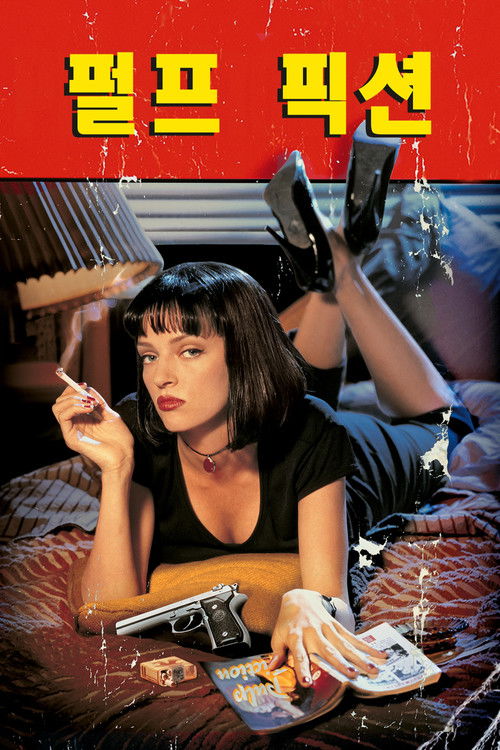
The film's title and core structure—'Pulp Fiction'—refers to the serialized fiction in cheap pulp magazines of the early 20th century, a metaphor that extends beyond a simple genre backdrop to signify the film's entire narrative structure. The film adopts a non-linear anthology format, deliberately deconstructing chronological order, focusing not on the causes and effects of incidents but on the trivial conversations and chance encounters of its characters. This fragmented structure completes a black-comedy game posing fundamental questions about 'the order of stories' and 'the true protagonist.'
- arrow_outward
Items That Symbolize Power and Pride
The two key symbolic items—the 'gold briefcase' and the 'gold watch'—go beyond mere props to form the fundamental axis of conflict in the gangster world. The briefcase signifies the overwhelming 'power' and 'domination' of gang boss Marsellus Wallace, while the watch represents the 'personal pride' and 'past glory' of failed boxer Butch Coolidge. The process of these two symbols colliding shows that the violent lives of the gangsters ultimately reduce to the all-too-human question of pride.
- arrow_outward
The Interrogation Scene Where Faith and Violence Collide
The scene in which Jules Winnfield interrogates the small-time hoods as a gang enforcer goes far beyond mere violence—it is an iconic set piece in which scripture is used to display moral superiority and deeply held conviction. It captures the collision between the gangster world's violence and the religious authority used to justify it, and serves as the key narrative device that brings about Jules's fundamental shift in conviction.
Back to the title
Pulp Fiction
14 deep dives in total