Cardarrow_outward
The Symbolism of Black-and-White Cinematography
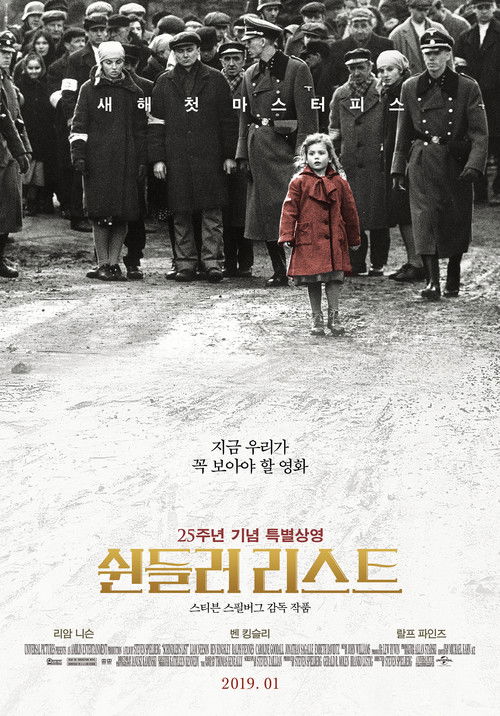
The black-and-white cinematography of Schindler's List transcends a mere aesthetic choice to serve as the core device symbolizing the weight of historical tragedy and the complex moral gray zone of human conscience. It focuses the viewer's gaze on the essence of the horrors without dramatic embellishment, substituting 'losing color' for 'losing life' to express the silenced laments of the vanished Jewish people.
Characterarrow_outward
Amon Goeth
Amon Goeth transcends the simple villain to become the incarnation of systemic, everyday evil produced by Nazism and antisemitism. As a psychopathic commandant who treats prisoners as 'vermin' and enjoys massacre as a hobby, he serves as the most powerful moral catalyst that drives protagonist Schindler to navigate the moral gray zone.
Cardarrow_outward
Real Figures and Historical Context
Schindler's List transcends a simple survival story to explore the moral gray zone where capitalist logic and human conscience collide. Noting that protagonist Oskar Schindler's process of helping Jews is achieved not through pure good deeds but through 'business acumen' and 'bribery,' it explores this complex human psychology in addressing the vast tragedy of the Holocaust.
Cardarrow_outward
Survivors' Memorial and Legacy
The final scene in which survivors place memorial stones on Oskar Schindler's grave symbolizes the process by which he is remembered not merely as a businessman but as an 'agent' and 'angel of Mercy.' This scene shows that Schindler's rescue was achieved not through pure good deeds but upon a complex moral gray zone and the logic of survival — completing the film's deep thematic consciousness.
Cardarrow_outward
The Awakening of Conscience: A Turning Point
Oskar Schindler's moral awakening is not a simple emotional change but a complex process of moral transformation occurring as capitalist logic and the survival instinct collide. The film deeply explores how he began as a businessman focused entirely on profit, but after directly witnessing the horrific massacres in the Kraków Ghetto and the systematic evil of the Nazis, deploys all his assets and acumen to 'businesslike' rescue the Jews.
Cardarrow_outward
The Logic and Process of Rescue
The core of Schindler's List is that Oskar Schindler's rescue acts are not pure humanitarian love but a complex process achieved through capitalist logic and business acumen. Initially focused only on profit-seeking, Schindler deploys his assets and social status after witnessing Nazi brutality to spirit Jews away as 'factory employees' in a vast survival operation — exploring the deepest and most complex human conscience that crosses the boundaries of moral good and evil.
Readingarrow_outward
The Intersection of Capitalism and Moral Responsibility
The core interpretation of Schindler's List focuses on the observation that Oskar Schindler's acts of salvation were not pure moral good deeds. The film deeply explores the complex survival strategy in which he deploys capitalist logic and business acumen to confront the vast evil system of Nazism, presenting an ambiguous moral gray zone where good and evil, profit and conscience are entangled.
Cardarrow_outward
Business Acumen and Opportunism
Oskar Schindler's 'business acumen and opportunism' is the film's most complex and compelling core. Schindler began as a corrupt businessman focused solely on profit, but as he witnesses the horrors of Nazism his actions gradually evolve into a form where 'business survival strategy' and 'conscience' are intermingled. His rescue acts are not simple good deeds — they explore the moral gray zone achieved through bribery, lobbying, and the logic of capital.
Characterarrow_outward
Emilie Schindler
Emilie Schindler, as Oskar Schindler's wife, provides the backdrop for the moral turmoil he experiences and the survival operation he conducts. She symbolizes the 'normality' of Schindler's life, serving as an emotional anchor as he transforms from a cold businessman into a protector of lives. Her presence lends human weight and a personal dimension to his actions.
Characterarrow_outward
Oskar Schindler
Oskar Schindler begins World War II as a corrupt, opportunistic businessman, but gradually feels the pangs of conscience as he witnesses Nazi atrocities, ultimately spending his entire fortune to save countless Jewish lives and transforming into an 'agent' of redemption. His story transcends simple heroics to explore the complex moral gray zone where capitalist logic and human conscience collide — driving the film's core themes.
Readingarrow_outward
The Subject of the Gaze and the Role of the Audience
Schindler's List places the audience's gaze within Oskar Schindler's moral gray zone, posing complex ethical questions that transcend a simple survival story. Through a protagonist who saves lives not through pure goodwill but through 'business acumen' and exploitation of systemic cracks, the film demands active moral judgment from its audience — delivering the message that confronting great evil need not always take the form of heroic struggle.
Characterarrow_outward
Itzhak Stern
Itzhak Stern is far more than an accountant — he is the key figure connecting Oskar Schindler's cold business logic with his human conscience. By providing the practical know-how to run Schindler's factory, he forges a deep bond with him along the way. Stern's presence grounds Schindler's journey of redemption in a realistic and intellectual foundation, serving as an essential axis that completes the film's moral gray zone.