The Logic and Process of Rescue
The core of Schindler's List is that Oskar Schindler's rescue acts are not pure humanitarian love but a complex process achieved through capitalist logic and business acumen. Initially focused only on profit-seeking, Schindler deploys his assets and social status after witnessing Nazi brutality to spirit Jews away as 'factory employees' in a vast survival operation — exploring the deepest and most complex human conscience that crosses the boundaries of moral good and evil.
Rescue Driven by the Logic of Capital: Schindler's 'Business Acumen'
The most interesting and substantive theme running through Schindler's List is that Oskar Schindler's rescue acts were not typical heroic good deeds. From the beginning Schindler was not a person with pure intentions to save Jews. He was a corrupt and dissolute ethnic German businessman — a figure moving according to the capitalist logic of profit and survival. His rescue process is the complex mechanism showing how this initial opportunistic motivation gradually combined with the weight of conscience to transform into a vast survival operation.
1. Initial Phase: Pursuit of Profit and Securing Labor
In the film's first act, Schindler finds his motivation for all actions in "profit" after arriving in Kraków. He begins by hiring Jews to secure the labor needed to operate the factory. In this phase, Jews are treated merely as "cheap, available labor." His partnership with Jewish accountant Itzhak Stern is closer to a "practical partnership" enhancing factory operational efficiency. All Schindler's actions were designed to maximize his own business interests — a thoroughly calculated continuation of opportunism, far from humanitarian.
2. Turning Point: Horrific Reality and the Awakening of Conscience
Schindler's inner transformation begins as he directly witnesses the horrific massacres and extermination in the Nazi ghetto. The shock of witnessing the Kraków ghetto liquidation in particular poses to him a moral question that transcends mere business calculation. At this point, Schindler begins to realize that his survival can no longer rely solely on money or power. His conscience is redefined in the direction of using the tool of "business acumen" to protect the new value of "life."
3. The Mechanism of Rescue: The Combination of Capital and Lobbying
Schindler's process of rescuing Jews was one that most actively utilized capitalist tools — "bribery" and "legal standing." This was closer to a vast lobbying operation than simple relief activity.
- Bribery and purchase: He trades lives with camp commandants like Amon Goeth by offering trunks full of cash or diamonds as bribes. This reflects the tragic reality that lives can be purchased with money. Schindler uses his financial power to penetrate even the most corrupt parts of the Nazi system, pulling the survival of humans into the realm of "transaction."
- Protection in the guise of factory employees: Schindler bundles Jews under the pretext of "factory employees" to protect them. This pretext simultaneously grants them the minimum human standing and acts as a "business shield" excluding them from the Nazi system's direct kill list. Citing the factory property protection law to secure the authority to prevent the factory from being searched is likewise the result of this legal and business logic.
- The meaning of the list: The "Schindler's List" is not simply a list of rescue targets. It was a kind of survival asset list — a "portfolio of investment" — through which Schindler invested his financial power and social networks to "manage" and "preserve" lives.
4. Conclusion: The Weight of Guilt and Responsibility
Ultimately, in the final scene where Schindler depletes everything and flees, he weeps with guilt and shame at the thought that he might have been able to save even one more person. This emotion paradoxically proves that he did not have pure goodwill from the start. His rescue began in "the process of earning money," but the human dignity and the Nazis' evil deeds he encountered in that process transformed him into a human being of a new dimension called "responsibility." This complex moral gray zone is precisely the film's deepest appeal.
Why It Matters
This logical analysis of the rescue elevates Schindler's List from a simple historical tragedy to a philosophical drama exploring the moral essence of human beings. Because Schindler was not a 'good person' but a 'human being with capitalist logic,' his rescue poses to audiences the question 'What is true good deeds?' His actions show that good and evil, profit and conscience are entangled in one vast system — making audiences see Schindler not as a hero but as a 'tormented agent.' This is the core basis by which the film delivers a powerful message addressing the ethical dilemmas of modern society beyond simple historical recreation.
Other 기타 dives5
- arrow_outward
The Symbolism of Black-and-White Cinematography
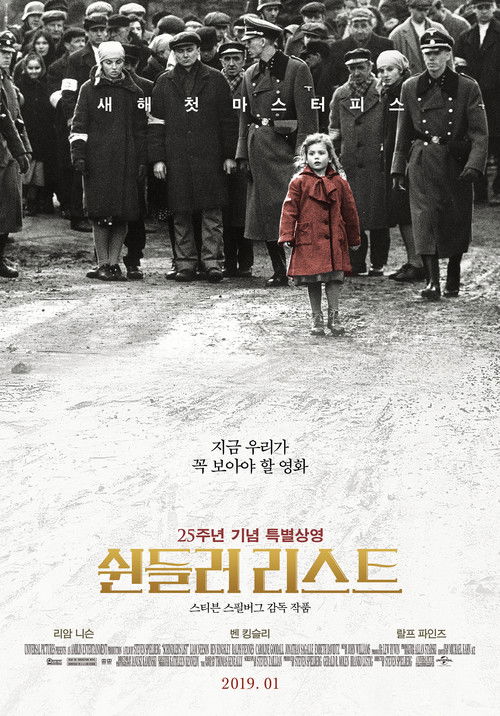
The black-and-white cinematography of Schindler's List transcends a mere aesthetic choice to serve as the core device symbolizing the weight of historical tragedy and the complex moral gray zone of human conscience. It focuses the viewer's gaze on the essence of the horrors without dramatic embellishment, substituting 'losing color' for 'losing life' to express the silenced laments of the vanished Jewish people.
- arrow_outward
Real Figures and Historical Context
Schindler's List transcends a simple survival story to explore the moral gray zone where capitalist logic and human conscience collide. Noting that protagonist Oskar Schindler's process of helping Jews is achieved not through pure good deeds but through 'business acumen' and 'bribery,' it explores this complex human psychology in addressing the vast tragedy of the Holocaust.
- arrow_outward
Survivors' Memorial and Legacy
The final scene in which survivors place memorial stones on Oskar Schindler's grave symbolizes the process by which he is remembered not merely as a businessman but as an 'agent' and 'angel of Mercy.' This scene shows that Schindler's rescue was achieved not through pure good deeds but upon a complex moral gray zone and the logic of survival — completing the film's deep thematic consciousness.
Back to the title
Schindler's List
12 deep dives in total