Survivors' Memorial and Legacy
The final scene in which survivors place memorial stones on Oskar Schindler's grave symbolizes the process by which he is remembered not merely as a businessman but as an 'agent' and 'angel of Mercy.' This scene shows that Schindler's rescue was achieved not through pure good deeds but upon a complex moral gray zone and the logic of survival — completing the film's deep thematic consciousness.
Survivors' Memorial and Legacy: The Moral Reconstruction of Schindler
The film's final scene refuses to end Oskar Schindler as a mere historical figure — it makes him live on forever in the form of "memory." The scene of survivors placing memorial stones on Schindler's grave in Jerusalem poses to the audience a question about what values Schindler's deeds are judged by and how they will be remembered.
1. The Planted Moment: The Combination of the 'Ring' and 'Business Acumen'
Schindler's process of saving Jews was not a journey of pure redemption from the start. He was originally a corrupt, dissolute businessman focused on profit through acquiring the factory. His change of conscience begins as he directly witnesses the horrific massacres and extermination in the Nazi ghetto. In this process, Schindler receives a ring from the Jews he saved — symbolically gaining "strength" through it. This ring becomes both the tool and symbol through which he deploys all his assets and business acumen to perform his role as redeemer. In other words, his rescue was not merely from the emotional motivation of "humanitarian love" but a combination of the realistic motivation of the "logic of capital" and "business acumen."
2. The Recalled Moment: The Epithet 'Angel of Mercy'
At the film's conclusion, survivors call Schindler an "angel of Mercy." This epithet is both the result of the acts Schindler showed and the legacy he left behind. They emphasize his role as the "savior of their lives" who rescued them, making his existence an object of memorial. This scene shows that what matters most is not Schindler's own survival but the "possibility of survival" and "memory" he created.
3. The Foreshadowing List: The Intersection of 'Money' and 'Conscience'
- The ring: The ring Schindler receives from the Jews is not a simple memento. It is the link between him and the Jews he rescued — the symbolic weight he assigns to his own acts. The ring inscribed with the Talmudic maxim "Whoever saves one life, saves the world entire" — gifted by Stern — is the device reminding Schindler that he ultimately came to bear a moral responsibility transcending money and business.
- Bribes and lobbying: The scenes of Schindler stuffing trunks with cash for Goeth, or proposing the hiring of prisoners to other industrialists, ceaselessly show that his rescue activities were situated in the realm of "transaction" rather than "good deeds." This complex process itself is Schindler's human contradiction and the film's greatest question.
- The final rose: The final scene of Liam Neeson placing two roses on the gravestone visually condenses both the "agent's" role of having to cast off everything and go — and the human anguish he left behind.
4. Why It Is the Core of the Work's Identity: Refusal of the Heroic Narrative
This final scene proves that Schindler did not follow the conventional heroic narrative (Hero's Journey). He was initially a corrupt, selfish businessman, and his rescue did not originate in "love" or "moral duty." Rather, it originated in revulsion toward the "vast evil system" of Nazism, and a sense of responsibility for the "workers in his own factory" as a private domain. Therefore, the act of survivors memorializing him means that he is remembered not as a perfect hero but as an individual who realized "good" in the most human and contradictory of ways.
Why It Matters
This final memorial scene determines the film's moral center of gravity. It recalls the fact that Schindler's rescue was achieved not through pure good deeds but through the capitalist logic of 'business acumen' and 'bribery.' While survivors remember him as an 'angel of Mercy,' the film deeply explores — through the guilt and shame he experiences in the process — how complex and contradictory the motivations of human goodness can be. This demands of audiences the ethical question 'How should we remember?' and maximizes the work's artistic depth.
Other 명장면 dives5
- arrow_outward
The Symbolism of Black-and-White Cinematography
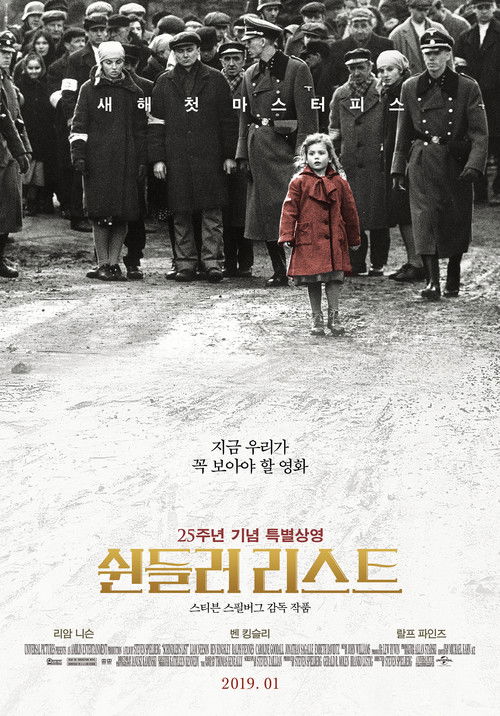
The black-and-white cinematography of Schindler's List transcends a mere aesthetic choice to serve as the core device symbolizing the weight of historical tragedy and the complex moral gray zone of human conscience. It focuses the viewer's gaze on the essence of the horrors without dramatic embellishment, substituting 'losing color' for 'losing life' to express the silenced laments of the vanished Jewish people.
- arrow_outward
Real Figures and Historical Context
Schindler's List transcends a simple survival story to explore the moral gray zone where capitalist logic and human conscience collide. Noting that protagonist Oskar Schindler's process of helping Jews is achieved not through pure good deeds but through 'business acumen' and 'bribery,' it explores this complex human psychology in addressing the vast tragedy of the Holocaust.
- arrow_outward
The Awakening of Conscience: A Turning Point
Oskar Schindler's moral awakening is not a simple emotional change but a complex process of moral transformation occurring as capitalist logic and the survival instinct collide. The film deeply explores how he began as a businessman focused entirely on profit, but after directly witnessing the horrific massacres in the Kraków Ghetto and the systematic evil of the Nazis, deploys all his assets and acumen to 'businesslike' rescue the Jews.
Back to the title
Schindler's List
12 deep dives in total