Mills
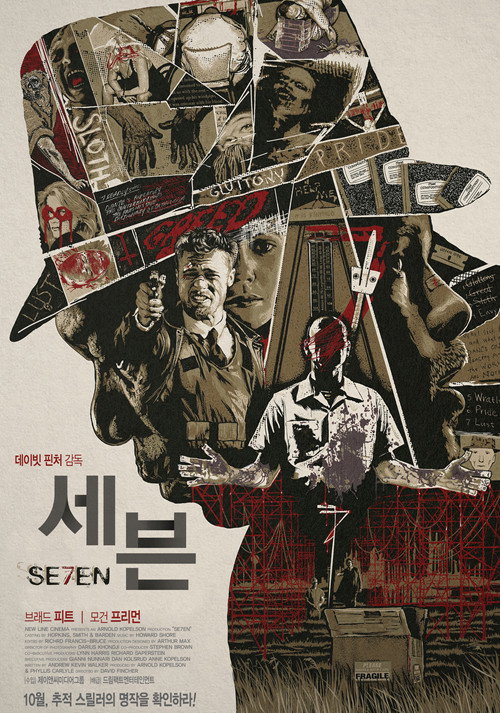
David Mills is a hot-headed rookie detective who stands in stark contrast to the cool rationality of Somerset. He leads the investigation with pure passion and emotional intuition, showing the intense belief that 'you have to pour out your emotions' in response to the question 'What is justice?' His actions drive the film's hard-boiled atmosphere and confront the audience with an uncomfortable question about the boundaries of justice.
The Character Arc of Hot-Headed Rookie Mills
Mills is not merely an assistant but the core engine of the film. He symbolizes 'passionate idealism' against Somerset's 'experienced cynicism.' His character expresses emotional shock and rage as events unfold, which is sometimes inefficient but serves to drive the film's tension to its peak.
1. Contrast with Somerset: The Clash of Reason and Emotion
Mills's most prominent characteristic is emotional eruption. When Somerset emphasizes legal procedure and caution with 'we need a warrant,' Mills relies on instinctive anger and intuition. This contrast forms the film's most important conflict axis.
- Scene Assault: When Somerset tries to stop Mills from barging into the killer's residence, Mills erupts emotionally and ultimately kicks the door open despite Somerset's restraint. This scene shows that Mills places greater value on 'the act of confronting truth' itself over legal boundaries.
- Leadership in Case Pursuit: While Somerset goes to the trouble of finding materials and leaving them on Mills's desk, Mills pores through Dante Alighieri's Inferno and Geoffrey Chaucer's Canterbury Tales trying to understand the background of the crimes. This shows he is not a character who rejects intellectual reasoning, but one who actively acquires knowledge in his own passionate way.
2. Key Scenes: The Expression of Emotional Shock and Anger
Mills reacts emotionally each time he is exposed to the brutality of the crimes, conveying shock to the audience as well.
- The Sloth Case: When Mills sees the victim's state for the first time, he is severely shocked. This shock leads to his losing composure, shouting at a journalist and knocking down their camera. Somerset evaluates this sarcastically — 'impressive to see someone who has to pour out emotions to live' — but this symbolizes Mills's essential energy.
- The Lust Case: When he witnesses the horrific crime scene, Mills responds by shouting at officers in agitation at the scene's brutality. His rage is not simple fear, but combined with an intense excitement of needing to deliver justice.
3. Philosophical Opposition: 'Indifference' vs. 'Intervention'
In the bar conversation in the latter half of the film, Somerset reveals his resignation about everyday life, saying 'I don't want to live in a society where indifference becomes a virtue.' Mills retorts: 'You're no different from the rest.' He wants to catch the killer and make him pay regardless of indifference, to distinguish good from evil and try to change the world for the better. This means he is a figure with the strong will not merely to catch the killer but to 'intervene' in and 'improve' social justice.
Why It Matters
Mills poses the question about the film's most important theme — 'the method of realizing justice' — to the audience. If Somerset seeks justice within the grand framework of law and the system, Mills shatters that framework itself to pursue emotional truth. His passion is sometimes reckless and irrational, but it is precisely that irrationality that becomes the only force creating cracks within the perfect labyrinth the killer has designed. Mills is the core axis that deepens the philosophical depth of the work by confronting audiences with the uncomfortable question: 'Is justice something that can only be completed by going through legal procedure, or does it arise from humanity's primal rage and passion?'
Other Character dives3
- arrow_outward
John Cassini (Officer Davis)
John Cassini (Officer Davis) goes beyond a mere supporting character to represent the institutional limitations of the investigative process against the brutality of crime. He embodies the 'system' perspective of law and order, serving to imprint upon the audience how meticulously the killer John Doe evades the police investigative net. His presence emphasizes that this film is not a simple mystery but a philosophical thriller exploring the gap between 'legal justice' and 'moral justice.'
- arrow_outward
Somerset
Somerset is a seasoned detective nearing retirement who symbolizes the importance of 'legal procedure' and 'systematic justice' in the process of tracking the Seven Deadly Sins serial murder case. He restrains the passionate and emotional pursuit of rookie Mills and serves as an intelligent guide elevating the case from simple crime-chasing to a vast social and philosophical labyrinth.
- arrow_outward
Tracy
Tracy goes beyond a mere supporting character to represent the most humane values of 'everyday life' and 'motherhood' against the backdrop of the extreme violence of the Seven Deadly Sins. Her dilemma is a question of how to protect ordinary life in this bleak city, providing the audience with the greatest psychological contrast within the vast labyrinth the killer has designed.
Back to the title
Se7en
13 deep dives in total