Media and the Distortion of Truth
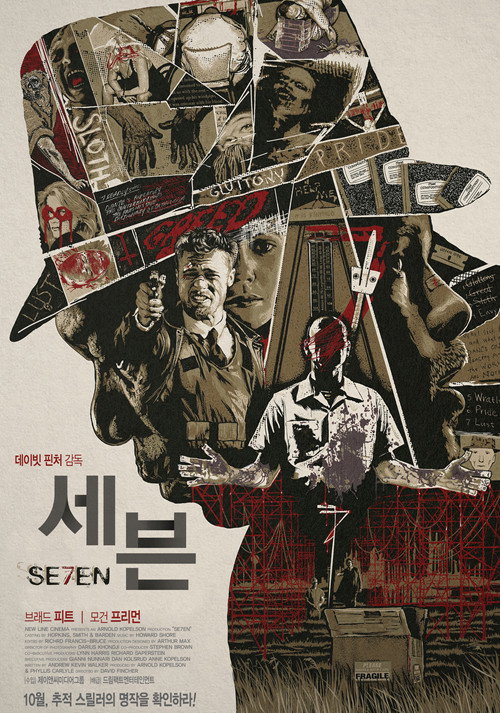
Se7en sharply critiques the fundamental distortion endemic to modern media: in tracking a serial killer themed around the Seven Deadly Sins, journalists focus not on truth but on sensational coverage and attention-grabbing. The film delivers the philosophical message that truth is hidden in the darkest, least-noticed corners, confronting the audience with the fundamental question of 'what is true justice?'
Media's Gaze: Does It Capture Truth, or Distort It?
In Se7en, journalists function not merely as witnesses to the case but as the film's central object of critique and symbolic device. Amid the brutal crime scenes of the Seven Deadly Sins, journalists are fixated on 'news value' and attracting attention rather than uncovering truth. Their behavior sharply indicts how modern media consumes truth — and sometimes distorts it.
1. The Spectacle at the Scene: Spectacle Over Truth
As the two detectives Somerset and Mills investigate the killer's residence, journalists appear early on as a primary threat to their work. They treat the crime scene as something to photograph, trying to insert themselves into the actual investigative process. When Mills attempts to enter the killer's residence without authorization, the scene of journalists photographing the moment and obstructing the investigation is a prime example of how media violates the boundaries of truth. They are obsessed with capturing 'shocking scenes' themselves, rather than the context of the case or the killer's motives.
This attitude reinforces the film's fundamental message that truth is hidden in the darkest, most grotesque, and least noticed places. True justice does not exist under the spotlight of camera flashes, but in the process of being patiently unearthed under cold, steady light.
2. The Structural Similarity of Distorted Interpretation
If Se7en critiques 'loss of context' through media, this theme is structurally analogous to other forms of 'truth distortion' in modern society. This goes beyond being a mere cinematic device to raise questions about how we receive information itself.
- The Distortion of Power Structures: The desire of those seeking to seize the core of power is the most powerful force for concealing and distorting truth. Media distorting truth in the flow of power shows how easily truth is sacrificed when power and capital combine.
- The Distortion of Relationships: The 'distortion of truth' that occurs in fan culture is similarly a matter of misunderstanding relationships by ignoring context and capturing only a certain angle. The gap between reality and distorted interpretation reminds us that all information we receive through media may be an 'edited angle.'
Se7en argues, at all these points of distortion, that uncovering truth is not through emotion or sensation, but through the cold principles of 'warrants' and 'procedure' and tenacious observation — as Somerset demonstrates.
3. Conclusion: The Virtue of Indifference and the Weight of Truth
Ultimately, the message Se7en delivers is the tension between the dark desires inherent in human nature and the sensationalism of media that stimulates those desires. Somerset's feeling that 'indifference is a virtue' is the safest and most objective attitude toward truth. Truth is a domain accessible only through patient observation and cool judgment — not through flashy reporting or emotional outrage.
Why It Matters
Se7en's media critique is the key element that elevates this film from a mere crime thriller to a philosophical masterwork. Using extreme crime as its backdrop, the film structurally exposes how modern society consumes and misuses 'truth.' The presence of journalists prompts audiences to ask: 'Is what I'm watching the whole truth?' Combined with the film's hard-boiled atmosphere, this establishes the film's identity as a work that goes beyond predicting plot outcomes to make audiences think deeply about the boundaries of 'justice' and 'truth.'
Other Reading dives2
- arrow_outward
The Ambiguity of Justice: The Clash of Law and Emotion
Se7en deconstructs the very concept of 'justice,' depicting the sharp clash between systemic justice that values legal procedure and personal justice that follows emotional intuition. While Somerset near retirement upholds law and principle, Mills approaches truth through instinctive passion. At the collision point of these two perspectives, the film throws the audience the fundamental ethical dilemma of 'what is true justice?', securing philosophical depth that transcends simple crime-chasing.
- arrow_outward
Human Guilt and Redemption
Se7en is a philosophical thriller that probes the fundamental human guilt and problem of redemption beyond simple crime-chasing, using the universal human original sin of the Seven Deadly Sins as its subject. The film presents not the act of punishing sin, but the painful process of humans confronting and 'recognizing' their sins as the most important judgment, confronting the audience with uncomfortable questions.
Back to the title
Se7en
13 deep dives in total