Tracy
Tracy goes beyond a mere supporting character to represent the most humane values of 'everyday life' and 'motherhood' against the backdrop of the extreme violence of the Seven Deadly Sins. Her dilemma is a question of how to protect ordinary life in this bleak city, providing the audience with the greatest psychological contrast within the vast labyrinth the killer has designed.
The Shield of Ordinariness: Tracy's Role and Symbolism
Tracy, as the wife of rookie detective Mills, serves as an ally who directly provides physical evidence for the main plot. But her true role goes beyond a mere information provider to symbolize 'everyday life' itself — in stark contrast to the horrible violence at the heart of this film. Her presence makes audiences pause and reflect on the value of the ordinary lives we seek to protect.
1. Clues Discovered in the Flow of Events
Tracy is a key figure who provides important clues to the two detectives. The information she provides at the Wednesday dinner scene becomes the decisive catalyst for Somerset and Mills to change the direction of the investigation. Her observations — that in the frame at the lawyer's wife's house there was a blood-painted eye shape, and that the frame at the crime scene was hung upside down — become important clues that make the two detectives sense that the killer is not a simple murderer, but has an intelligent plan to deliver some 'message.'
These clues show how important 'intuition' and 'human observation' are against the killer's meticulous design. This hints that no matter how perfectly the killer designs the labyrinth, he ultimately cannot escape the human emotions and trivial everyday habits.
2. Maternal Instinct and Anxiety: The Weight of the Most Private Dilemma
Tracy's deepest inner conflict is her concern over 'maternal instinct' and 'safety.' On Friday, in her meeting with Somerset, she reveals that she is pregnant and confides deep anxiety about whether she should raise a child in this dangerous city where violent crimes frequently occur. This concern goes beyond a personal privacy matter. It expands to the fundamental question of whether the system called 'civilized society' can actually provide a safe environment for the most vulnerable beings.
Though Somerset tries to reassure her by sharing past experience, this conversation shows how deeply Tracy's anxiety is connected to enormous social anxiety. Her anxiety is the most private resistance against the 'uncontrollable chaos' symbolized by the killer.
3. The Psychological Position of Depending on Somerset
Tracy exists outside the domain of detectives probing the truth of the case. Rather than being swayed by the logic of crime or legal justice, she seeks Somerset's help in the most private and emotional realm. This means she is looking for an 'emotional safe haven' that will protect her own life and emotions, rather than uncovering the truth of the case. Somerset, as a figure of seasoned experience, takes on the role of a kind of 'mentor' and 'advisor' for her.
This relationship setting enriches the film's theme further. When the killer tries to destroy people with the grand concept of 'justice,' Tracy strives to preserve humanity in the smallest and most private way — through 'care' and 'connection.'
The Questions Tracy's Existence Poses to the Work
Tracy's character arc adds a warm and delicate human layer to the film's hard-boiled crime thriller genre. If the killer uses the grand philosophical framework of the Seven Deadly Sins to expose humanity's dark desires, Tracy symbolizes 'the brightest and most private realm humanity must protect' on the opposite side of that exposure. Her anguish asks the audience: What is justice, and what holds 'the value of living' even amidst the most terrible chaos?
Why It Matters
Tracy symbolizes the 'value of everyday life' that runs through this film's philosophical theme. When the killer tries to destroy people with the enormous logic of sin, Tracy's character represents the most private and vulnerable realm — 'maternal instinct' and 'ordinary life.' Her presence makes audiences look back at the importance of the trivial relationships and emotions we face every day, rather than being overwhelmed by the spectacle of crime. This is a device that metaphorically presents to the audience that beyond legal justice, there exists 'human justice' — as an answer to the question the film poses: 'What is justice?'
Other Character dives3
- arrow_outward
John Cassini (Officer Davis)
John Cassini (Officer Davis) goes beyond a mere supporting character to represent the institutional limitations of the investigative process against the brutality of crime. He embodies the 'system' perspective of law and order, serving to imprint upon the audience how meticulously the killer John Doe evades the police investigative net. His presence emphasizes that this film is not a simple mystery but a philosophical thriller exploring the gap between 'legal justice' and 'moral justice.'
- arrow_outward
Somerset
Somerset is a seasoned detective nearing retirement who symbolizes the importance of 'legal procedure' and 'systematic justice' in the process of tracking the Seven Deadly Sins serial murder case. He restrains the passionate and emotional pursuit of rookie Mills and serves as an intelligent guide elevating the case from simple crime-chasing to a vast social and philosophical labyrinth.
- arrow_outward
Mills
David Mills is a hot-headed rookie detective who stands in stark contrast to the cool rationality of Somerset. He leads the investigation with pure passion and emotional intuition, showing the intense belief that 'you have to pour out your emotions' in response to the question 'What is justice?' His actions drive the film's hard-boiled atmosphere and confront the audience with an uncomfortable question about the boundaries of justice.
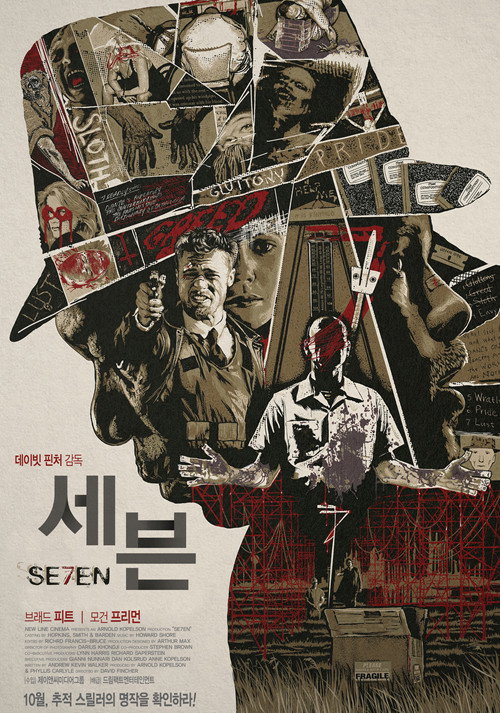
Back to the title
Se7en
13 deep dives in total