Cardarrow_outward
The Twilight of the Samurai Age
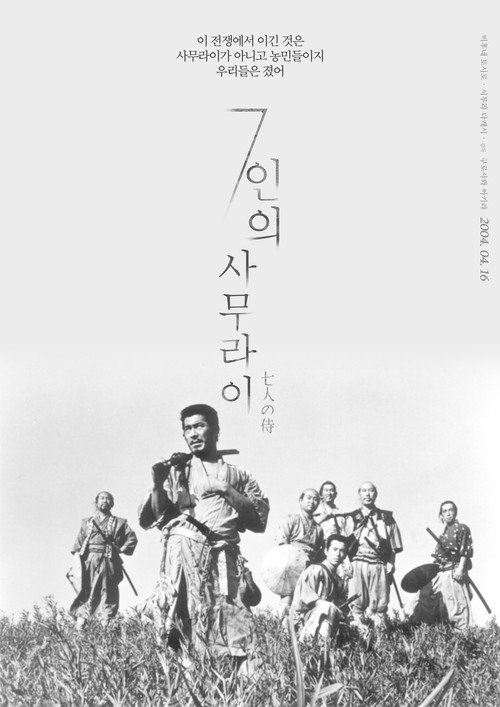
The core theme running through the ending of Seven Samurai is the decline of the samurai class and the dawn of a new era. The appearance of gunshots and firearms symbolizes the end of the warrior class that held honor and swordsmanship as its lifeblood—a grand narrative declaration that the feudal age has ended and a new social order centered on farmers and merchants has been established.
Cardarrow_outward
The Adversarial Relationship Between Village and Samurai
In Seven Samurai, the relationship between the village and the samurai is not a simple alliance but a precarious cooperation built on deep distrust and antagonism. The villagers hire samurai out of desperation to survive, but their historical experience and class prejudice cause them to fear and be wary of samurai. This film poses vast questions about the decline of the warrior class and the coming of a new era through this temporary solidarity for survival.
Characterarrow_outward
Katayama Gorobei
Katayama Gorobei is regarded as the most stable and reliable axis of the Seven Samurai as a group. He provides a kind of 'counterweight' amid the dynamic combination of Kanbei's outstanding strategy, Kyuzo's overwhelming force, and Kikuchiyo's unpredictable energy—symbolizing 'the true expert' who combines both skill and character.
Characterarrow_outward
Shimada Kanbei
Shimada Kanbei is not a samurai with mere physical force, but a strategist and leader who rallies seven samurai and guides a village in crisis. He is a figure who endlessly re-examines his past and present role, balancing between the villagers' earnest requests and his own solitary warrior's life—posing fundamental questions about the reason for the warrior class's existence.
Readingarrow_outward
The Decline of the Warrior Class and the Tide of Change
Seven Samurai transcends a simple action film to pose vast questions about the very reason for the samurai class's existence. Set in the Warring States period, the emergence of the 'gun' after the battle with the bandits implies that the warrior's professional existence has already become meaningless in the tide of history. Their heroic sacrifice ends not in satisfaction but in bitterness and disillusionment—a tragic narrative symbolizing the decline of the warrior class and the dawn of a new age centered on farmers and merchants.
Cardarrow_outward
The Duality of the Samurai
Seven Samurai explores in depth the complex, contradictory relationship between the samurai class and the farmers beyond a simple heroic tale. The samurai are depicted not as unconditional saviors but sometimes as wild and selfish beings, while the farmers are described not as passive victims but as three-dimensional figures who move cunningly for survival. This duality lends the work deep realism and is the core device that penetrates the vast themes of the warrior class's decline and the arrival of a new era.
Characterarrow_outward
Hayashida Heihachi
Hayashida Heihachi is the most human and down-to-earth mood-maker among the Seven Samurai. Rather than outstanding martial skill, he uses his uniquely comical character and warm humanity to bring ease to those around him, representing the perspective of an 'ordinary person' among the cold, professional samurai. His presence is the core device that breathes warm humanism into the film's grand narrative.
Cardarrow_outward
The Assembly of the Seven
The process of the seven samurai assembling in Seven Samurai goes beyond a simple character introduction—it is a device that encapsulates the vast themes of the warrior class's decline and survival. The desperate needs of the villagers and the personal desires of the samurai collide, and it is the narrative core showing how those who 'gathered out of necessity' function as a single team.
Characterarrow_outward
Shichiroji
Shichiroji faithfully shadowed Shimada Kanbei and served as his loyal retainer and de facto lieutenant. Despite Kanbei having fallen to the status of a ronin, rather than blaming him or lamenting his own fate, he quietly fulfills his duties and takes on the central supporting role of fighting the bandits together with the villagers. Beyond a simple lieutenant, he symbolizes the value of unchanging human loyalty and fidelity amid a collapsed social order.
Readingarrow_outward
The Conflict Between Survival and Honor
Seven Samurai transcends a simple action film about driving out bandits. It meticulously explores the collision between the primal need for 'survival' and the classical value of 'honor as a warrior.' The villagers hire experts out of desperation, yet witnessing the samurai's wild and sometimes brutal nature, they harbor a fundamental distrust. This film poses vast questions about the decline of the samurai class and the arrival of a new era, asking what the true spirit of the samurai really means.
Characterarrow_outward
Kyuzo
Kyuzo is the most enigmatic and supremely skilled character among the Seven Samurai, embodying a presence that heightens the film's tension. He initially refuses Kanbei's offer and wanders alone, but eventually joins the punitive force—making his existence a symbol of 'expert's distance' beyond mere action, adding depth to the film's narrative.
Cardarrow_outward
The Archetype of the Team-Play Genre
Seven Samurai is the work that first presented to popular culture the 'team play' narrative structure—multiple experts with distinct personalities temporarily uniting to face an external threat. Moving beyond a simple action film, it established the cliche of heroes assembling to achieve a single objective, becoming the archetype of countless subsequent hero franchises, martial arts stories, and the Japanese animation genre.
Characterarrow_outward
Kikuchiyo
Kikuchiyo begins as a rough, boisterous comic character with a murky past, but through the course of the film reveals a depth of presence that goes far beyond simple comedy. He is the figure who most directly points out the alienated relationship between the samurai and the villagers, and the hypocritical aspects of the warrior class, offering the audience the most human and vivid perspective.