Psychodrama as Therapy
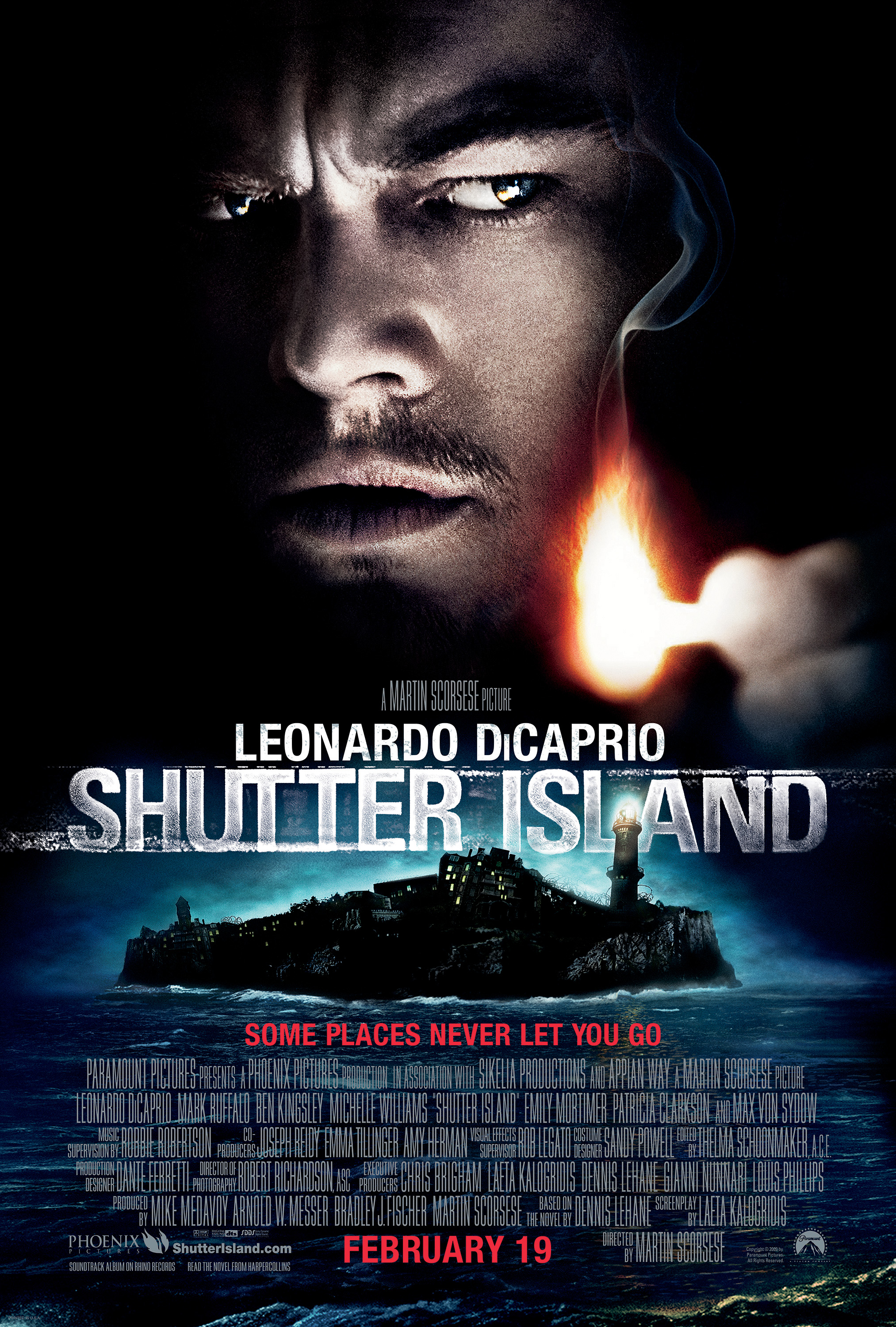
The gun and the match in *Shutter Island* are core devices symbolizing protagonist Teddy Daniels's unstable psychology and guilt. The act of borrowing a match to light a cigarette reflects his psychological state of dependence on others, always seeking 'permission' for his own actions; the gun functions as an instrument of 'punishment' he inflicts on himself, and as the ritual of a psychological salvation to end his guilt. These two symbols ceaselessly shake the boundary between the truth Teddy pursues and the hallucination he has created.
🚬 The Symbolism of the Match: Anxious Dependence Seeking 'Permission'
Teddy Daniels's repeated act of borrowing someone else's match every time he wants to smoke is the most trivial yet most powerful symbol running through the entire film. It reflects Teddy's psychological state — unable to trust his own actions or emotional decisions with his own strength, he always needs external 'permission' or 'acknowledgment.'
- Repetition of dependence: Teddy cannot smoke without a match. The fact that the prerequisite of this mundane, everyday act depends on another person hints that he has lost control of his own life and is trapped in a hallucination driven by others' gazes and judgments.
- Control and surveillance: Early in the film, when Teddy says his matches have disappeared and Chuck remarks, 'A staff member must have taken them,' the moment is significant. It calls to mind the reality that even possessing something like matches is subject to legal and institutional control for a mental patient. Even Teddy's smallest actions are monitored and controlled by the hospital as a system.
🔫 The Symbolism of the Gun: The Ritual of 'Punishment' to End Guilt
The gun is the most violent and decisive symbol in Teddy's psychological journey. It functions not as a simple crime weapon but as an instrument of 'punishment' he inflicts on himself to resolve the guilt he has carried his entire life.
- The killing in hallucination: When Teddy's memories of his wife are replayed as a dream, the vision of blood pouring from her abdomen metaphorically shows that he shot and killed her. This act is the core of the trauma he has experienced — the truth itself that he has spent his life avoiding.
- The ritual of salvation: For Teddy, the act of picking up a gun is not the terror of committing a crime but something closer to a 'psychological salvation ritual' to end the burden of that guilt. Through this violent act he attempts to bring to a close all the suffering he has endured.
🔍 The Intersection of Symbols: Connecting Flame and Violence
The match and the gun both symbolize 'decisive moments.' The match is the small spark of permission Teddy needs to start something; the gun is the ultimate flame to end everything. Through these two symbols, Teddy comes to realize that the truth he is chasing is not an external event but the flame of guilt that burns ceaselessly inside him.
- Interpreting the ending: The film's final scene — Teddy choosing lobotomy of his own apparent accord — can be interpreted as his refusal to keep living as the illusory 'Teddy Daniels' and his determination to 'conclude' himself by confronting his own guilt. This represents a shift from the dependent self that once borrowed matches to a self-determining subject deciding his own fate.
Why It Matters
The symbolism of the gun and the match proves that this film is not a simple detective thriller but a 'psychoanalytic drama.' These symbols visualize Teddy's defense mechanisms. The act of borrowing a match shows the weakness of someone who constantly seeks external support (permission) to believe in reality; the gun is the attempt to 'resolve' the guilt he cannot bear through violence. Only by deeply understanding these symbols can the audience reach the fundamental question of whether the missing person Teddy is chasing truly existed, or whether it was a 'theater of guilt' he created for himself.
Other 기타 dives4
- arrow_outward
Names Linked by Anagram
The anagram structure of names — one of the key devices in *Shutter Island* — goes beyond mere coincidence and symbolizes that every truth Teddy Daniels pursues is not an external event but a projection of the guilt buried deep inside himself. The structural similarity of the names of major characters — Edward Daniels, Rachel Solando, Dolores Chanal — hints that every trauma and investigation Teddy experiences is ultimately a question directed at himself and his past.
- arrow_outward
The Dual Function of Shutter Island
Ashecliffe Hospital on Shutter Island is not merely a remote island but an enormous stage where physical confinement and psychological control are combined. It confines inmates under the guise of 'treatment' while simultaneously serving as the psychological prison onto which protagonist Teddy Daniels projects his guilt and trauma. Its closed nature ceaselessly asks the audience how ambiguous the boundary between truth and hallucination can be.
- arrow_outward
The Symbolic Contrast of Water and Fire
The helpless and awkward attitude of the search team is one of the most important meta-devices in *Shutter Island*. This scene covertly conveys to the audience that the 'investigation' protagonist Teddy Daniels believes in is already a fabricated and staged theater. This foreshadowing — that every procedure in the investigation is fiction — plays a decisive role in maximizing the film's central theme of 'the subjectivity of truth.'
Back to the title
Shutter Island
13 deep dives in total