John Cawley
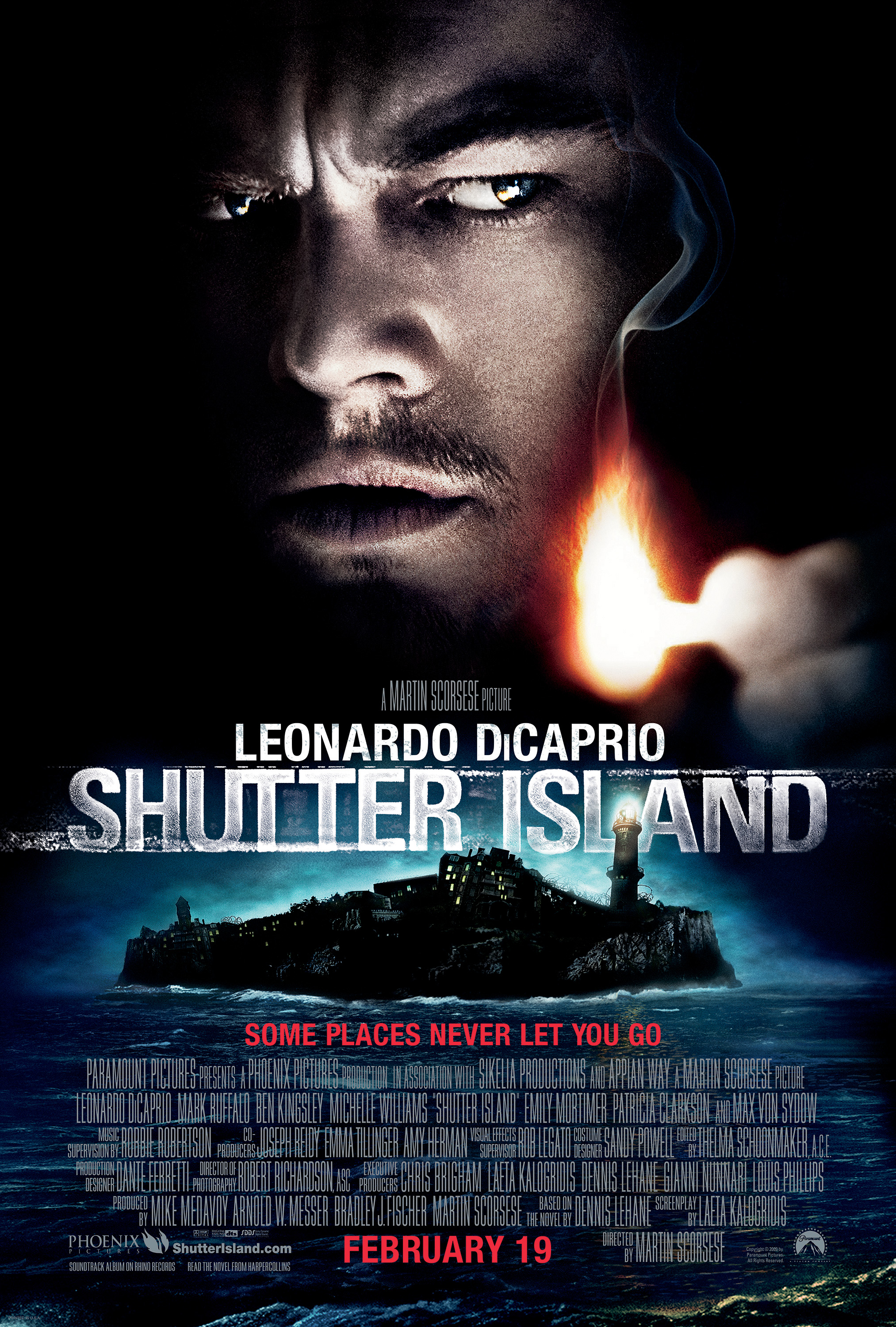
As director of Ashecliffe Hospital on Shutter Island, John Cawley is not merely a medical professional but the core power figure who manages the entire order and 'truth' of the institution. The 'psychodrama' therapy he devises and executes is a vast theatrical device designed to control patients and preserve the hospital's secrets. He appears to reveal the truth to protagonist Teddy Daniels, yet in reality functions as the architect drawing Teddy ever deeper into the hospital's logic.
Hospital Director John Cawley: Architect of Controlled Theater
John Cawley is the supreme authority at Ashecliffe Hospital on Shutter Island, overseeing every system in this closed world. He is more than a medical expert treating patients; he embodies the secrets and order maintained by the hospital as an institution. His role appears to be that of a guide revealing 'truth' to protagonist Teddy Daniels — yet in reality he functions as the architect who locks Teddy ever more deeply inside the hospital's logic.
1. Psychodrama: A System of Control Disguised as Therapy
The concept Cawley holds most central is 'psychodrama.' Far beyond a simple psychotherapeutic technique, it is a system that reconstructs and controls patients' memories and emotions in a 'theatrical' form within the hospital environment.
- Concept: Psychodrama assigns patients specific roles, inducing them to re-enact and resolve their traumas through those roles. The patient reassembles his own past and is repositioned under the guise of 'healing' on a controlled stage.
- Mechanism: Through this method, Cawley ensures that patients' memories exist not as objective facts but as a 'narrative' the hospital system can manage and interpret. Truth, in other words, is not discovered — it is 'directed' by the institution.
2. Narrative Function: Gatekeeper of Truth
Cawley is both the ultimate source of every clue Teddy pursues and, simultaneously, the greatest obstacle. His presence pushes the narrative tension of the film to its peak.
- Control of information: He feeds Teddy information 'gradually' and 'carefully' — bait designed to make Teddy suspect on his own and dig ever deeper. Cawley is adept at providing 'false truths' that make Teddy believe he has arrived at the real truth himself.
- Embodiment of authority: Cawley always maintains a composed, logical, and professional demeanor. This perfect expertise lends absolute credibility to every piece of information he presents, making both the audience and Teddy dependent on his words — a device showing how powerful institutional authority can be.
3. What Cawley Symbolizes: Institutional Violence
Cawley is not simply a villainous doctor. He symbolizes the violence inherent in 'institutions' and 'systems.' The hospital promises healing, but its internal logic prioritizes 'maintaining order' above individual freedom or truth.
- Commodification of truth: Cawley's system treats individual suffering and memory as a 'treatable commodity.' The patient's life is tailored to fit the hospital's operational logic, and individual autonomy is wholly stripped away in the process.
- Concluding meaning: Cawley poses a question to the audience. Is the 'truth' we believe in an objective fact, or an 'optimal story' that someone has meticulously engineered to reassure and control us? Cawley is the most cunning and dangerous guide, leading the protagonist toward that answer.
Why It Matters
John Cawley most clearly embodies the film's central theme — 'the boundary between reality and delusion.' He symbolizes the authority of the closed space called the hospital itself. The 'psychodrama' he leads demonstrates a system that reconstructs and controls patients' memories and emotions under the guise of therapy. Cawley is therefore not merely an information provider needed to solve the case; he is the device that poses the fundamental question to both the audience and the protagonist: 'Is the reality you believe in truly the truth?' His existence symbolizes the hospital system's perfect closure and hierarchy, amplifying the film's neo-noir atmosphere.
Other Character dives4
- arrow_outward
Edward Daniels (Edward "Teddy" Daniels)
Edward 'Teddy' Daniels is not a simple investigator but an 'unreliable narrator' onto whom his repressed guilt and trauma have been projected. As he pursues the missing-persons case, he comes to realize that everything he has experienced is an enormous psychological theater — and through the process in which the boundary between truth and delusion, reality and hallucination, collapses, he poses to the audience a fundamental question about the very definition of 'truth.'
- arrow_outward
Chuck Aule
Chuck Aule appears as Edward Daniels's closest ally and partner, yet in reality he is the therapist most closely observing and guiding Teddy's psychological breakdown. His ever-smiling demeanor and subtle powers of observation are the device that ceaselessly raises questions about where the boundary of 'truth' lies, maximizing the ambiguity of hallucination versus reality at the film's core.
- arrow_outward
Dolores Chanal
As the hospital director of Ashecliffe, John Cawley controls the 'truth' under the guise of 'therapy.' He opposes inhumane treatments like lobotomy, yet ultimately designs and executes an elaborate 'psychodrama' to manage Teddy Daniels's violent tendencies. Cawley is not merely an administrator but a narrative device that poses to both the audience and Teddy the question of where the boundary of 'truth' lies.
Back to the title
Shutter Island
13 deep dives in total