Dolores Chanal
As the hospital director of Ashecliffe, John Cawley controls the 'truth' under the guise of 'therapy.' He opposes inhumane treatments like lobotomy, yet ultimately designs and executes an elaborate 'psychodrama' to manage Teddy Daniels's violent tendencies. Cawley is not merely an administrator but a narrative device that poses to both the audience and Teddy the question of where the boundary of 'truth' lies.
The Architect of Ashecliffe: Cawley's Role and Ethical Dilemma
John Cawley, as the director of Ashecliffe Hospital, is the figure who symbolizes all the rules and authority of the institution. He does not merely manage patients; he embodies the very philosophy of the hospital as a system. His initial stance is crucial: he believes mental illness should be treated with proper medication and counseling, and he takes a clear position against the lobotomy that was prevalent at the time. This shows he is not simply a figure of power but someone trying to uphold medical ethics.
1. The Boundary Between Control and Treatment
Cawley faces his own ethical limits when confronted with a violent and unruly patient like Teddy Daniels (Andrew Laeddis). He judges that Andrew's violence is beyond what he can manage, but he does not want to simply isolate or punish him unconditionally. This dilemma is Cawley's greatest narrative motor. He finds himself in a situation where he 'wanted to leave Andrew as he was, but his violence made it utterly impossible to cope.'
In this situation, Cawley's chosen solution is 'psychodrama' — a form of psychiatric treatment in which the patient participates in a play based on his own story. Through this theater, Cawley guides Andrew to realize on his own that the 'delusion' — the fiction that he could not mentally endure the horrific outcome he had caused — is false, and to accept reality. Cawley thus does not expose the truth; rather, he creates the psychological environment in which the truth can be received.
2. Indirect Interrogator of Teddy
Cawley observes Teddy's investigative activities and plays the role of guiding him toward ultimately confronting the truth. When Teddy asks about Rachel Solando, Cawley mentions that she 'believes her children are still alive and treats the prison island as her home' — causing Teddy intense headaches. This is a device indirectly pointing out that Teddy's delusion originates from guilt related to his wife.
Moreover, when Teddy demands the personnel records of hospital staff, Cawley refuses on the grounds of 'obstruction of official duties.' This refusal shakes the very premise that Teddy is a 'federal investigator,' revealing how fragile an illusion his identity and authority are within the hospital system.
3. Architect of a Tragic End
In the film's climax, Cawley makes the most difficult decision. Even after witnessing Andrew emerge from his hallucination and appear to accept his objective reality, Cawley keeps in mind the possibility of relapse. When Andrew shows signs of falling back into delusion, Cawley ultimately brings about agreement for a lobotomy. This decision symbolizes the tragic reality in which, even under the guise of 'treatment,' a person's autonomous will must be placed under the system's control.
Cawley is the figure who completes the coldest yet most human ending — making Teddy accept his true name Andrew Laeddis, and ultimately driving him to stand up and walk away asking, 'Is it better to live as a monster, or to die as a good man?'
Why It Matters
John Cawley is the pivotal pillar embodying the film's theme of 'the relativity of truth.' He is not merely involved in solving the case but is a character who personifies the very system that defines and controls 'truth.' Cawley challenges the audience: does truth exist objectively, or is it simply the most convincing 'story'? The psychodrama he leads amplifies the film's fundamental terror — that every memory and experience we trust may be a theater engineered by someone else — and plays a decisive role in completing the work's intellectual depth.
Other Character dives4
- arrow_outward
Edward Daniels (Edward "Teddy" Daniels)
Edward 'Teddy' Daniels is not a simple investigator but an 'unreliable narrator' onto whom his repressed guilt and trauma have been projected. As he pursues the missing-persons case, he comes to realize that everything he has experienced is an enormous psychological theater — and through the process in which the boundary between truth and delusion, reality and hallucination, collapses, he poses to the audience a fundamental question about the very definition of 'truth.'
- arrow_outward
Chuck Aule
Chuck Aule appears as Edward Daniels's closest ally and partner, yet in reality he is the therapist most closely observing and guiding Teddy's psychological breakdown. His ever-smiling demeanor and subtle powers of observation are the device that ceaselessly raises questions about where the boundary of 'truth' lies, maximizing the ambiguity of hallucination versus reality at the film's core.
- arrow_outward
Rachel Solando
Rachel Solando — the 'missing patient' who sets the entire story in motion — is the essential medium symbolizing protagonist Teddy Daniels's guilt and fabricated memories. Her disappearance is not merely a plot device for a detective story; it is a vast psychological apparatus that projects onto the audience the past trauma and guilt Teddy has been suppressing and evading.
Back to the title
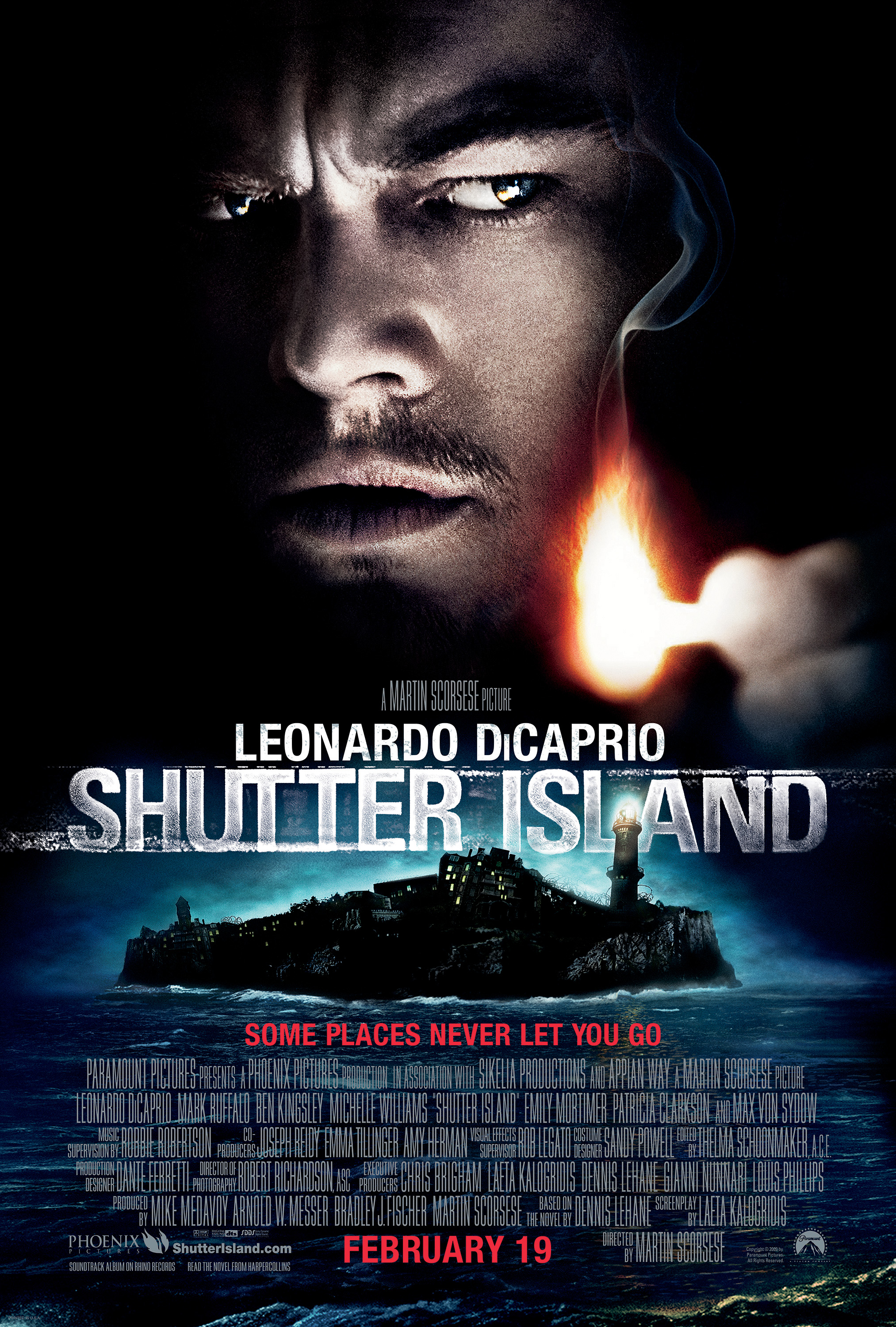
Shutter Island
13 deep dives in total