Chuck Aule
Chuck Aule appears as Edward Daniels's closest ally and partner, yet in reality he is the therapist most closely observing and guiding Teddy's psychological breakdown. His ever-smiling demeanor and subtle powers of observation are the device that ceaselessly raises questions about where the boundary of 'truth' lies, maximizing the ambiguity of hallucination versus reality at the film's core.
The Observer Behind the Smile: Chuck Aule's Role
Early in the film, Chuck Aule is positioned as the most trustworthy colleague for Edward Daniels (Teddy). He watches Teddy's unstable and excessive obsessions from close range, maintaining a gentle smile alongside a subtle tension that seems to say he understands everything. This smile hints that he is not simply an investigative partner but an 'observer' measuring and recording Teddy's psychological state from the closest possible position.
1. Subtle Rebuttal of Teddy's Delusions
Chuck's most important function is not to directly contradict Teddy's illogical thinking but to create fractures through 'questioning.' When Teddy aggressively emphasizes his identity as a federal marshal and becomes obsessed with the investigation, Chuck does not blame him. Instead, he calmly and rationally prompts Teddy to reflect on his own actions.
- Badge and gun: When Teddy flaunts his status as a 'federal investigator,' Chuck subtly reminds him that he is a detective, not a doctor, implying professional flaws in Teddy's behavior. This is a refined way of prodding at the gaps in the 'reality' Teddy has constructed for himself.
- Sharing knowledge: When Teddy becomes absorbed in conspiracy theories about Communists or Nazi-camp remnants, Chuck — rather than being startled or angry — deflects to something mundane like 'toothpaste' with a sardonic laugh, suggesting that Teddy's reasoning is excessively grand and unrealistic.
2. The Gaze of One Who Knows the Truth
Chuck reveals his role most clearly at the moments Teddy is most vulnerable — when his traumas explode. The scenes where he watches Teddy conduct interrogations or exchanges glances with the nurses send the signal 'something is wrong' to the audience. Especially when Chuck is in Cawley's office and says with a subtle smile, 'I should have come to work here,' it hints that he is part of the hospital system.
He is the character who knows best the 'truth' inside the hallucination Teddy has created. The smile he displays carries not empathy or support but the intellectual superiority of someone who knows 'all of this is a predetermined process.'
3. Chuck Aule as Therapist
In the end, Chuck Aule is not a mere investigative partner but Dr. Lester Shehan — the attending physician managing Teddy's mental state. This fact reframes every event in the film. Every fear, anger, and truth-seeking moment Teddy experiences was part of a 'psychodrama' designed by Chuck. Chuck's existence is, in effect, a living device continuously delivering the message to Teddy: 'You are living inside a hallucination.'
Why It Matters
Chuck Aule is the character who most effectively embodies the film's theme of 'the subjectivity of truth.' By performing the role of Teddy's most trustworthy ally, he draws the audience to completely immerse themselves in Teddy's perspective. When that immersion peaks and Chuck reveals his true identity (as therapist), the audience experiences, together with Teddy, the shocking sensation of losing the map of reality. Chuck's smile is not simple affection but a symbol of the cold knowledge of superiority — 'you are performing in a theater' — and the central pillar that brings the entire film's neo-noir psychological tension to its peak.
Other Character dives4
- arrow_outward
Edward Daniels (Edward "Teddy" Daniels)
Edward 'Teddy' Daniels is not a simple investigator but an 'unreliable narrator' onto whom his repressed guilt and trauma have been projected. As he pursues the missing-persons case, he comes to realize that everything he has experienced is an enormous psychological theater — and through the process in which the boundary between truth and delusion, reality and hallucination, collapses, he poses to the audience a fundamental question about the very definition of 'truth.'
- arrow_outward
Dolores Chanal
As the hospital director of Ashecliffe, John Cawley controls the 'truth' under the guise of 'therapy.' He opposes inhumane treatments like lobotomy, yet ultimately designs and executes an elaborate 'psychodrama' to manage Teddy Daniels's violent tendencies. Cawley is not merely an administrator but a narrative device that poses to both the audience and Teddy the question of where the boundary of 'truth' lies.
- arrow_outward
Rachel Solando
Rachel Solando — the 'missing patient' who sets the entire story in motion — is the essential medium symbolizing protagonist Teddy Daniels's guilt and fabricated memories. Her disappearance is not merely a plot device for a detective story; it is a vast psychological apparatus that projects onto the audience the past trauma and guilt Teddy has been suppressing and evading.
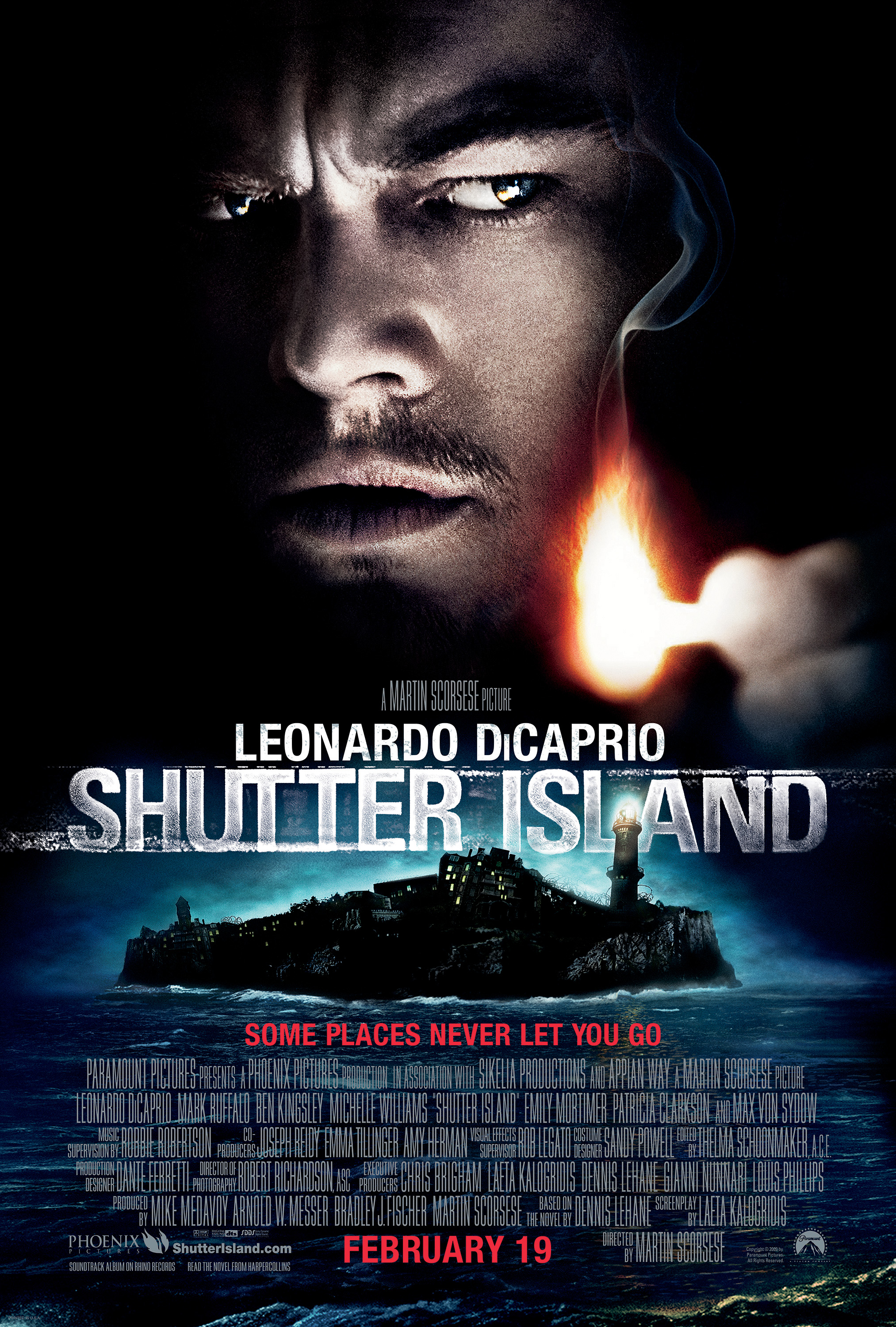
Back to the title
Shutter Island
13 deep dives in total