Rachel Solando
Rachel Solando — the 'missing patient' who sets the entire story in motion — is the essential medium symbolizing protagonist Teddy Daniels's guilt and fabricated memories. Her disappearance is not merely a plot device for a detective story; it is a vast psychological apparatus that projects onto the audience the past trauma and guilt Teddy has been suppressing and evading.
The Missing Rachel Solando: The Weight of a Truth That Does Not Exist
Rachel Solando is the figure who triggers every mystery in Shutter Island. In 1954, she is a patient confined in Ashecliffe — an isolated psychiatric hospital off Boston — a woman who drowned her three children and has since gone missing. Her disappearance serves as the most powerful 'hook' for the detective narrative, yet as the film unfolds it becomes clear that her existence is less a physical reality than a 'hallucination' projected through the psychological defense mechanisms and guilt of protagonist Edward Daniels (Teddy).
1. Rachel as Catalyst for the Plot
Rachel Solando's disappearance is the decisive event that draws Teddy and his partner Chuck Aule to Ashecliffe Hospital. Hospital staff report that she treated the prison island as her own home and commanded other inmates as errand-runners. As Teddy pursues the case, he grows to suspect the hospital is far more than a simple penitentiary — a place riddled with political conspiracy and inhumane 'treatments.' Rachel's disappearance thus gives Teddy a sense of mission to 'uncover the truth' and draws the audience into the mysterious investigation.
2. Symbolic Meaning: A Projection of Guilt
Rachel Solando is not merely a missing person. Her name is an anagram of Teddy's wife, Dolores Chanal, and her story symbolizes the trauma Teddy has been repressing. Throughout the investigation, Teddy continually revisits memories of his own past traumas — war crimes at a Nazi concentration camp and the memory of his wife's death. The vague testimonies surrounding Rachel's disappearance hint that Teddy is projecting his guilt onto an external 'incident.'
- Fabricated memory: As it emerges that every case and character Teddy pursued was part of an elaborate theater, it also comes to light that Rachel's disappearance was a fabricated event from the start — leading to the shocking conclusion that everything Teddy experienced may have been hallucination.
- The meaning of 'vanishing': The fact that Rachel has 'disappeared' reflects Teddy's unconscious desire to flee from his most painful truth: his wife's death and his own crime.
3. Rachel's Narrative Function: The Paradox of Truth
The film shows Rachel not as someone who has gone missing but as an existence perpetually reconstructed and manipulated within Teddy's psychological structure. Every testimony surrounding her is a mirror reflecting Teddy's unstable mental state. The closer Teddy draws to truth, the more that truth exists only as fragments he cannot bear — ultimately revealing that it was all part of a 'theater' he himself had built.
Rachel Solando poses a question to the audience: is everything we call 'truth' truly an objective fact? Or is it a theater of guilt — staging the very things we most desperately want to hide? Her disappearance is the most powerful and beguiling device for posing that question.
Why It Matters
Rachel Solando is both the narrative axis of this film and the most important medium through which Teddy Daniels's psychological collapse is conveyed to the audience. Her disappearance transcends a simple mystery plot, raising the philosophical question of 'the reliability of memory.' The conclusion that her existence is a fabricated illusion keeps the audience wondering throughout: 'Is what I am watching right now real?' Rachel's narrative thus expands the film's genre boundaries into the realm of both psychological thriller and psychological drama, determining the depth and artistic weight of the work.
Other Character dives4
- arrow_outward
Edward Daniels (Edward "Teddy" Daniels)
Edward 'Teddy' Daniels is not a simple investigator but an 'unreliable narrator' onto whom his repressed guilt and trauma have been projected. As he pursues the missing-persons case, he comes to realize that everything he has experienced is an enormous psychological theater — and through the process in which the boundary between truth and delusion, reality and hallucination, collapses, he poses to the audience a fundamental question about the very definition of 'truth.'
- arrow_outward
Chuck Aule
Chuck Aule appears as Edward Daniels's closest ally and partner, yet in reality he is the therapist most closely observing and guiding Teddy's psychological breakdown. His ever-smiling demeanor and subtle powers of observation are the device that ceaselessly raises questions about where the boundary of 'truth' lies, maximizing the ambiguity of hallucination versus reality at the film's core.
- arrow_outward
Dolores Chanal
As the hospital director of Ashecliffe, John Cawley controls the 'truth' under the guise of 'therapy.' He opposes inhumane treatments like lobotomy, yet ultimately designs and executes an elaborate 'psychodrama' to manage Teddy Daniels's violent tendencies. Cawley is not merely an administrator but a narrative device that poses to both the audience and Teddy the question of where the boundary of 'truth' lies.
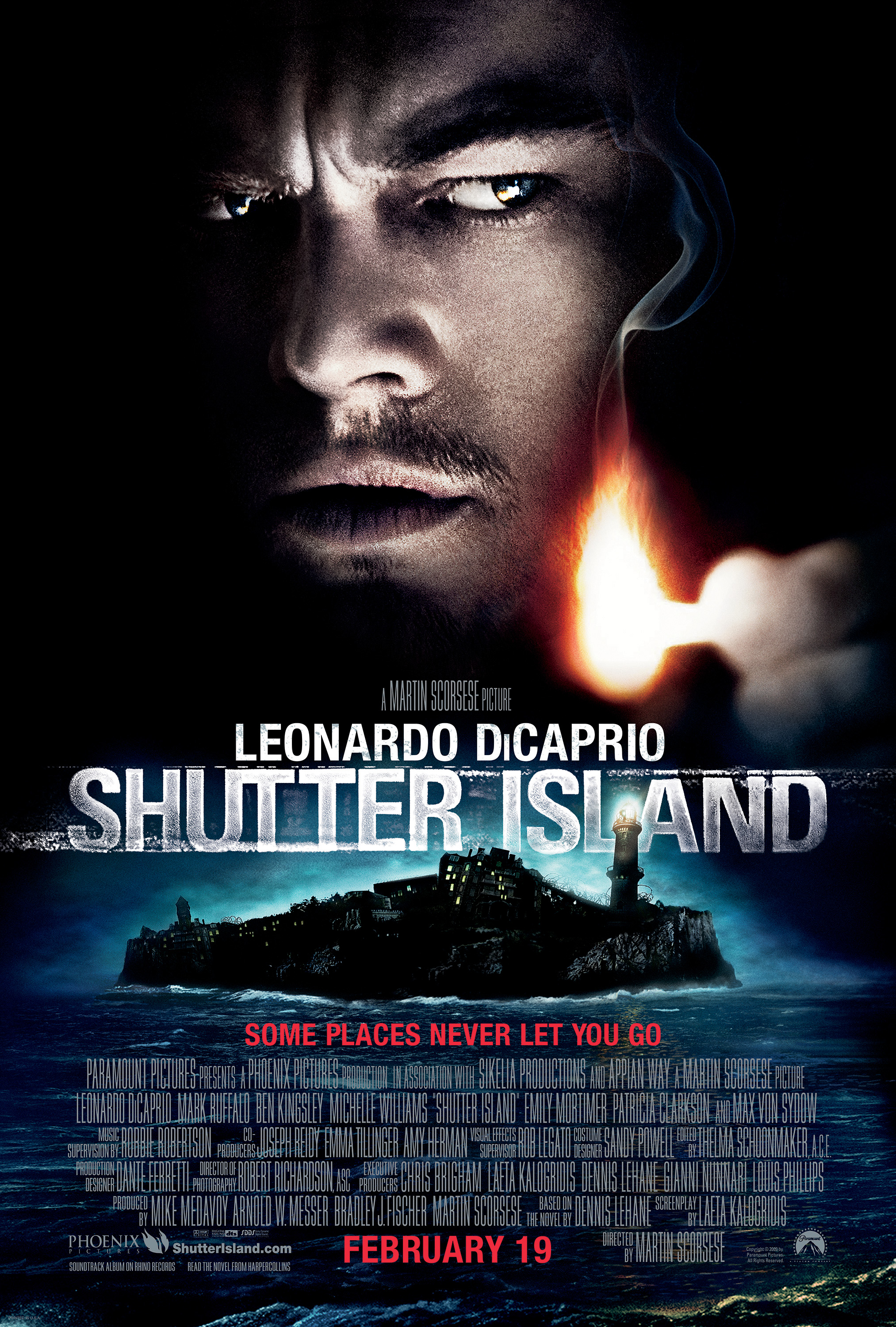
Back to the title
Shutter Island
13 deep dives in total