The Blurred Line Between Good and Evil
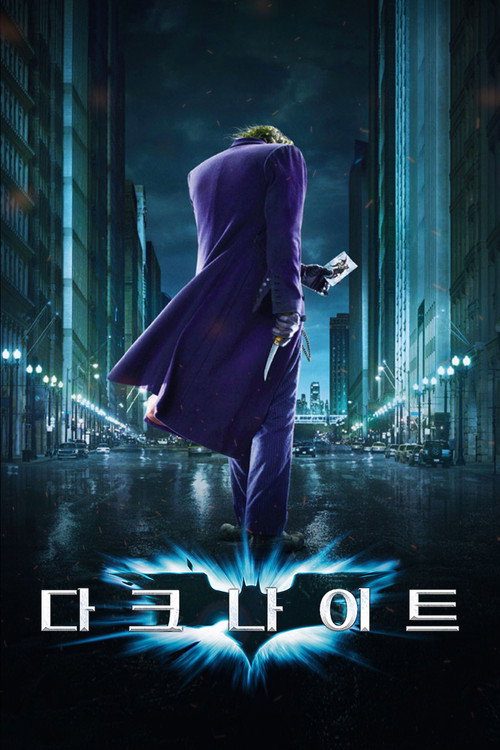
The Dark Knight is a philosophical thriller that goes beyond a simple battle between good and evil to explore the very ambiguity of the concepts of 'justice' and 'law.' Batman's extralegal activities, the 'purification' effect within the chaos the Joker creates, and the figure of Harvey Dent crumbling within the law constantly pose to audiences the question 'what is true justice?'
Deconstructing Justice: The Blurred Line Between Good and Evil
The Dark Knight wears the skin of a superhero film, but its core lies in moral dilemma and ethical skepticism. The film does not present 'justice' as an absolute value. Instead, it meticulously shows which systems — law, capital, individual conscience — sustain justice, and how human nature manifests when those systems collapse.
This ambiguity is realized through three axes: Batman's extralegal activities, the Joker's chaotic 'purification' effect, and the systemic corruption of the law.
1. The Joker: Madness Without Rules or Purpose
The Joker is not simply a villain. He is a philosophical entity that poses the sharpest possible questions about every moral norm and rule society has constructed. His actions appear to have no purpose, yet paradoxically they trigger a 'purification' effect that exposes the deepest corruption and hypocrisy of Gotham.
- Truth exposed through chaos: The Joker's disposal of mob figures and delivery of messages to the public can be read as a form of 'purification' even amid the chaos he sows. This presents the logic of 'necessary evil' — not fundamentally different from Batman's maintenance of order through illegal means outside the law.
- Guilt and the agent of chaos: The narrative of a figure tormented by guilt for a catastrophic tragedy — who refuses peace and becomes an agent of chaos — symbolizes the guilt all characters in Gotham carry and the resulting moral collapse. The Joker amplifies this guilt to a breaking point.
2. Batman: Justice That Transcends the Law
Batman employs illegal means in the name of maintaining order. He is a 'knight of the night' who operates outside the law. His very existence symbolizes the ambiguity of law and justice.
- Illegal means: Batman stakes everything on stopping the Joker but ignores the law in the process. This makes him appear as a kind of 'tyrant of justice' — justifying 'the ends' through 'any necessary means.' His actions begin from the premise that Gotham cannot realize justice within the rule of law.
- The contradiction of Bruce Wayne: The figure of Bruce Wayne himself maximizes this ambiguity. By day he follows social norms and the logic of capital as a billionaire chairman, but by night he dons a mask to destroy all norms. This double life reveals that he is a being in constant conflict between living as a 'normal member of society' and living as a 'monster for the sake of justice.'
3. Harvey Dent: The Limits of Law and Tragedy
Harvey Dent is the most 'conventional' character, who seeks to realize justice within the confines of the law. Yet the film shows him suffering a fatal crack as well.
- The vulnerability of the system: The situation Harvey Dent faces reveals in stark terms how corrupt and fragile Gotham's laws and judicial system truly are. No matter how ambitious and righteous he may be, he is powerless before the enormous corruption of the system and the Joker's madness.
- The meaning of the tragic ending: Harvey Dent ultimately becoming the Joker's sacrificial victim and descending into a figure symbolizing 'the failure of justice' is a core device showing that this film does not simply celebrate a hero's triumph, but reveals how tragic and ambiguous the very process of upholding justice can be.
In conclusion, The Dark Knight presents 'justice' not as a single fixed goal but as a fluid state that is constantly being redefined and destroyed, posing to the audience the most fundamental ethical questions in this masterwork.
Why It Matters
The greatest appeal of this film lies not in 'action' but in 'philosophy.' By treating the boundary between good and evil as ambiguous, audiences are forced to make their own moral judgments amid Batman's violence, the Joker's madness, and the impotence of law. The Joker is not a villain — he is a device that embodies the most uncomfortable and sharp questions society must ask itself. This ambiguity is the core driving force that elevates the work from a simple blockbuster to a profound drama addressing the corruption and ethical dilemmas of modern society.
Other 떡밥 dives4
- arrow_outward
The Technical Evolution of the Batsuit
Batman's suit in The Dark Knight is a live-action suit of armor concentrating advanced technology, far beyond a simple costume. The suit employs eleven protective plates combined with various special materials — Kevlar, Nomex, Boron Carbide — achieving bulletproofing, fire resistance, and shock absorption. In particular, the technological breakthrough of allowing the actor to turn his neck maximizes Batman's range of action and the realism of his fight scenes, serving as a key device that heightens the film's immersion.
- arrow_outward
The Significance of the Mob Bank Heist
The mob bank heist is more than a simple criminal incident — it is the core device that exposes the structural flaws of the corrupt capitalism and criminal system sustaining Gotham. Through this incident, Batman attempts not merely to punish individual criminals but to dig into the fundamental system of law and order that has rotted in Gotham itself, posing the question 'what is the definition of justice?' — the film's philosophical theme.
- arrow_outward
The Joker's Psychological Provocation
The Joker's method of psychological provocation goes beyond simple terror — it is a philosophical device that dismantles the fundamental norms of 'law' and 'morality' that Gotham society believes in. He forces his targets to choose between their most cherished relationships (friend vs. fiancee), mocks Batman's 'rules' as a 'ridiculous joke,' and poses to both audience and characters the question of how easily human nature crumbles in the face of crisis.
Back to the title
The Dark Knight
13 deep dives in total