The Coexistence of Chaos and Order
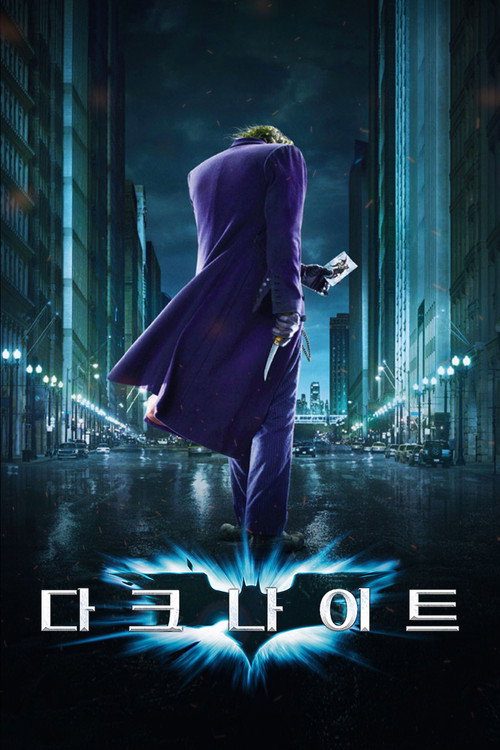
The central theme of The Dark Knight is not a simple battle between good and evil, but the philosophical collision of two fundamental forces: 'chaos' and 'order.' The Joker symbolizes chaos, arguing for the futility of all moral norms and rules, while Batman represents extreme control and order. The film shows, through the clash of these two extremes, not the triumph of one side, but the necessity of both forces coexisting to sustain the 'balance' that is Gotham City.
Chaos vs. Order: The Two Pillars That Sustain Gotham City
The Dark Knight is not merely a battle against crime — it is a philosophical exploration that deconstructs the very concepts of 'rules' and 'morality' that underpin human society. At its center stand two diametrically opposing forces: the Joker, who symbolizes unlimited chaos, and Batman, who represents extreme control and order. Their collision is not simply a contest of strength, but a question about the principles by which the vast system that is Gotham City must be sustained.
1. The Joker's Question: The Futility of Rules
The Joker is the embodiment of chaos itself. He argues that 'a state without rules' is the only rational way to live in this world, laughing with unhinged glee at every order and rule society has constructed. His actions appear to have no purpose or logic, yet their fundamental message is clear: "How fragile and arbitrary are humanity's moral norms?"
The Joker declares that he will not stop unless Batman unmasks himself and reveals his identity, shaking the very reason for Batman's existence and the principle of maintaining Gotham's order. It is as if he is finding the most vulnerable link in the social system and offering visual proof that once that link snaps, everything can collapse.
2. The Dilemma of Order: The Failure of Perfect Order
Batman symbolizes order and control, yet the film shows how easily that order can be corrupted. District Attorney Harvey Dent is the most ideal embodiment of 'order' — a man determined to realize justice within the confines of the law. He remains wary of Batman's extralegal activities while demonstrating his resolve to save the city through law.
Yet even this seemingly perfect order crumbles before the Joker's madness. Harvey Dent succumbs to the Joker's terror and pressure, ultimately abandoning 'justice' — a tragic arc demonstrating that no matter how solid a system of laws may appear, it can be rendered powerless before the psychological vulnerabilities of the people within it. This makes the case that order must be grounded not merely in 'rules,' but in 'conviction' and 'moral will.'
3. Conclusion: The Aesthetics of 'Balance' That Must Coexist
The film's most important interpretive conclusion is that Gotham City cannot be maintained by pure order (law) alone, nor can it survive on pure chaos (anarchy) alone. Gotham stands upon a 'balance' sustained by these two extreme forces checking and countering each other.
The moment Batman discovers in Harvey Dent the true meaning of heroism is the moment he grasps the necessity of this balance. Batman recognizes Harvey's efforts to save the city through law and helps him realize justice within the law's boundaries. In other words, the system that is Gotham City survives by setting 'boundaries' to prevent order from collapsing, and maintaining 'fear' to keep those boundaries from breaking.
Why It Matters
This interpretation elevates The Dark Knight from a simple superhero action film to a work that poses ethical and philosophical questions about modern society. The Joker is not merely a villain but a philosophical device that questions the very 'assumptions' of the social system. Only by deeply understanding this theme can one grasp the emotional depth behind why Batman is inspired by Harvey Dent's efforts to save the city through law — and why he ultimately had no choice but to choose 'law.' This concept of balance is the message Director Nolan ultimately sought to convey through this work.
Other Reading dives1
Back to the title
The Dark Knight
13 deep dives in total