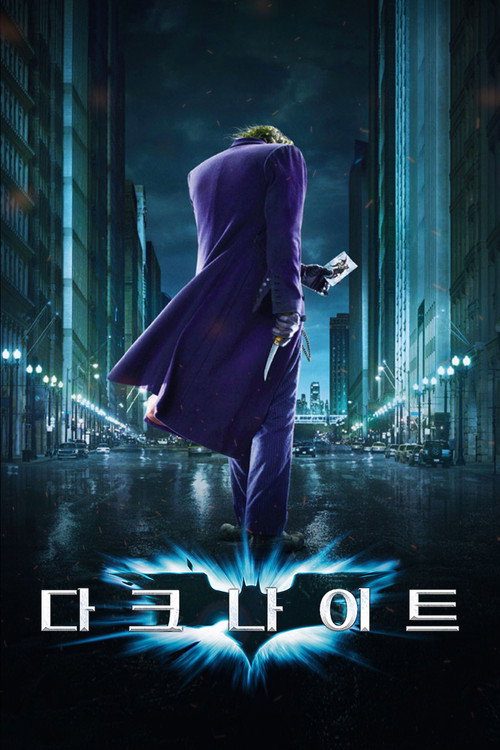
Joker
The Joker is not a simple criminal, but a philosophical entity who mocks every moral norm, law, and order that human society has constructed. He advances the logic that 'a state without rules' is the most essential and rational way to live, probing the weaknesses of the 'order' that Batman and Harvey Dent sought to uphold. His madness is the catalyst that poses the sharpest questions to Gotham's heroes.
The Joker's Philosophy: The Battle Between Order and Chaos
The Joker is the most unpredictable character in the film, yet the message he delivers possesses a surprisingly consistent philosophical logic. Rather than calling himself simply an 'embodiment of evil,' he positions himself as a critic of every artificial system humanity has built — the 'embodiment of chaos.' His existence makes the very concept of 'order' that Gotham's heroes have believed in fundamentally suspect.
1. The Mockery of Human-Made Order
The Joker's core argument is that all the orders humanity has constructed — law, morality, good and evil — are artificial systems fabricated to forget 'chaos,' the true nature of the universe. To him, even money and legal codes are just one more form of order invented for the sake of predictability. He endlessly mocks this, provoking Batman with the claim that thinking 'rules (code) are everything' is a mistake.
He claims he is not a planner, describing himself as someone who simply acts according to circumstances. This is both a rejection of the small world that 'schemers' — those who want to control everything through predictability — try to manage, and an emphasis that he is a being who moves according to instinct. The Joker defines himself as an 'agent of chaos,' and characterizes the essence of chaos as 'fear.'
2. The Deconstruction of 'Good and Evil': Instinct vs. Civilization
The Joker argues that the binary moral order of good and evil is just one more form of order that humans have constructed to forget their fear. His philosophy connects to Nietzschean thought, emphasizing that beyond the manipulation of the human spirit by artificial order, the innate 'instinct' unlearned from society is the true spirit that has come from the universe.
He calls himself not an 'embodiment of evil' but an 'embodiment of chaos,' criticizing the laws and morality humanity has built as obstacles obscuring the original cosmic truth — chaos and instinct.
3. The Ethical Dilemma Posed to the Heroes
The Joker applies this philosophy most directly to Gotham's heroes. He points out to Batman that Harvey Dent has come to occupy the position of Commissioner, pressing Batman on how lonely an existence he has become.
The most dramatic moment is Batman confronting an ethical choice. The Joker engineers a situation where Batman must choose between the two things he holds most dear — Harvey Dent, his friend and the District Attorney, or Rachel, his beloved — forcing Batman to choose. This situation becomes the decisive catalyst that leads Batman to discover the true meaning of a hero in Harvey Dent's efforts to save the city through law. The Joker is, in effect, a device that exposes how fragile and arbitrary the 'rules' the heroes are trying to uphold truly are.
Why It Matters
The Joker goes far beyond being a villain who plunges Gotham into chaos — he is a philosophical device that runs through the entire thematic consciousness of the work. If the Joker did not exist, the confrontation between Batman and Harvey Dent would have ended as a simple crime-fighting operation. The Joker poses fundamental questions about humanity's most sacred values — 'order' and 'law' — elevating this film from a simple hero action film into the realm of 'ethical confrontation.' His madness acts as the catalyst that forces Gotham to reestablish its own moral standards.
Other Character dives5
- arrow_outward
Bruce Wayne / Batman
Bruce Wayne / Batman is not a simple hero, but the very entity that deconstructs the concepts of law and justice in Gotham. Hiding behind the mask of a wealthy businessman, he employs illegal means to maintain order, but confronts the limits of his own existence and methodology before the absolute evil that is the Joker. This character poses the philosophical question of whether 'realizing justice outside the law' is truly right, and profoundly explores the ethical price a hero must pay.
- arrow_outward
Rachel Dawes
Rachel Dawes is far more than a romantic supporting character — she is a pivotal figure who symbolizes the fateful crossroads between Bruce Wayne and Harvey Dent. Her presence poses to Bruce the fundamental question of what he must choose between 'personal happiness' and 'justice for Gotham,' and provides the catalyst for Batman to become a true hero within the law.
- arrow_outward
Alfred Pennyworth
Alfred Pennyworth is far more than a butler — he is Bruce Wayne's moral anchor and his most profound psychological supporter. He is the sole witness who has watched closest as Bruce experienced his traumas and hidden truths, and he symbolizes the human connection that allows Bruce to remain 'Bruce Wayne.' His presence is the core device that communicates to the audience the essence of one suffering human being, hidden beneath the mask of Batman.
Back to the title
The Dark Knight
13 deep dives in total