The Joker's Psychological Provocation
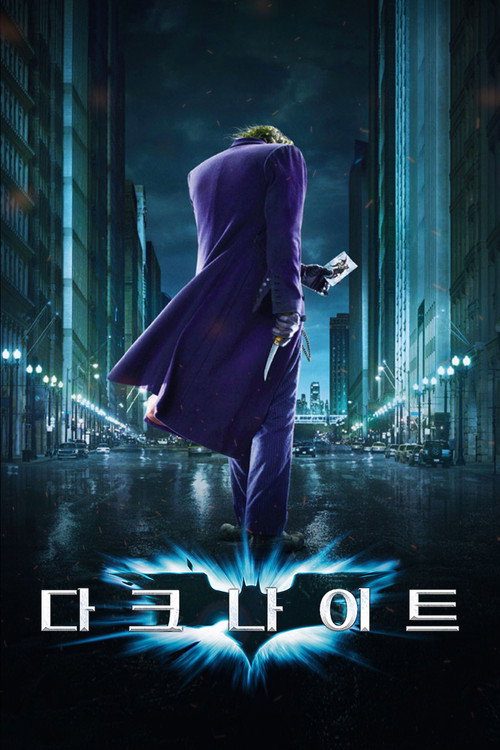
The Joker's method of psychological provocation goes beyond simple terror — it is a philosophical device that dismantles the fundamental norms of 'law' and 'morality' that Gotham society believes in. He forces his targets to choose between their most cherished relationships (friend vs. fiancee), mocks Batman's 'rules' as a 'ridiculous joke,' and poses to both audience and characters the question of how easily human nature crumbles in the face of crisis.
The Joker's Psychological Provocation: Dismantling Norms and Forcing Choices
The Joker's threat is not limited to physical violence. His most lethal weapon is 'psychological provocation' — boring into the psychological vulnerabilities of his targets. He relentlessly argues that all the moral norms (morals, code) that Gotham's citizens, police, and Batman himself have believed in are nothing more than a 'bad joke' that collapses in crisis. This functions not as the madness of a mere villain, but as a philosophical device that poses fundamental questions about the structure of society itself.
1. The Mechanism of Provocation: The Boundary Between Empathy and Deception
The Joker observes his surroundings with an air of apparent indifference rather than directly exploding in anger or cruelty, psychologically dominating those around him. His provocation begins with the deployment of highly deceptive lies. He takes pleasure in fabricating new lies or making events appear as if he experienced them himself, manipulating and controlling others' psychology.
- Fear grounded in self-centeredness: The Joker's actions are fundamentally grounded in 'self-centeredness.' To him, others are merely tools, and because he lacks faculties such as empathy or guilt, he is capable of criminal acts that harm others. For this reason, he sometimes uses the psychological device of appearing relatable, drawing audiences and people around him into emotional connection with him.
- The use of relativism: The Joker's telling of multiple versions of the story of his scars shows traces of postmodern relativism — connecting to his argument that people's good and evil are hypocritical and relative.
2. The Core Provocation: Forcing a Choice of Relationship
The most powerful tool the Joker uses is 'forcing a choice.' This creates situations where characters are forced to sacrifice one of the values they hold most dear.
- The dilemma of friend versus fiancee: The Joker presents Batman with a situation where he must choose between Harvey Dent (a friend) and Rachel Dawes (a fiancee). This situation acts as a dramatic device that manipulates circumstances so that Batman is ultimately forced to try to save them both, maximizing Batman's moral dilemma.
- Mocking Batman's rules: The Joker mocks Batman's 'good cop/bad cop' routine, pointing out that Batman wanted him and accusing him of not disappointing. He accuses Batman of the 'cold-hearted' act of letting people die, pointing out Batman's moral corruption.
3. The Joker's Madness and Philosophical Message
The Joker says he is simply ahead of his time, purely enjoying all his terrorism as if it were a child's game, claiming he moves according to pure, unmasked impulse. This shows that he is a philosophical entity posing the sharpest possible questions about every moral norm and rule society has constructed.
His message is clear: law and rules are not perfect, and ultimately human nature is driven by the most primal impulses. The claim that the only way to survive in this world is to live 'without rules' shakes the very premise of maintaining order in Gotham.
Why It Matters
The Joker's method of psychological provocation is the core driving force that elevates this film from a simple superhero action film to an 'ethical thriller.' The Joker uses physical threat to force the two heroes — Batman and Harvey Dent — into the most human dilemma: 'choice.' In this process, Batman discovers in Harvey Dent's efforts to save the city through law the true meaning of a hero, and the fate of Gotham is placed on an ethical confrontation between the most powerful villain and its champions. The Joker is not a villain — he is the 'catalyst' that tests the moral foundations of human society.
Other 설정 dives4
- arrow_outward
The Blurred Line Between Good and Evil
The Dark Knight is a philosophical thriller that goes beyond a simple battle between good and evil to explore the very ambiguity of the concepts of 'justice' and 'law.' Batman's extralegal activities, the 'purification' effect within the chaos the Joker creates, and the figure of Harvey Dent crumbling within the law constantly pose to audiences the question 'what is true justice?'
- arrow_outward
The Technical Evolution of the Batsuit
Batman's suit in The Dark Knight is a live-action suit of armor concentrating advanced technology, far beyond a simple costume. The suit employs eleven protective plates combined with various special materials — Kevlar, Nomex, Boron Carbide — achieving bulletproofing, fire resistance, and shock absorption. In particular, the technological breakthrough of allowing the actor to turn his neck maximizes Batman's range of action and the realism of his fight scenes, serving as a key device that heightens the film's immersion.
- arrow_outward
The Significance of the Mob Bank Heist
The mob bank heist is more than a simple criminal incident — it is the core device that exposes the structural flaws of the corrupt capitalism and criminal system sustaining Gotham. Through this incident, Batman attempts not merely to punish individual criminals but to dig into the fundamental system of law and order that has rotted in Gotham itself, posing the question 'what is the definition of justice?' — the film's philosophical theme.
Back to the title
The Dark Knight
13 deep dives in total