The Mafia's Alliance with Capitalism
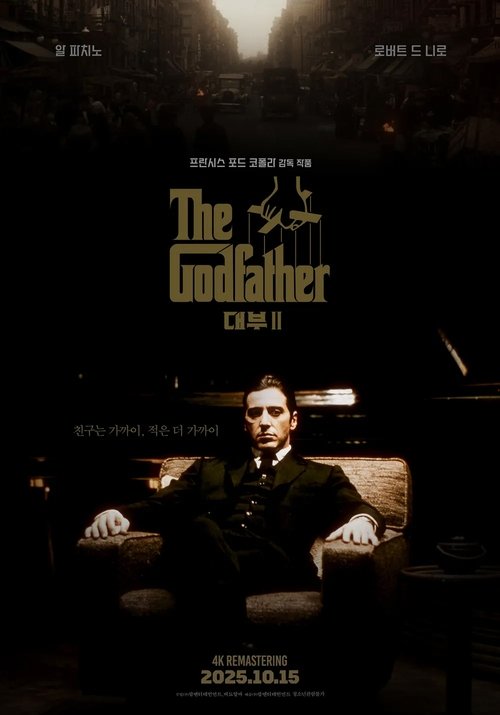
The Godfather Part II interprets the Mafia not as a mere criminal gang but as a vast capitalist enterprise that evolves with the times. It meticulously depicts the evolution from Vito Corleone's traditional regional dominance to Michael Corleone's modern methods—leveraging the legal financial system, information warfare, and legal frameworks—arguing that the essence of power has shifted from violence to the logic of capital accumulation.
The Evolution of the Mafia: From Violent Brotherhood to Capitalist System
The Godfather Part II refuses to portray the Mafia as an organization that relies simply on violence. Instead, it positions the Mafia as a massive economic actor that must continually evolve to survive. This work meticulously illuminates the dark underbelly of modern capitalist society, where criminal funds combine with legitimate financial systems (banks, casinos, real estate)—where crime itself becomes the logic of capital accumulation.
1. The Foundation of Traditional Power: 'The Family' and Regional Dominance
Vito Corleone's early activities are based on the Mafia's traditional cohesion and regional strength. What mattered to Vito, beyond simply making money, was forming a vast 'Family' that could help one another in times of need. The early Mafia world, like one ruled by regional bosses such as Don Ciccio, maintained order through physical force and fear. But this traditional approach reaches its limits. As Mafia survival confronts new threats that physical force alone cannot resolve, they are compelled to seek new ways of surviving.
2. Pursuing Capitalist Legitimacy: Michael's Strategy
In the process of inheriting his father's business, Michael attempts to maintain the family's influence not merely through violent purges but within a legal and institutional framework. His business expansion does not remain in New York's underworld. He expands the business in the form of a 'legitimate asset holder'—through charity events and acquisitions of European financial companies—demonstrating a union with capitalism. This means that the Mafia's goal has shifted from regional dominance to securing influence within a global financial system.
This evolution shows that the Mafia's mode of survival has shifted from physical force to intelligent capital (information). Veteran Mafia bosses enlisting former police for help against rivals and gathering intelligence—using information warfare and strategic maneuvers instead of violence—exemplifies this shift. The Mafia has now expanded into the realm of the capitalist game: understanding and exploiting 'rules' and 'systems.'
3. Betrayal and the Logic of the System: Internal Threats
The crises Michael faces arise not only from external enemies but from internal traitors. These betrayals and conflicts extend beyond personal grudges, entangled with capitalist interests. Michael's associates are bound by competing interests in territorial disputes and business opportunities, showing that the organization experiences crises within a complex web of human relationships and capital interests.
Ultimately, the Mafia's final confrontation is not a simple shootout. Veteran Mafia bosses facing a gang lay elaborate plans using traps and inducing police intervention rather than resorting to simple violent resolution. This symbolizes that the Mafia has been fully absorbed into the realm of the capitalist game: understanding and utilizing 'systems.'
Why It Matters
This interpretation elevates The Godfather Part II from a mere crime drama to a work of social criticism. The film uses the extreme irregular system of the Mafia to show how modern capitalism absorbs and legitimizes every domain—even the criminal one. Michael Corleone's journey is a metaphor for the process of becoming a 'successful capitalist.' Rather than a violent liquidator, he maintains power through legal and financial 'restructuring.' This demonstrates that the essence of power no longer lies in force, but in the ability to control the most efficient and legitimate flow of capital—the work's most central thematic concern.
Other Reading dives1
Back to the title
The Godfather Part II
16 deep dives in total