Laundering the Mob's Money
The process by which the Mafia's illegal funds, passing through sophisticated financial techniques such as straw men and shell corporations, are transformed into legitimate businesses—this goes beyond simply hiding crime to become the decisive juncture at which the organization penetrated the core of the capitalist system and evolved into a nationwide syndicate.
From Violence to Finance: The Legitimization of Mafia Funds and Their Systemic Evolution
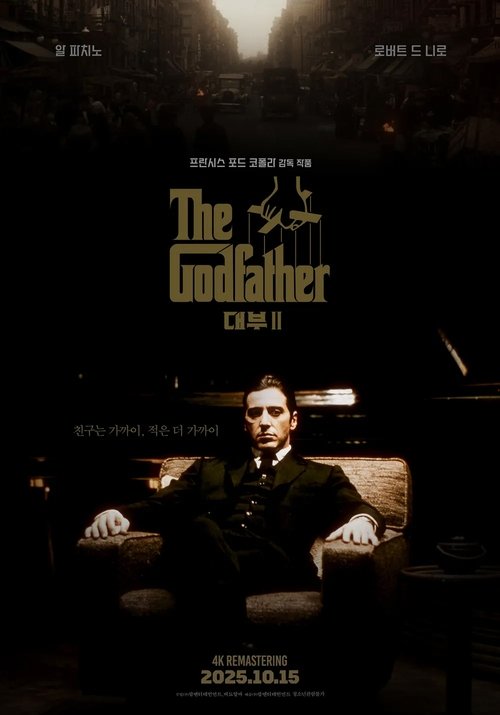
The Godfather Part II meticulously portrays how the Mafia grew from a simple gang of street vagrants into a vast syndicate that shakes the foundations of the national economy. The core of this process lies in 'money laundering'—blending illegally accumulated funds into the legitimate economic system—and 'business diversification.' If early Mafia relied on protection money extortion or bootlegging, the Mafia of the Michael Corleone era displays an entrepreneurial character, wearing ties and wielding complex contracts and financial networks.
1. Vito Corleone's Foundation Stone: 'Genco Pura' and the Monopoly Strategy
Young Vito Corleone, in New York, established an olive oil import company called 'Genco Pura,' beginning to assume the outward form of legitimate business. This was not simply a business of selling oil—using connections to Sicily, it secured a monopolistic position in the market and became a conduit for laundering criminal funds. This early model was inspired by the case of real-life New York Mafia boss Giuseppe Profaci, showing the typical Mafia business of seizing control of the local economy to solidify the organization's influence.
2. Michael Corleone's Leap: Las Vegas and the Casino Industry
Michael took his father's business a step further, turning his eyes toward Las Vegas where gambling is legalized. The casino was the optimal location for laundering illegal funds—a place where enormous amounts of cash flowed in real time. The scene in the film where Michael confronts Senator Pat Geary while trying to obtain a casino license graphically shows the fierce political lobbying and financial maneuvers the Mafia must undertake to enter 'within the bounds of the law.' Senator Geary's line denouncing them as "men who pose as legitimate businessmen" symbolizes the hypocritical tension between the Mafia and the establishment in the process of legitimization.
3. Expansion into a Global Syndicate and Financial Maneuvers
They installed straw men to hide the actual owners and laundered the origins of funds through shell corporations. Offshore financial transactions using secret accounts in Switzerland or the Bahamas in particular were the decisive means of evading government surveillance. The partnership with Hyman Roth (a character modeled on real-life figure Meyer Lansky) in the film shows the pinnacle of this evolution. The scene declaring "We're bigger than U.S. Steel" while investing in Cuba proclaims that Mafia capital has already crossed national borders and become part of the global capitalist system.
Ultimately, the history of the Mafia as portrayed by The Godfather Part II is simultaneously a 'history of violence' and a 'history of capital laundering.' The apex of power no longer comes from the muzzle of a gun—it comes from the flow of capital hidden behind complex accounting books and legitimate businesses as a shield.
Why It Matters
This entry allows the work to be understood not as a simple crime action film but as a sophisticated socioeconomic epic. By analyzing how the Mafia exploited gaps in capitalism to penetrate inside the system, it suggests that the solitude and tragedy Michael Corleone experiences are not personal character flaws but the price that had to be paid to maintain vast capital power.
Other 설정 dives7
- arrow_outward
The Corleone Syndicate
The process by which the Corleone family, stepping beyond a simple violent organization, leveraged the legitimate front of 'Genco Pura' to seize political and financial networks—evolving into a nationwide syndicate worth a billion dollars—is the core narrative device showing how the Mafia survived by absorbing the corporate structure of modern capitalism.
- arrow_outward
Restructuring the Business Around Las Vegas
The process by which Michael Corleone moves the family's base from New York to Nevada and restructures the business around the legitimate casino industry is the Mafia's evolutionary turning point—penetrating the core of the modern capitalist system to pursue survival—and simultaneously foreshadows the family's tragic downfall.
- arrow_outward
Hyman Roth: The Financial Architect
Hyman Roth is the core 'financial architect' who evolved the organization into a vast capitalist enterprise and expanded the domain of power from physical violence to financial structures—by designing a systematic financial plan to channel Mafia funds into legitimate businesses.
Back to the title
The Godfather Part II
16 deep dives in total