America's Double Face
The Godfather cross-cuts the bright outdoor wedding and the dark scenes of private revenge, simultaneously showing the violent, dark survival history hidden behind the rule of law and peaceful daily life that America professes — while questioning how 'justice' operates in the private domain. It is a genre masterwork.
The Surface of Rule of Law and the Depths of Private Revenge: The Dual Aesthetic of The Godfather
One of the most powerful and symbolic directorial techniques in The Godfather is 'contrast.' The film does more than simply show two scenes side by side; it visually and narratively incarnates the dual nature of the vast social system called America. At the heart of this is the cross-editing of 'Connie's happy outdoor wedding scene' and 'the private-revenge scene in Vito Corleone's darkened study.'
The Plant: The Bright Outdoor Scene and the Symbol of the Rule of Law
Connie's wedding scene, presented in the opening sequence, symbolises the values American society most ideally pursues. The lavish dress, the sound of celebratory laughter, the bright outdoor sunlight — these signify 'legitimacy' and 'peaceful everyday life.' This scene shows that the Corleone family, though a criminal organisation, has taken root in the deepest heart of American society and maintains a 'normal' life. They expand their business within the bounds of the law and, through social ceremony (a wedding), try to legitimise their own existence.
But this brightness is never pure. This wedding is a stage for the Corleone family's display of influence. Vito receives petitioners throughout and implicitly flaunts how far his money and power reach. This is a method of maintaining order through 'social capital' rather than legal authority.
The Payoff: The Dark Study and the Logic of Private Revenge
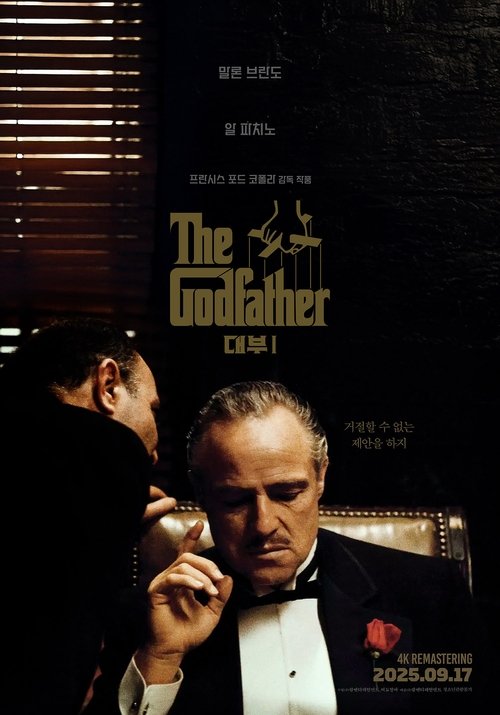
Vito's study, by contrast, is purely 'the shadow world.' Every conversation and transaction that unfolds here takes place where light cannot reach, and its sole purpose is 'survival' and 'maintenance of the family.' Private revenge is the core logic of this space. 'Justice' is administered not through legal procedure but exclusively according to the unofficial rules of power, information, and family honour.
The cross-cutting of these two scenes delivers a shocking metaphor to the audience. It shows that America itself wears the bright outer clothing of law and order, but the actual operating principle of its interior is in fact driven by the logic of private revenge and force. The Corleone family is the perfect incarnation of this duality. They take the most American form — 'family' — while internally harbouring the most un-American logic — 'violence.'
The Question the Contrast Poses: Who Is the Agent of Justice?
This contrast carries more than the weight of a device. It is a fundamental question about who should be the agent of 'justice.' The justice handed down by a judge in a courtroom, or the justice personally administered by the family boss? The film shows how powerful and seductive the logic of the latter can be. For the Corleone family, justice is directly bound to 'family duty' — and that duty takes precedence over the law.
In the end, The Godfather — set against the background of the vast, complex system called America — is a philosophical epic that breaks genre boundaries by showing how fragile the concept of 'legitimacy' is, and how easily it can be consumed by the logic of private violence.
Why It Matters
This contrast structure is the core device that elevates *The Godfather* from a simple Mafia film to a critical fable about American society. The coexistence of 'legitimacy' and 'violence' that the film depicts illuminates simultaneously the ideal values America professes and the dark shadow existing behind them. Through this contrast, the audience comes to realise how fragile the concept of 'rule of law' is — and that it can be dismantled at any moment by the logic of private force — and this expands the work's theme from crime fiction to an exploration of society's essential contradictions.
Other 설정 dives8
- arrow_outward
Michael's Resolve and Awakening
This entry focuses on the decisive psychological turning point at which Michael Corleone, after witnessing the family's vulnerability at the hospital following his father's attack, abandons his ordinary civilian life and awakens as a cold heir by personally shooting Sollozzo and McCluskey at Louis Restaurant.
- arrow_outward
Michael's Transformation and Awakening
Michael Corleone's transformation goes beyond a simple revenge story to depict a man's tragic awakening between 'family' as obligation and the cold reality of 'power.' His process of initially trying to distance himself from the world of violence, only to ultimately become the most efficient and ruthless 'Godfather' in his father's footsteps, symbolises the dual nature of American society and the fateful weight of the family.
- arrow_outward
Johnny Fontane and Hollywood
Johnny Fontane's appearance symbolises the Corleone family's reach extending from New York's underworld to the glittering heights of Hollywood — a narrative device that shows how the Mafia controls the domains of art and capital through its own brutal rules.
Back to the title
The Godfather
17 deep dives in total