The War of the Five Families
The war of the Five Families running through *The Godfather* symbolises, beyond a simple territorial dispute, the collision between a traditionalist old guard and a capital-sensitive new generation. This conflict becomes the decisive catalyst for Michael Corleone's establishment of the Corleone family's absolute power through a sweeping purge of all enemies.
The Clash of Tradition and Capital: The Narrative Significance of the Five Families War
The conflict structure of The Godfather is not simply a fight over which organisation is stronger. It is a grand metaphor projecting onto the Mafia backdrop the economic and moral transformation that American society underwent in the mid-twentieth century. The Corleone family's refusal to enter the drug trade is interpreted as an old-guard resistance determined to defend the traditional values of 'honour' and 'discipline.'
The Drug Refusal: Defending Old-World Values
The scene in which Vito Corleone refuses Sollozzo's drug-trade proposal is the narrative turning point of the film. At the time, narcotics in the Mafia world represented 'emerging capital' guaranteeing enormous profits. But Vito instinctively senses the 'contamination' and 'risk' this business would bring. For him, the family's honour and its way of surviving mattered more than the size of the profit. This refusal shows that the Corleone family is not merely a money-chasing criminal gang but a community with its own strict 'discipline' and 'tradition.'
As a result, the Tattaglia family and their allies define the Corleone family as 'an outdated relic' and move to eliminate them. Their assault is equivalent to an attempt to erect a 'new capitalist order' upon the Corleone family's ruins.
Michael's Great Purge: The Establishment of a New Order
The Corleone family, thrown into confusion by the absence of Vito and the death of Sonny, faces crisis. The key to overcoming this crisis lies in Michael Corleone's transformation. Michael, who had initially tried to keep his distance from the family business, is ultimately crushed under the weight of his father's 'obligation' and takes revenge in the most ruthless manner.
Michael's revenge is not a simple revenge story. It is the process of building a 'perfect system' in the name of 'family obligation.' He shows, in the process of eliminating his enemies, not emotional rage but meticulous, planned 'business efficiency.' The manner in which he eliminates the rival organisation's leaders is as systematic and logical as a corporate merger and acquisition. Through this process the Corleone family evolves from a simple criminal organisation into a perfectly controlled, efficient 'mega-corporation.'
The Boundary Between Law and Private Justice
The ultimate victory in the Five Families war means the Corleone family has established absolute power in the 'private domain' beyond the 'legitimate domain.' They do not wait for police or legal judgment but create and maintain order by their own power. In this process 'justice' is replaced by private revenge and the logic of force in the public domain. This is the biggest question The Godfather poses: can the order created by private revenge be genuine justice?
Subtext and Detail: Things You See the Second Time
There are details worth noting to understand this conflict structure.
- The redefinition of 'family': For the Corleone family, 'family' means an 'obligation' and 'belonging' that transcend blood. This obligation is both their way of surviving and the boundary that separates them from the outside world. Michael's fulfilment of this obligation symbolises the process of abandoning personal desire and completely subordinating himself to the 'family system.'
- The power of 'silence': The Corleone family always uses 'silence' as a weapon. They control information, instil fear in enemies, and maintain the mystery of their very existence. This is an intelligent power structure that weaponises 'the absence of information' — the most powerless weapon in a law-governed society.
- The symbolism of 'place': The film's locations are symbolic. The contrast between the lavish wedding venue (outward splendour) and the dark backstreet (the real operation of power) shows that the Corleone family possesses both a public image and a private violence simultaneously. In particular, the baptism scene is the location where these two domains are most perfectly fused — the most powerful expression of duality.
Why It Matters
The war of the Five Families is more than a simple plot device in *The Godfather*; it is a grand metaphor that interprets the capitalist transformation and moral dilemmas of mid-twentieth-century American society through the extreme filter of the Mafia. The Corleone family's drug refusal symbolises the will to defend 'traditional values;' Michael's Great Purge symbolises the process of building an 'efficient capitalist system.' Thanks to this conflict structure, the film transcends a simple crime drama and ascends to a masterwork that breaks genre boundaries by posing philosophical questions about the nature of 'legitimacy' and 'justice.'
Other 설정 dives8
- arrow_outward
Michael's Resolve and Awakening
This entry focuses on the decisive psychological turning point at which Michael Corleone, after witnessing the family's vulnerability at the hospital following his father's attack, abandons his ordinary civilian life and awakens as a cold heir by personally shooting Sollozzo and McCluskey at Louis Restaurant.
- arrow_outward
Michael's Transformation and Awakening
Michael Corleone's transformation goes beyond a simple revenge story to depict a man's tragic awakening between 'family' as obligation and the cold reality of 'power.' His process of initially trying to distance himself from the world of violence, only to ultimately become the most efficient and ruthless 'Godfather' in his father's footsteps, symbolises the dual nature of American society and the fateful weight of the family.
- arrow_outward
Johnny Fontane and Hollywood
Johnny Fontane's appearance symbolises the Corleone family's reach extending from New York's underworld to the glittering heights of Hollywood — a narrative device that shows how the Mafia controls the domains of art and capital through its own brutal rules.
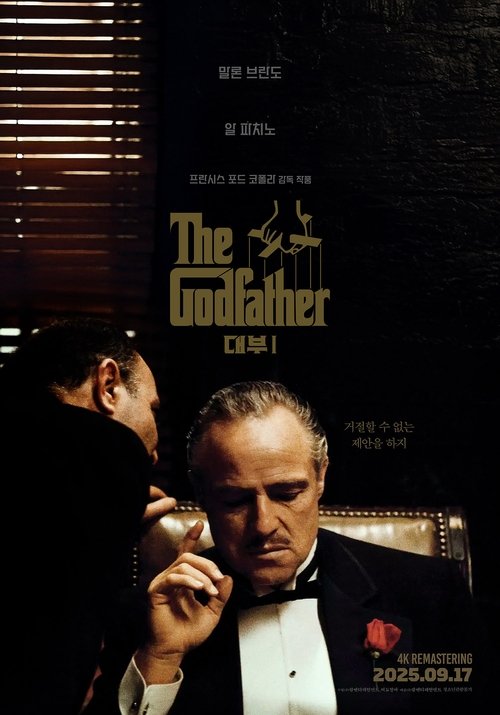
Back to the title
The Godfather
17 deep dives in total