The Weight of Family and Obligation
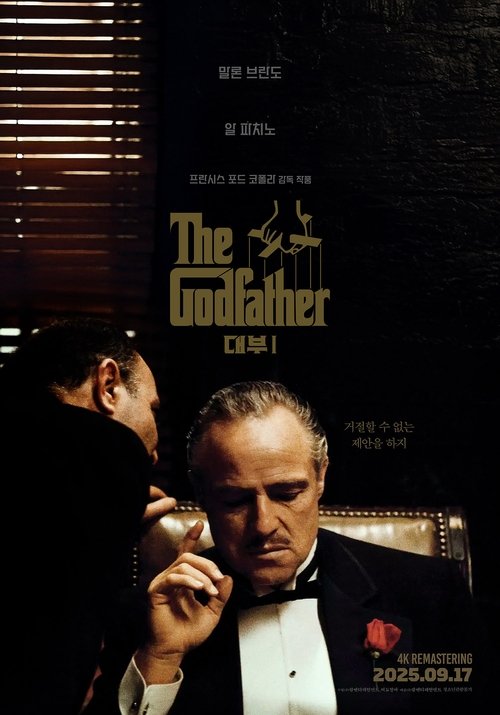
In *The Godfather*, 'family' operates beyond mere blood ties as a vast system in which survival and obligation are entangled — and as the heavy shackle that leads Michael into a world of violence. Through the tragic collision between individual desire and family destiny, the film functions as a key device that sharply allegorises the dual nature of American society.
The Definition of 'Family': A Contract for Survival Beyond Blood
In The Godfather, 'family' far transcends the warm, protective sense of blood relationship we usually picture. It is a contract for survival, a totality of obligations that members must assume for each other in order to defend against external threats. The 'Family' that Vito Corleone exalts is not merely a household but a vast business, a system unto itself for maintaining absolute power.
The core of this system is the interaction between 'protection' and 'obligation.' Vito provides stable lives to members through the network he has built, but in return those members must submit to his rules and will. This sense of duty suppresses each member's individual desires and subordinates every individual life to the overarching goal of the family's survival.
The Weight of Obligation: Michael Corleone's Tragic Journey
The character who most dramatically assumes the weight of this obligation is Michael Corleone. In the film's opening, Michael is drawn as a man who keeps his distance from his father's business and aspires toward a legitimate, bright world. He speaks candidly about the dark and frightening aspects of the family business, yet draws a line — 'that's not me' (F4). This shows that he placed individual freedom and legitimacy above all.
But as he witnesses his father's shooting and the family's crisis, Michael is gradually absorbed by the vast force of this 'family' system. He no longer fights external enemies but plunges himself into the dark world under the weight of internal threat and the obligation to ensure the family's survival (F16). His transformation symbolises the tragic collision between personal desire (love, an ordinary life) and the family's fate (power, survival).
The Allegory of 'Family' and the Dual Nature of American Society
The Godfather uses the Mafia genre to allegorise the dual nature of American society itself. This duality appears as the contrast between 'the legal world' and 'the illegal world.'
- The bright face (legitimacy): The wedding scene, charity events, Michael in his military uniform — these symbolise the bright, orderly aspect that American society professes (F3, F20). This is the 'normal' world where law and rules apply.
- The dark face (illegality): The Mafia's private revenge, backroom deals, and violent purges show the violent reality perpetrated in the name of 'justice' in the domain law and police cannot reach (F2). This is America's shadow.
The film constantly counterpoints these two worlds, asking where true 'justice' comes from — depicting America's duplicity in resolving problems law and police cannot solve through private revenge (F2). Michael's eventual succession as the new Godfather means he abandons the legal world and redefines himself as the supreme administrator of the dark system that is 'family obligation.'
The Climax: The Juxtaposition of the Baptism and the Purge
The most symbolic scene is the day Michael stands as godfather at his nephew's baptism (F19). This is the moment 'family' obligation reaches its apex. On one side, the most sacred and radiant ceremony proceeds; on the other, the purge, ordered by a forewarning from his father, unfolds. This stark juxtaposition maximises the coldness of the violence and obligation committed under the name of 'family.' The simultaneous occurrence of a sacred rite and a bloodbath establishes the Corleone family's power as absolute and inviolable.
Comparative Analysis: Greek Tragedy's Fatalism and Its Modern Variation
The family obligation depicted in The Godfather runs parallel to the 'inheritance of blood' suffered by royal houses in the tragedies of Sophocles or the plays of Shakespeare. Michael resembles Oedipus or Hamlet in bearing the family's karma regardless of his own will — a tragic hero archetype. This contrasts with The Sopranos, which treats family relationships as more everyday and neurotic conflicts. In The Godfather, family is a mythic order that overwhelms the individual, and Michael's downfall is the process by which he loses his humanity by submitting to that order.
Why It Matters
This entry is the core pillar that elevates *The Godfather* from a simple crime drama to a work of 'social criticism.' Through the concept of 'family,' the author shows how fragile the legal and moral order of American society truly is, and how the system of private revenge and obligation fills those cracks. Michael's transformation is the most powerful metaphor for how the realisation of individual selfhood is sacrificed before the obligation of a vast collective.
Other Reading dives1
Back to the title
The Godfather
17 deep dives in total