The Film's Thematic Interpretation
The Godfather, far beyond a simple Mafia film, is a philosophical epic exploring the dual nature of American society. The film counterpoints scenes where private revenge masquerades as 'justice' in the space where law and police cannot reach against scenes of bright legitimacy — posing fundamental questions about 'justice' itself and the boundary between America's public face and its dark interior.
The Contrast Between the Legal System and Private Justice
The film's most central thematic device is 'contrast.' The Godfather shows how America resolves — through the private violence of 'justice' — the problems that its legitimate system of law and police cannot handle. This contrast poses the fundamental question 'What is true justice?' to the audience and provides a philosophical depth that transcends simple crime drama.
This contrast is also powerfully realised visually. The film cross-cuts the sunlit outdoor wedding venue (the bright face) and the illegal petitions and deals occurring in dark rooms (the dark face), using them metaphorically to show America's two faces — its outer appearance and its interior. This appears as the contrast between sacred and profane, sunshine and shadow, compressing the duplicity by which the American Dream is gradually revealed as an illusion.
Michael Corleone's Transformation: From Legitimacy to Violence
The protagonist Michael Corleone's character arc is the device that most clearly demonstrates this theme.
- Symbol of the legal world: Michael initially appears in uniform, outdoors in the sun, declaring 'not me.' This symbolises that he was a being who lived in the legitimate, bright world.
- Entry into darkness: But as he witnesses his father's death and inter-family war, he chooses to plunge himself into the dark world. His change is depicted through the process of growing from a citizen of the legal world into the Godfather of a world where violence and illegality reign.
- The violence of the system: Even the scene where Michael's father Vito says "Senators and presidents don't have men killed? Of course they do" exposes the violent history latent in even the supposedly highest reaches of political power — a metaphorical exposure of the violent history underlying the American founding.
The Dual Meaning of 'Godfather' and the Duality of America
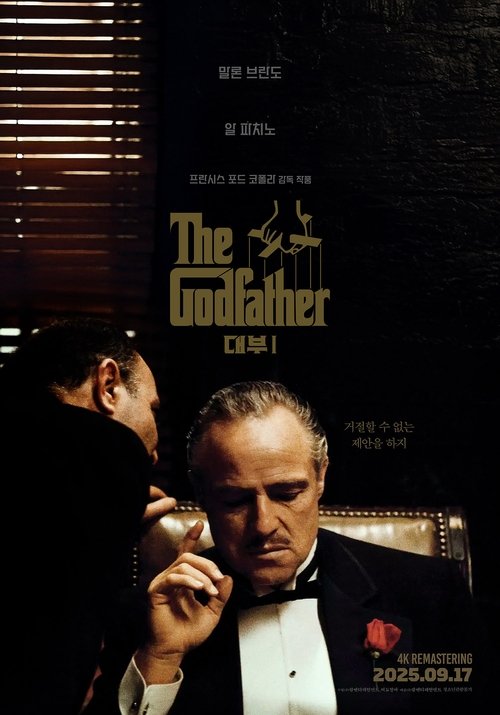
The title 'Godfather' itself is central to thematic interpretation. The word carries the simultaneous dual meaning of 'godfather' in the religious sense — a child's spiritual guardian at baptism — and 'Godfather' in the sense of a Mafia boss. The film rigorously exploits both meanings, hinting that the violent force the Mafia family requires can at times be packaged in the name of religious salvation or social order.
In the end, The Godfather is a masterwork that, through the extreme subject matter of the Mafia, anatomises the vast themes of human desire that the legal system cannot resolve, the nature of power, and the ruthless logic of capitalist society.
Why It Matters
The reason *The Godfather* is assessed as a masterwork beyond a simple Mafia genre film is the philosophical depth underlying it. The film borrows the extreme subject matter of the Mafia — 'private violence' — to sharply dissect the contradiction and duality that American society experiences between its legal system (public justice) and private revenge (private justice). In particular, the process by which Michael Corleone transforms from a legitimate citizen into a violent boss is a powerful metaphor for how individual desire is transformed into a vast business and power structure. Thanks to this thematic interpretation, *The Godfather* transcends simple entertainment and performs the role of a critical mirror of capitalist society and American identity.
Other 비화 dives8
- arrow_outward
Michael's Resolve and Awakening
This entry focuses on the decisive psychological turning point at which Michael Corleone, after witnessing the family's vulnerability at the hospital following his father's attack, abandons his ordinary civilian life and awakens as a cold heir by personally shooting Sollozzo and McCluskey at Louis Restaurant.
- arrow_outward
Michael's Transformation and Awakening
Michael Corleone's transformation goes beyond a simple revenge story to depict a man's tragic awakening between 'family' as obligation and the cold reality of 'power.' His process of initially trying to distance himself from the world of violence, only to ultimately become the most efficient and ruthless 'Godfather' in his father's footsteps, symbolises the dual nature of American society and the fateful weight of the family.
- arrow_outward
Johnny Fontane and Hollywood
Johnny Fontane's appearance symbolises the Corleone family's reach extending from New York's underworld to the glittering heights of Hollywood — a narrative device that shows how the Mafia controls the domains of art and capital through its own brutal rules.
Back to the title
The Godfather
17 deep dives in total