The Dissolution of the Boundary Between Legality and Illegality
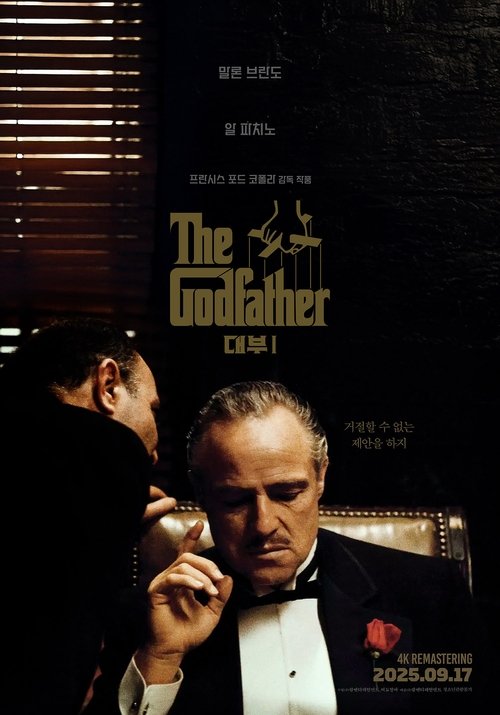
The Godfather is an epic that deconstructs the very concept of 'legitimacy' in American society through the activities of the Mafia. The film shows how the space that law and police cannot fill is privately occupied by money and power, and sharply critiques America's dual nature through Michael Corleone's construction of a 'new form of legitimacy' by fusing violence with capital.
Private Justice in the Void of Law: The Deconstruction of Legitimacy
The Godfather is less a crime drama than a philosophical text exploring how fragile and fluid the concept of 'legality' is in modern capitalist society. The film shows how, in the private domain where American law and police cannot operate — the crossroads of money and power — 'justice' morphs into private revenge and vast enterprise.
1. The Failure of Legal Order and the Necessity of Private Intervention
The early scene in which Vito Corleone refuses Sollozzo's drug-trade proposal is the central narrative turning point of this theme. Vito's refusal was not simply about money or business. It was a declaration that the Corleone family would defend its own rules and territory — and that refusal immediately generated a crisis to be resolved not in the realm of 'official law' but in the realm of 'the family.'
The subsequent near-fatal shooting of Vito is a metaphor for the fact that America's official law-enforcement system — police, judiciary — is either powerless against an organised threat like the Mafia, or so corrupt as to have lost its function. When the gap law cannot fill appeared, the family had no choice but to resort to the most primal and violent means available: private revenge.
2. Michael Corleone's Transformation: Violence Disguised as Legitimacy
Michael Corleone's character arc dramatises this theme most powerfully. A war hero who had tried to distance himself from the family business, he takes up a gun to avenge his father and purges the enemies. This process is plainly illegal and violent. Yet that violence is legitimised by the most powerful and ostensibly lawful obligation: the survival of the family.
The point Michael ultimately reaches is not violence itself but 'systemic power' acquired through violence. He goes beyond simply making money to secure the influence of the Vatican — society's most sacred and legitimate institution. The Vatican represents the most powerful moral and spiritual authority in the world; Michael's entry into this sphere means he has moved beyond the Mafia domain and penetrated the highest strata of 'civilised power.'
3. The Fusion of Capital and Power: Building a New Legitimacy
Michael's trajectory in the film's second half fundamentally destabilises the definition of 'legitimacy.' He goes beyond money-laundering to lead what, on the surface, are thoroughly legitimate, sophisticated capital flows — real-estate ventures (his relationship with B.J. Harrison) or financial companies (Immobiliare stock).
Most importantly: Michael uses capital won through violence for the most legitimate and exalted purposes — charity, Vatican reform. This represents a 'new form of legitimacy' forged from the fusion of violence and money. In other words, the film shows that the new order made by money and power — not the boundary set by law — is society's actual operating principle.
Why It Matters
This reading lifts *The Godfather* beyond a simple Mafia genre piece and provides a critical perspective on the structural contradictions of twentieth-century American capitalism. The film dismantles the abstract concept of 'law' and argues that money and power are ultimately the most powerful law and order. Michael Corleone's journey functions not merely as a tale of personal revenge but as a vast work of social criticism that traces the flow of capital and the mechanics of power — and it is the core theme that maximises the film's artistic depth.
Other Reading dives1
Back to the title
The Godfather
17 deep dives in total