The Mafia's Business Structure
The Mafia's business structure, far beyond simple violence, takes the form of a complex 'corporation' equipped with a sophisticated financial system for disguising illicit funds as legitimate capital. This construct is a core narrative device showing how the Corleone family exploited cracks in the social system to grow into a vast capitalist enterprise.
Black Money into Gold: The Mafia's Financial System
To understand the Mafia organisation as merely a violent criminal gang is to miss its essence. What the Corleone family demonstrates is a sophisticated financial blueprint: how illegally accumulated 'black money' is disguised as legitimate capital and used to seize control of the broader social system. This process proves that the Mafia was not a simple violent gang but a complex 'corporation' equipped with advanced financial knowledge and business acumen.
The Original Foundations of Power: Land, Justice, and Arbitration
The origins of the Mafia are not simply a history of crime. Their initial power was fused with essential community functions. Those who formed the backbone of the Sicilian Mafia were originally gabelloti — overseers who managed the large estates of absentee landlords. They established indigenous power through exploitation of sharecroppers and, beyond mere land management, extended their influence to encompass local judicial functions and arbitration. This means the Mafia performed the role of filling 'legal voids' from the very beginning.
As time passed and the First World War erupted in 1915, people turned to the Mafia rather than a helpless government. Mafia bosses served as mediators between thieves and their victims, like informal courts, consolidating their influence. In this way, the early Mafia business structure began from exploiting the social defect of the absence of an official system.
Explosive Capital Accumulation During Prohibition
The Mafia's capital-accumulation history exploded in growth during Prohibition (1920–1933). As alcohol distribution was made illegal, criminal organisations reaped enormous profits. This period saw the emergence of heavyweights like Al Capone in Chicago and Lucky Luciano in New York, greatly expanding Mafia power.
This black money did not remain confined to liquor sales. After the war, the Mafia was able to construct a vast underground network encompassing market protection rackets, construction, finance, and smuggling. Through the powerful internal discipline of Omertà — the code of silence forbidding anyone involved in illegal activities from talking to authorities — arrests often resulted in release due to insufficient evidence.
Entrepreneurial Acumen to Disguise Legitimacy
The most important point the Corleone family demonstrates is how this black money is disguised as 'clean capital.' The Mafia did not simply make money through violence; they circulated capital by allying with legitimate power.
- Political influence: The Corleone family took deep root in the social system through bribing politicians and seizing union control. This shows the process by which money becomes power and power generates legitimacy.
- Diversified business portfolio: Operating gambling dens, monopolising construction, and infiltrating finance, the Mafia moved like a vast 'corporation' across multiple industries rather than depending on a single sector.
This financial acumen elevates the Mafia beyond a simple criminal organisation to the darkest and most efficient shadow economy of American capitalism. To them, violence was merely a means; their ultimate goal was to control 'the flow of legitimate capital.'
Why It Matters
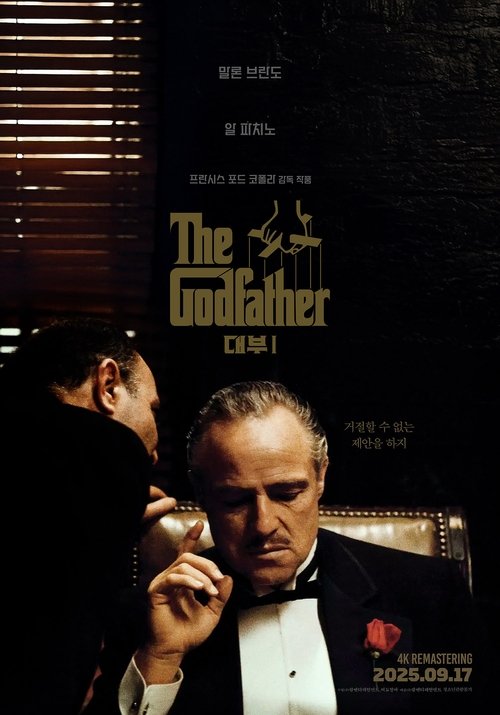
This 'business structure' construct is a core pillar determining the narrative depth of *The Godfather*. Had the Corleone family been depicted solely as a violent clan, their greatness would have amounted to nothing more than villainy. But by showing how they earn money and channel it into legitimate systems — politics, finance, construction — the film dissolves the boundary between 'crime' and 'capitalism.' Michael Corleone's eventual succession as the Godfather signifies a transformation from violent boss to **ruthless, calculating 'corporate CEO.'** Thanks to this construct, the film transcends a simple Mafia action piece and ascends to a grand social critique of capital flows and America's dual nature.
Other 설정 dives8
- arrow_outward
Michael's Resolve and Awakening
This entry focuses on the decisive psychological turning point at which Michael Corleone, after witnessing the family's vulnerability at the hospital following his father's attack, abandons his ordinary civilian life and awakens as a cold heir by personally shooting Sollozzo and McCluskey at Louis Restaurant.
- arrow_outward
Michael's Transformation and Awakening
Michael Corleone's transformation goes beyond a simple revenge story to depict a man's tragic awakening between 'family' as obligation and the cold reality of 'power.' His process of initially trying to distance himself from the world of violence, only to ultimately become the most efficient and ruthless 'Godfather' in his father's footsteps, symbolises the dual nature of American society and the fateful weight of the family.
- arrow_outward
Johnny Fontane and Hollywood
Johnny Fontane's appearance symbolises the Corleone family's reach extending from New York's underworld to the glittering heights of Hollywood — a narrative device that shows how the Mafia controls the domains of art and capital through its own brutal rules.
Back to the title
The Godfather
17 deep dives in total