The Weight of the Miracle and the Burden of Sin
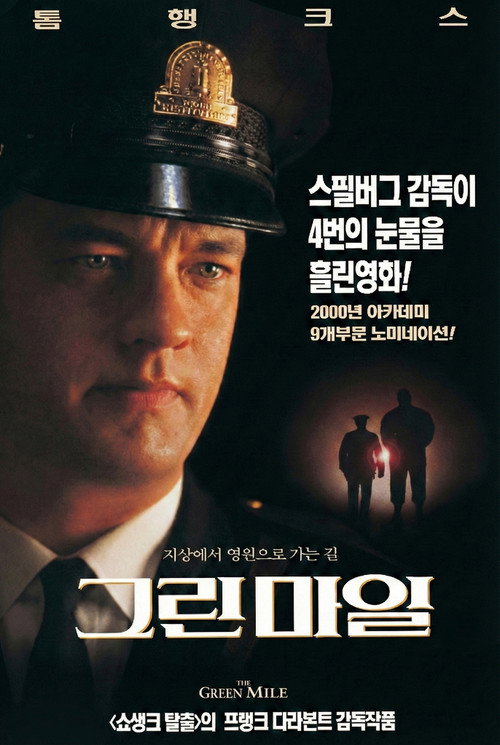
The core themes of The Green Mile — the weight of miracles and the burden of sin — explore how humanity's purest goodwill is rendered helpless before vast social systems and unjust legal judgment. The guilt of protagonist Paul Edgecomb stems not from the act of killing John Coffey itself, but from the anguish of having had to treat that miracle as merely 'part of the system,' trapped by professional helplessness and complicity. This work poses deep ethical questions about what justice means and how fragile human dignity is in the face of institutional prejudice.
The Weight of Miracles: The Clash Between the System and Goodwill
John Coffey's existence transcends a simple superpower—he embodies the very 'wonder' of the purest and warmest quality humanity possesses. Yet when this wonder is cast into the cold, structured system of the execution chamber, the work dramatically reveals the collision between 'goodness' and 'professional duty.' Paul Edgecomb's guilt is not simply regret over having sent John Coffey to the execution chamber; it is a deep sense of culpability for the helplessness and complicity of having had to treat that miracle as merely 'part of the system.'
1. The Conflict Between Professional Duty and Human Compassion
Paul Edgecomb performs his professional role as senior guard of E Block. That role imposes on him the system's order and rules. Through John Coffey's miracle, Paul directly experiences the healing power of human goodness—from curing his urinary infection to healing Warden Hal Moores's wife Melinda's brain tumor, John's ability brings miraculous change to Paul's life and those around him.
Yet this miracle is ultimately crushed by the system's final stage: the execution. Paul works to prove John's innocence, but the deep-rooted racial prejudice and systemic bias of 1930s Louisiana stand in their way. Paul is left to endure agonizing conflict between the human compassion of wanting to save John and the professional duty of maintaining the system as a guard.
This conflict reaches its zenith in the iconic scene where Paul confesses to John. Paul asks him: "When I die and I stand before God and He asks me why I killed one of His true miracles, what am I gonna say? That it was my job?" This symbolizes the fundamental gap between individual moral responsibility and the role imposed by social structure.
2. The Metaphor of Systemic Violence: Racial Discrimination and the Absence of Innocence
John Coffey's tragedy originates not in individual wrongdoing but in a flaw of the system. He had tried to save the girls and suffered for it, while the true culprit was someone else entirely. Yet because of his race, and because of the deep racial prejudice embedded in 1930s American society, his actions are branded 'murder.'
- The Absence of Evidence: Paul and his colleagues are convinced of John's innocence, but the system demands 'clear evidence.' This gap shows that justice operates not through emotion or truth but through institutional procedure and prejudice.
- Wild Bill's Fate: The process by which John's ability is ultimately used to bring down Wild Bill shows the tragic cycle of a sinner condemning another sinner. This implies that justice is not a perfect loop—it can instead become an inheritance of sin.
3. The Remnant of the Miracle: Life Persisting
The work shows that even after John Coffey's physical death, the 'miracle' does not entirely vanish. The portion of his power shared with the mouse Mr. Jingles allows the creature to survive more than 64 years. Paul himself, thanks to a portion of the ability he received from John, lives to 108.
This 'remnant of the miracle' exists on the continuum of physical life. It means that John's soul continues to live and breathe through the mediums of Paul and Mr. Jingles, transcending the physical space of the execution chamber. The fear and anguish Paul feels as he survives feel to him like a kind of 'divine punishment' for having killed the miracle, arguing paradoxically that human life carries the weight of miracles.
Why It Matters
This theme elevates The Green Mile from a simple prison drama to a powerful moral allegory. The film's identity lies in critiquing 'the flaws of human society' through the transcendent element of 'miracles.' Paul Edgecomb's internal conflict forces audiences to ask: 'What is true justice?' No matter how perfect the structures of law and order appear, human prejudice, ignorance, and systemic violence can at any moment obscure the light of miracles. Ultimately this work paradoxically emphasizes the value of human dignity by showing the process in which the warmest human goodwill is sacrificed by the coldest institutional violence.
Other Reading dives1
Back to the title
The Green Mile
15 deep dives in total