The Relationship Between Art and Survival: The Sublimation of Suffering
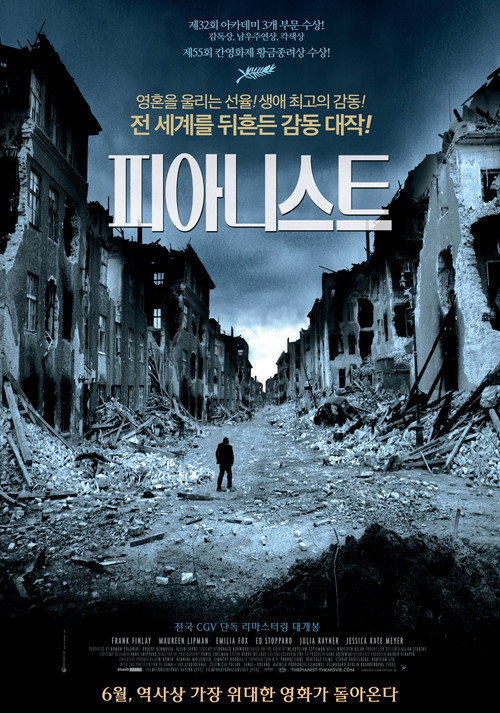
In The Pianist, piano performance is not merely a professional talent but the spiritual lifeline that preserves Szpilman's humanity — an artistic act that sublimates suffering. When Nazism seeks to strip away everything human, music becomes Szpilman's only channel for proving he is still a 'living human being,' acting as the driving force of survival and its most powerful message.
Art, the Last Line of Defense for Survival: The Sublimation of Suffering
In The Pianist, piano performance exceeds a mere background score. One of the core themes of this film is 'the relationship between art and survival,' and music is the most indispensable mental resource for Szpilman's survival. When Nazism seeks to strip away everything human, Szpilman must endlessly prove through the music flowing from his fingertips that he is still an 'artist' and a 'living human being.'
1. Identity as a Pianist: The 'I' Before the War
In the early part of the film, Szpilman appears as a professional pianist active at the Polish National Radio broadcasting station. Music symbolizes the class and intelligence to which he belongs — becoming the baseline against which all of his subsequent deprivations will be measured. Music was not merely a hobby for Szpilman but the most important element through which he defined himself.
In the process of being trapped in the ghetto, this 'professional self' gradually collides with his 'self as a survivor.' He strives to maintain his life as a pianist, but starvation and fear place him in a situation where he cannot make music.
2. Music in Isolated Space: A Spiritual Lifeline
Music becomes Szpilman's only passage connecting him to the outside world. Music is for him like a solitary ritual. When overwhelmed by the primal instinct of survival, the act of playing music confirms to himself that he still possesses human sensibility. This is a desperate attempt not merely to endure suffering but to sublimate suffering into an artistic form — a kind of 'psychological defense mechanism' for not losing his humanity.
3. The Encounter with Hosenfeld: Performance as Artistic Proof
One of the climaxes of the film is the encounter with German officer Wilhelm Hosenfeld. The demand for a piano performance is not a simple 'show of talent.' It is the 'final testing ground' where Szpilman must stake his survival and prove to the outside world that he still holds value as an artist.
By listening to Szpilman's music, Hosenfeld recognizes that he is not merely a surviving body but a being possessing a noble soul. The music at this moment becomes the decisive 'human evidence' that makes Szpilman's survival possible.
4. The Contrast Between Art and Historical Record
By inserting music as an artistic element, the film conveys the message that 'the human spirit cannot be completely extinguished by physical destruction.' Art is depicted as the most delicate and powerful force that preserves individual dignity within the great flow of history.
Why It Matters
This theme is the core driving force that elevates The Pianist beyond the category of a mere historical documentary or war film into a universal human drama. Because an 'artistic self' called music exists, the audience witnesses the process of 'sublimating' Szpilman's pain. This expands the meaning of survival from 'physical survival' to 'maintaining mental dignity,' adding decisive depth to the artistic and philosophical weight of the film.
Other Reading dives1
Back to the title
The Pianist
12 deep dives in total