Red
Red survives through cynicism, then awakens to hope through Andy and achieves spiritual liberation.
From Observer to Beneficiary: Analyzing Red's Character Arc
Red is not merely an inmate — he is an 'observer' who symbolizes Shawshank's closed and oppressive space. He has observed and recorded the system from the closest vantage point over a long prison life. His gaze coincides with the audience's gaze, and the audience vicariously experiences the everyday violence and oppression of Shawshank through Red.
Building Survival Skills and Cynicism
Red's initial appearance is the archetype of the 'observer' optimized for survival. In the film's opening he demonstrates skilled hands in barter — a detail showing how adeptly he moves within the prison's unofficial economic system. He focuses on practical survival over emotional fluctuation, and as a result builds a cynicism that treats 'hope' itself as dangerous or unrealistic.
This attitude is at odds with the film's core message. In fact, Red periodically undergoes parole hearings — a process that goes beyond merely showing his physical changes, symbolizing a psychological growth process in which he comes to accept the changes of the era and the outside world. The shifting attitude of the parole board is intertwined with changes in Red's external environment, revealing his inner maturation.
Andy Dufresne: The Catalyst for Hope
What brought the decisive turning point in Red's life was unquestionably Andy Dufresne. Andy continuously injects the concept of 'hope' into Red. Red initially keeps Andy's optimistic attitude at arm's length — even warning that hope is dangerous — an opposite stance. This means Red was long kept in the safe zone of 'despair' by the prison environment.
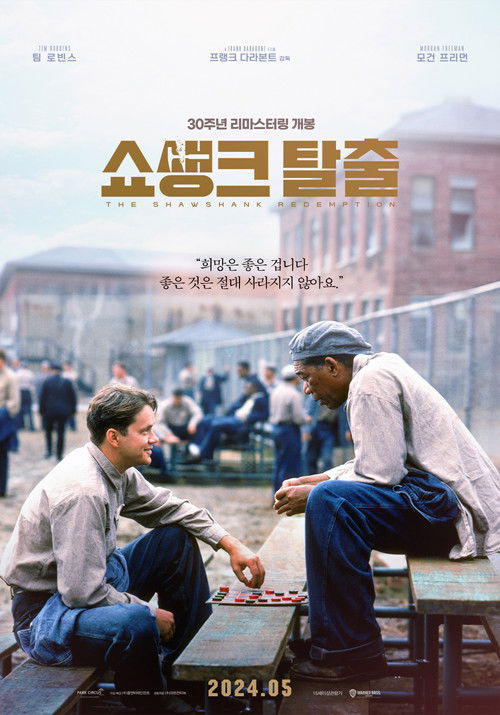
Andy takes an intellectual approach to transforming this cynical Red. He tells Red he'll keep a chess set ready for him, expressing anticipation for their reunion, and later sends a letter containing a message that calls hope back to mind. This process becomes the decisive catalyst for Red's transformation from a mere observer watching the escape to a beneficiary who must protect the emotional value called hope.
Light and Shadow: Red's Final Liberation
Red's growth is amplified through visual contrast.
Early Warning (Cynicism): Early in the film, Red warns Andy that "hope is a dangerous thing," emphasizing that 'despair' is the safest state within the oppressive prison system. In this scene Red's narration says: "These walls are funny. First you hate them, then you get used to them. Enough time passes, you get so you depend on them. That's institutionalized." This clearly exposes the mental imprisonment of the prison.
Catalyst for Change (Intellectual Stimulus): As Andy pushes forward the library expansion project and works alongside Red sorting books, Red is gradually inspired by Andy's beliefs. In particular, in the scene where Andy explains the structure of 'money laundering' and creates the fictitious person 'Randall Stephens,' Red marvels at Andy's intelligence and conviction and says, "You're a real artist." This is the moment Red grasps that Andy's hope is not mere optimism but is grounded in meticulous planning and conviction.
Final Liberation (Catharsis): After Andy's escape in 1966, Red witnesses Warden Norton's suicide and discovers the letter Andy left hidden inside a Bible. The letter contains the address of a small town in Mexico called Zihuatanejo, and through it Red receives the message of hope Andy left for him. In the film's final scene, when Red is reunited with Andy on a Pacific beach, he is completely liberated from the mental imprisonment that had oppressed him for so many years. This scene — in bright sunlight — forms a stark contrast with the dark, damp interior of the prison in the opening, visually completing Red's inner transformation.
Why It Matters
Red is the emotional anchor of this work. If Red had believed in hope from the start, Andy's journey would have remained nothing more than a successful escape drama. But Red doubts the concept of 'hope' alongside the audience, then undergoes the process of resolving that doubt. His cynicism symbolizes the successful 'mental imprisonment' created by the Shawshank system, and the fact that he finally moves toward the light provides the audience with the greatest catharsis. Because Red's growth is identical to the 'relearning of hope' that the audience experiences, this character arc is the core axis that completes the work's thematic consciousness and identity.
Other Character dives5
- arrow_outward
Heywood
Heywood is a quiet, grounded ally who supports Andy and Red within the oppressive system of Shawshank State Penitentiary. Rather than participating in grand escape plans, he deepens the work by reminding those around him of the importance of human connection and memory through everyday, seemingly trivial moments — offering a beer, mentioning a book title.
- arrow_outward
Andy Dufresne
Andy Dufresne is not a simple inmate but an intellectual who dismantles the oppressive system itself, wielding intellect and patience as weapons. By spearheading financial management and library expansion within the prison and using twenty years of time to bore through both the physical and mental prison walls, he symbolizes the ultimate freedom of the human spirit and the power of hope.
- arrow_outward
Captain Byron T. Hadley
Byron Hadley is a figure who symbolizes the violent and oppressive system of Shawshank Prison. Going beyond a simple guard, he is the device that maximizes the prison's dehumanizing atmosphere — institutionalized violence that erases humanity. His brutality functions as the most physical and direct obstacle that protagonist Andy Dufresne must overcome.
Back to the title
The Shawshank Redemption
21 deep dives in total