The Proactive Use of Time
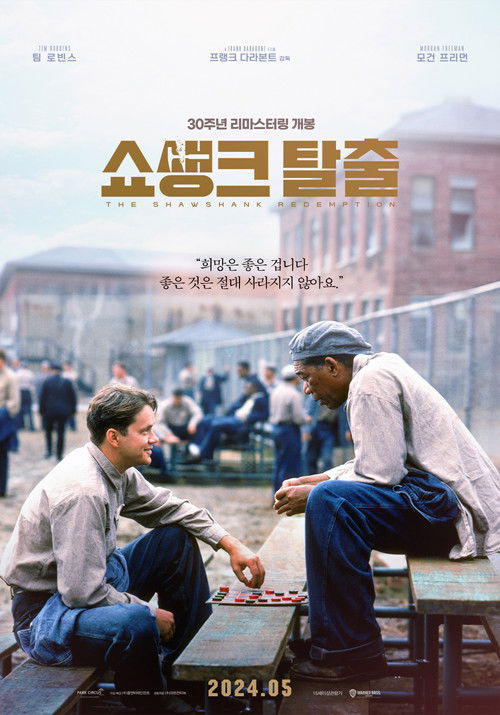
This film shows not the passive passage of time but how to actively 'use' it through human will and intellect. The process by which Andy Dufresne spends twenty years on an escape plan, and Red redefines his identity through the rhythm of parole hearings, symbolizes time as the most powerful tool for claiming freedom.
Time: From Passive Flow to Active Resource
The Shawshank Redemption is set in a prison — an extremely closed space — yet it is more accurately a philosophical inquiry into 'time,' the most abstract and fundamental resource of all. The core message the film delivers is that time is in itself a neutral flow, and acquires meaning and freedom only when actively 'used' and 'reshaped' through human will and intellect.
This proactive use of time is rendered in three dimensions through the starkly contrasting life trajectories of protagonist Andy Dufresne and observer Red.
1. Andy Dufresne's Time: Intellectual Labor Called 'Preparation'
For Andy, time is the most important resource for survival. His escape is not simply the physical act of breaking through a wall. It is the product of intellectual labor — the 'accumulation' of knowledge, influence, and a flawless plan over twenty long years.
- Accumulation of Knowledge: Andy spends his time managing the prison library. This is not mere leisure — it is 'investment time' securing access to the knowledge and civilization of the outside world. He uses this knowledge to penetrate the prison's financial system and as the decisive weapon to uncover Warden Norton's secrets.
- Redefining Waiting: Ordinary viewers perceive Andy's time as 'waiting,' but the film redefines this waiting as time for 'preparation.' Andy does not let each moment pass idly — he uses every instant as a resource for the next phase of his plan. This shows how the human spirit can concentrate energy toward a goal without stopping, even in a hopeless environment.
- The Paradoxical Use of Time: In Shawshank — the most unfree of spaces — Andy performs the most freely spirited mental activities (intellectual inquiry, planning), and paradoxically completes his own freedom through this.
2. Red's Time: Redefining Identity Through 'Memory'
Red's time is different in character from Andy's. Where Andy uses his time looking outward, Red undergoes a process of 'freeing' his time by confronting inner trauma. Red was long trapped in the 'time loop' created by the Shawshank system — unable to live a genuine present because his life was imprisoned in a repeating pattern of past trauma and current incarceration.
- Time Pressure of Parole Hearings: The parole hearing process is a moment of 'temporal pressure' in which Red must look at his own life objectively. In this process he realizes how passively he has lived and how much he has depended emotionally on others.
- Expanding Time Through Friendship: His friendship with Andy teaches Red how to share his emotions with another person and how to live 'in the present' through those emotions. Andy expands Red's time — keeping him from being imprisoned in the past and from losing hope for the future.
- The Moment of Liberation: At the end of the film, the scene of Red walking on the beach is the moment when the proactive use of time reaches completion. He no longer lives by the prison's clock. By his own will, he sets down the burden of the past and surrenders himself to the flow of only 'the present.' This means not merely escaping prison but the liberation of the soul.
3. The Contrast of Time: System vs. Human Will
The film perpetually contrasts the 'official time' controlled by the Shawshank system with the 'true time' created by human will. The prison's clock turns like a gear, trying to control everything — but Andy's plan and Red's inner growth neutralize this system's temporal control.
In the end, the film asks us: whose clock is your time running to? And will you spend that time merely letting it pass — or actively using it as a tool to claim freedom?
Why It Matters
This theme elevates The Shawshank Redemption from a mere prison escape thriller to a philosophical tale of the human spirit's triumph. Had Andy's escape amounted to nothing more than a physical breakout, the film would have remained an action movie. But by setting 'time' as the core driving force, the writers and director argue that freedom is not the act of smashing external physical barriers but the subjective act of breaking the internal mental shackles. This interpretation redefines for the audience the meaning of 'waiting,' forming the bedrock of the film's universal and deeply resonant impact.
Other Reading dives1
Back to the title
The Shawshank Redemption
21 deep dives in total