The interaction between language and thought
The core theme of Arrival — 'the interaction between language and modes of thought' — is depicted as a process that goes beyond mere communication to redesign the very cognitive architecture of the human mind. The protagonist Louise Banks' journey of acquiring an alien language symbolises an intellectual transformation: evolving from a human mode of thought trapped in linear time to a non-linear cognition in which past, present, and future coexist.
Maximising the Linguistic Hypothesis: Does Language Determine Thought?
Arrival is a film that takes the linguistic hypothesis — 'human thought is shaped by the language one uses' (the Sapir-Whorf Hypothesis) — to an extreme visual conclusion. In this film, the alien language functions not as a mere object of translation but as a kind of intellectual tool that fundamentally redesigns the cognitive framework of Louise Banks herself.
Louise's process of learning the Heptapods' logograms means that she evolves away from the human mode of thought accustomed to linear time, toward a non-linear mode of thought that perceives the flow of time simultaneously. This symbolises language acquisition as an 'upgrade' of human existence itself.
1. The Transition from Linear to Non-linear Thought
Human language fundamentally follows the linear sequence of 'past-present-future' in step with the flow of time. When Louise first encounters alien script, she tries to interpret the aliens' messages based on this linear mode of thought. But the Heptapod language is not bound by these temporal constraints. This language trains Louise's brain to process all information in one instant, simultaneously.
This process is akin not merely to memorising words, but to changing the very 'sensory filter' through which Louise views the world. In fact, communication style is shaped by the sense a person feels most strongly, and this is connected to the way they interpret the world. Through the alien language, Louise learns to process information in a visual and holistic manner — as if a person with an auditory communication style interprets the world through hearing. The alien language is teaching her a new 'way of seeing.'
2. The Danger of Mistranslation: Conflicts Born of Linguistic Limitation
The most critical juncture in Louise's process of learning the alien language is the danger of 'mistranslation.' The message the aliens leave, "Offer weapon," is mistranslated by humanity as a command to 'provide a weapon.' This mistranslation is an inevitable error that arises because Louise is still trapped within the linear linguistic structure of human language. She becomes stuck in the binary human concept of 'attack' and 'defence' embedded in the word 'weapon.'
But Louise — having evolved into non-linear thought — does not interpret this message simply as the word 'weapon.' As a linguist and as a being with non-linear thought, she proposes the possibility that this message may be a misunderstanding meaning 'new technology' or a 'tool' rather than a 'weapon.' This proves that her cognitive change is not merely the acquisition of knowledge, but the securing of 'flexibility of thought.'
3. The Union of Time and Language: The Language of Fateful Choice
Ultimately, in this film the union of language and mode of thought deals with the most abstract concept of all: 'time.' The Heptapod language rejects the linearity of time, and through this language Louise realises that she can be a being who, 'knowing the future,' chooses to experience the precious moments of the present regardless. This process of choice is itself the final product of linguistic and cognitive transformation.
Louise's learning of the alien script is not simply in order to communicate with the aliens; it symbolises the 'intellectual transformation' that humanity must first undergo in order to communicate with an unknown entity. Her linguistic growth is the process of finding an answer to the most fundamental philosophical question necessary for the survival of the human race.
Why It Matters
This interpretation is the core axis that proves Arrival is not a simple SF disaster film but a philosophical fable. Louise Banks' linguistic journey poses to the audience the question: 'How powerfully does the language we use constrain our mode of thought?' If we could step outside linguistic frameworks, the message conveys, humans could completely overturn their existing understanding of time and destiny. This is the key to unlocking all the film's mysteries (the aliens' purpose, the nature of time) and the part that provides the film's most intellectual pleasure.
Other Reading dives2
- arrow_outward
The non-linearity of time and the meaning of existence
The non-linearity of time — the core theme of Arrival — is a philosophical concept that shatters the limitation of humans perceiving time as a linear flow of past-present-future. As Louise Banks acquires the Heptapod language and embraces the non-linear view in which every moment exists simultaneously, this comes to symbolise, beyond mere scientific knowledge, an ontological liberation: 'every moment of life is connected and concepts like regret or longing simply do not exist.'
- arrow_outward
The dialectic of fatalism and free will
The dialectic of fatalism and free will — Arrival's core philosophical axis — poses the question of whether knowing the future paralyses human will. Louise Banks perceives a painful future (her daughter's death) but this knowledge does not render her powerless. Rather, it argues the paradox that on this fateful backdrop the active 'choice' to fully experience 'the present moment' is possible, showing that the human will to choose supersedes fatalistic destiny.
Back to the title
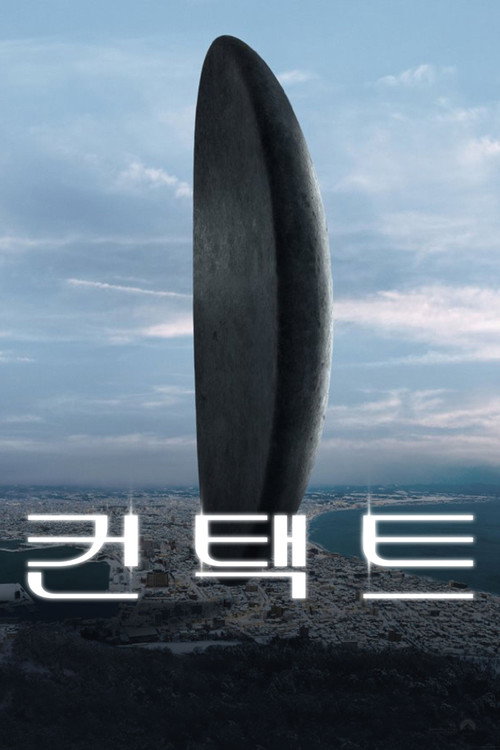
Arrival
14 deep dives in total