Tim Burton’s Uncharacteristically Warm Tone
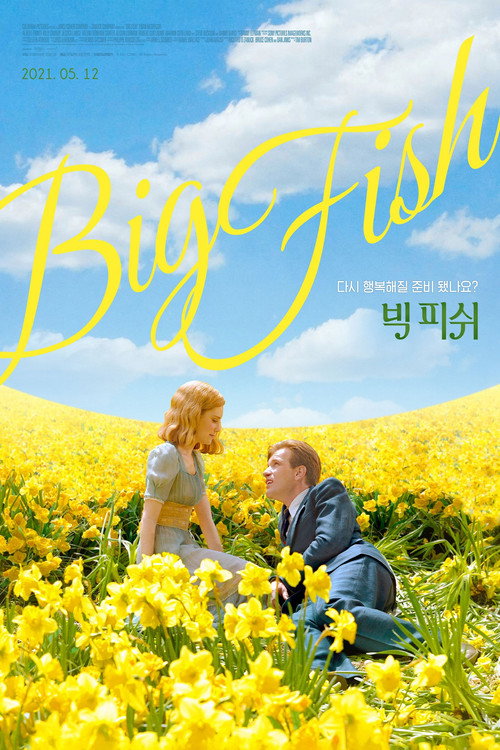
Big Fish is characterized by a warm, dreamlike tone that departs from Tim Burton’s typical dark and macabre aesthetic, delivering emotional resonance to its audience. This tonal shift goes beyond a simple stylistic choice — it means that the method of dealing with ‘truth’ is expressed through the warm embrace of ‘storytelling’ rather than darkness or the grotesque, directly tied to the work’s core thematic consciousness.
Tim Burton’s Aesthetic Variation: From the Grotesque to the Warmhearted
Tim Burton has long been known for visuals that carry a gothic, macabre, and dark palette. His landmark works — Batman, Charlie and the Chocolate Factory, Corpse Bride — offer audiences intense visual experiences through their characteristic morbid and dreamlike atmosphere. However, Big Fish intentionally departs from Tim Burton’s typical aesthetic framework, maintaining an overall bright, warm, and heartfelt tone. The prevailing interpretation is that the director intended this film to demonstrate the potential for ‘warm resonance’ within the fantasy genre.
What the Tonal Shift Means: Redefining Grief
This tonal shift is not merely a visual choice. It is connected to the director’s personal experience — the death of his own father — with the heavy themes of grief and loss expressed not through ‘the grotesque’ or ‘horror’ but through the warm embrace of ‘storytelling.’ The giant, the witch, and the werewolf circus ringmaster in the father’s adventure tales are inherently strange and incredible elements. But the film does not confine them in darkness — instead wrapping them in light and warm color and placing the filter of ‘love’ and ‘memory’ over them.
The Operating Principle of the Warm Filter Called ‘Story’
In the film, ‘story’ is not mere boasting. It is the most beautiful defense mechanism the father uses to protect himself and pass the meaning of life to his son — and simultaneously the most genuine expression of love. When Will tries to excavate the ‘lies’ in his father’s tales and uncover the truth, the film has viewers experience the moment when the boundary between ‘truth’ and ‘story’ collapses.
- Visual contrast: The film’s settings sometimes contain dreamlike, unrealistic fantastical elements (ghost town Specter, the giant), but the light and color enveloping those settings are always warm. This visually proves that no matter how unrealistic the story, it is always connected to the real anchor of ‘warm human emotion.’
- Emotional connection: All the adventure tales the father tells his son ultimately converge on a single romance: ‘love.’ As all extraordinary adventures ultimately resolve into family love or romance, the film’s overall tone fills not with darkness but with warmth.
Conclusion: Proving the Reason for the Fantasy Genre
Big Fish has not entirely abandoned the dark and macabre appeal of Tim Burton’s artistic world. Rather, it has elevated the source of that grotesque to a new dimension: ‘warm resonance.’ This film proves to audiences that the fantasy genre, beyond simply providing horror or enchantment, can be a medium that embraces and heals the complex and sometimes sorrowful truths of life in the most beautiful and warm way.
Why It Matters
The warm tone of Big Fish is the film’s thematic consciousness itself. Had this film maintained Tim Burton’s typically dark and macabre tone, the father’s adventure tales would have remained mere ‘boasting’ or ‘fantasy.’ But by maintaining a bright, warm tone, the film persuades the audience that what lay beneath all the bragging was ‘sincerity.’ That tone symbolizes not the act of seeking ‘truth’ but the process of reinterpreting truth through ‘story’ and embracing it with love. It delivers the message that the most important value in life is not perfect truth but the beautiful shared story — completing the work’s identity.
Other 기타 dives3
- arrow_outward
The Fish Transformation at the River’s Edge
In the film’s climax, the scene where Ed Bloom compares his death to ‘becoming a great fish swimming down a river’ goes beyond a simple ending — it symbolically shows that his life was not a fixed set of facts but an endlessly flowing ‘narrative.’ This scene visualizes the moment the father completes his life as one grand story and passes it on to his son, at the very moment Will tries to bring ‘truth’ to bear.
- arrow_outward
The Ghost Town of Specter and the Witch
The ghost town of Specter and the witch Jenny are not mere fantastical backdrops — they are narrative devices through which Ed Bloom reconstructs his life as a ‘story.’ These spaces transcend the logic of reality, posing for the audience and son Will the fundamental questions of what ‘truth’ is, and whether what sustains a human life is objective fact or the power of beautiful fiction.
- arrow_outward
The Blurry Line Between Lie and Truth
The core theme of Big Fish explores the boundary between ‘truth’ and ‘story’ at the point where they dissolve. Though a son dismisses his father’s tales as boasting and tries to uncover the truth, the film ultimately shows that truth is not a bare recitation of objective facts but ‘story’ itself — reconstructed through love and memory. This process is the most beautiful way of completing the meaning of one person’s existence.

Back to the title
Big Fish
13 deep dives in total