The Founding Visual Language of Cyberpunk
The cyberpunk visual language Blade Runner established is not mere backdrop — it is the mechanism that renders the film's core theme, 'the loss of humanity,' in visible form. Set against an early 21st-century ravaged Los Angeles blanketed in London-style smog, the interplay of neon light and shadow articulates the dystopian atmosphere that countless later works would inherit.
The Birth of Cyberpunk Aesthetics: The City of London-Style Smog and Neon
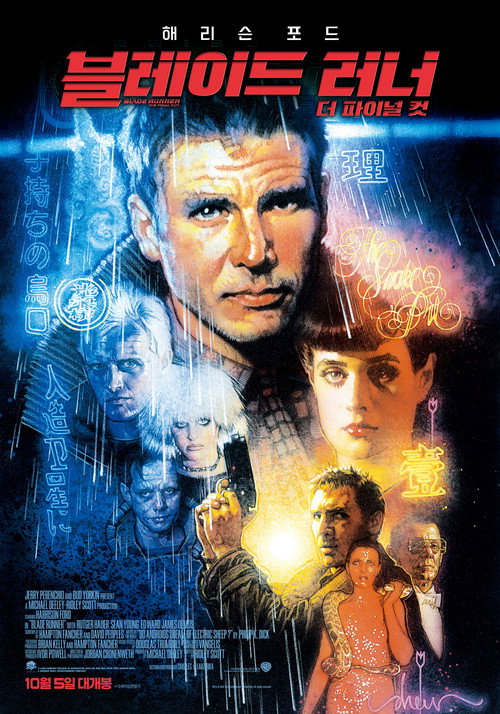
In depicting a dystopian future of the early 21st century, Blade Runner is recognized as the pioneering work that established the visual grammar of the cyberpunk genre. The film's visuals cannot simply be characterized as 'dark and futuristic' — they are a distinctive aesthetic fusion of technological advance, environmental ruin, and the loss of humanity.
1. Architectural Oppressiveness: Vertical Space and Monumental Scale
The Los Angeles of the film is filled with massive structures that overwhelm human life. These buildings are not mere decorative backdrop — they contrast the enormity of the technological civilization humanity has constructed with the frailty of the human beings beneath it. The production team drew inspiration from early science-fiction art such as Fritz Lang's Metropolis and Edward Hopper's Nighthawks to create this atmosphere. These towering buildings — symbols of human desire and the infinite expansion of capitalism — block out the sky and create a visual sense of crushing pressure on the characters below.
2. The Interplay of Light and Shadow: The Alchemy of Neon and Smog
The most iconic element of Blade Runner is the way it uses light. There is no clear, natural sunlight. Instead, only the artificial light of neon signs exists within an atmosphere covered by thick smog and acid rain. This neon light reflects off billboards, storefronts, and the eyes of replicants, suffusing the entire city with an unreal and decadent palette. It is the cold light of capital and information — not the warmth of life. Rain-wet streets mirror the neon light back like a mirror, creating the illusion that reality and fantasy are intermingled.
3. The Coexistence of Technology and Decadence: The Completion of Tech-Noir
Cyberpunk combines 'cyber' (technology) with 'punk' (rebellion). Blade Runner's visuals perfectly embody this definition. Replicants as the products of cutting-edge technology, the pyramid-shaped headquarters of the vast Tyrell Corporation, flying vehicles — these symbolize 'technology.' But this technology is fused with 'decadence': a ravaged environment, slums, and the emotional emptiness of human beings. The most advanced civilization, in other words, displays the most inhuman and contradictory face. It is this contrast that elevates the film from a simple sci-fi action thriller to a masterwork of the tech-noir genre — one that poses genuine philosophical questions.
Why It Matters
Blade Runner's cyberpunk visuals are not merely an aesthetic choice — they are the mechanism by which the film's central question, 'What is human?', is rendered visible. Neon signs and smog serve as metaphors for how easily human memory and emotion can be contaminated and distorted. The blazing billboards endlessly seek to define humans and replicants as 'commodities,' but their light never illuminates a warm truth. In this way the film's visual elements carry its philosophical weight — and in presenting the archetypal 'dystopian atmosphere' that later science-fiction films would follow, they play a decisive role in shaping the work's identity.
Other 기타 dives5
- arrow_outward
Replicant Life Expectancy and Rebellion
The replicant four-year lifespan is not a simple plot device — it is the 'built-in obsolescence' mechanism the Tyrell Corporation designed to control the value of their existence. This setting goes far beyond science-fiction interest into a sharp critique of how capitalist society controls and depletes its labor.
- arrow_outward
How the Voigt-Kampff Test Works
The Voigt-Kampff test is the key mechanism in the Blade Runner universe for drawing the boundary between human and replicant. It poses questions designed to provoke subtle emotional responses, then measures the pupil dilation of the subject to distinguish human from replicant — and the film raises fundamental doubts about its reliability.
- arrow_outward
Implanted Memories and Identity
The implantation of memories in replicants is the film's most central philosophical device. Far beyond merely providing information, it defines the replicants' reason for existence and their claim to 'humanity.' Replicants like Rachael — who hold implanted human memories — embody the film's deepest ambiguity about what it means to be human.
Back to the title
Blade Runner
14 deep dives in total