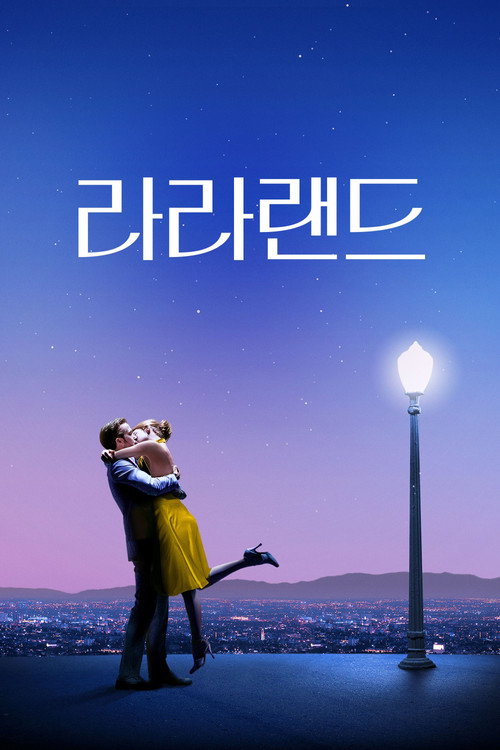
The Meaning and Setting of La La Land
The name 'La La Land' — both the film's title and its setting — holds a double meaning: it is Los Angeles's nickname and an expression meaning 'a state of being disconnected from reality.' This duality is the core theme running through the entire work, implying that the space of LA, full of dreams and fantasy, is simultaneously a stage of cold reality. The film poses a deep question about the passion and frustration artists experience as they chase their dreams, and about the price those dreams demand.
La La Land: The City of Dreams and Fantasy, and the Reality Lurking Beneath
The film's title — 'La La Land' — carries a meaning beyond a simple place name. It is at once a nickname for Los Angeles and an idiomatic expression meaning 'a state of being disconnected from reality.' Director Damien Chazelle lays this double meaning into the film's foundation, endlessly posing to the audience the question: just how 'unreal' can the act of chasing a dream actually be?
1. Defining the Setting: The Boundary Between Fantasy and Reality
LA is depicted in the film as the most luminous and glamorous backdrop imaginable. Every setting — Mia's audition rooms, Sebastian's jazz bar, and the final Griffith Observatory — is a 'fantasy' stage that amplifies the yearning of all those who chase dreams. But this fantastical backdrop is simultaneously a stage where 'cold reality' exists just beneath the surface. The dilemma facing artists — having to give up a stable job (Mia's barista life, her relationship with Greg) or a realistic relationship in order to realize a dream — arises precisely at this boundary.
2. How It Functions in the Film: Two Worlds in Collision
The film creates collisions between these two worlds through the relationship of Sebastian and Mia. This collision is not simply a matter of 'love' — it is a philosophical opposition about 'which way of life holds more value.'
- Sebastian's world (traditional jazz): To Sebastian, jazz is not 'comfortable background music' but 'fierce combat' and 'intense communication.' He feels that jazz is 'dying' as it merges with pop and electronica, and believes that preserving the purity of traditional jazz is his artistic conviction. His world is stubborn, conservative, and refuses compromise with reality.
- Mia's world (Hollywood): Mia's world is focused on 'mainstream success' and 'visible results.' In order to survive within the system of auditions and studios, she must constantly prove herself. Her dream is closer to escaping an uncertain future through 'realistic success.'
The two try to understand each other's worlds, but ultimately the definitions of 'real art' and 'what success means' collide, and they find themselves at a crossroads where each must choose their own path.
3. A Collection of Related Scenes: Intertwining Fates
- First Meeting (the café): The scene where Mia and Sebastian collide and spill coffee is a symbolic moment — the two beginning their acquaintance by 'colliding' over their respective ways of life. This collision is not a mere accident but the first point of contact where their worldviews meet.
- The conversation at the Lighthouse Café: Sebastian's speech in which he argues passionately that 'jazz is by no means comfortable music' is the apex of the artistic conviction he is fighting to protect. Mia, even after hearing this explanation, dismisses jazz as 'background music' — showing her practical perspective.
- The Griffith Observatory (ending): The scene of dancing beneath the Milky Way is the moment the two are most perfectly immersed in 'fantasy.' This beautiful moment suggests that their love shines brightest here — yet it is simultaneously the most 'unreal' instant, and they are ultimately destined to diverge when they collide with the wall of reality.
4. Influence Beyond the Film: The Question of the Price of Dreams
'La La Land' transcends a simple romantic musical to pose a universal question to contemporary society: what should one choose between 'success' and 'artistic purity'? This question makes audiences endlessly reconsider the balance between their own dreams and reality, deepening the thematic resonance of the film.
Why It Matters
The double meaning in the title 'La La Land' is the identity of this work itself. The film provides a 'fantastical' stage full of dreams and imagination through the space of LA, but the conflicts the characters play out on that stage carry the weight of 'realistic' choices. Sebastian's stubborn artistic conviction and Mia's practical ambitions endlessly test the 'beautiful yet unstable boundary' the title symbolizes. Ultimately, this film burns into audiences the sweet yet bitter truth: that 'dreaming the most beautiful dream' sometimes comes with 'the most painful reality.'
Other 설정 dives4
- arrow_outward
Sebastian's Jazz Philosophy
The jazz philosophy Sebastian Wilder embodies defines jazz not as simple background music but as a process of 'fierce combat' and 'intense communication' between musicians. This philosophy is directly linked to a sense of crisis that jazz is 'dying,' and it collides head-on with Mia's practical goal of 'commercial success,' driving the film's core conflict.
- arrow_outward
The Conflict Between Keith and Sebastian
The conflict between Sebastian and Keith symbolizes, beyond a simple musical disagreement, the fundamental artistic tension between 'preservation' and 'evolution' that the genre of jazz itself must navigate. Sebastian's insistence on the purity of traditional jazz and Keith's attempt to adapt to popular currents demonstrate the eternal dilemma between commercialism and artistic integrity that every art form faces, adding depth to the film's thematic weight.
- arrow_outward
The Rialto Theater Reunion
The reunion at the Rialto Theater is the defining scene that burns into the audience's memory that Mia and Sebastian's connection is not mere coincidence but destiny. When Mia — exhausted by auditions — arrives at the agreed-upon theater and Sebastian finds her in the middle of a screening, it is the emotional flashpoint in which both realize they are 'essential to each other.' The scene symbolizes the destined pull of encountering kindred spirits while chasing dreams, and the wistful resonance created by the intrusion of reality.

Back to the title
La La Land
14 deep dives in total