Teddy's Illogical Investigation
Edward Daniels's pattern of illogical thinking is a core device of the film. When explaining the motivation for the case, he starts from a 'missing person' and moves — without logical connection — through 'tracking a criminal' to 'World War II war crimes' and 'Communist conspiracies.' This exaggerated, incoherent narrative gives the impression of a schizophrenic patient who has lost the ability to perceive reality objectively, prompting the audience to question fundamentally every 'truth' he states.
Teddy Daniels's Illogical Narrative: Weaving a Hallucination Called 'Truth'
The way Edward Daniels (Teddy) explains events is not a straightforward investigator's report. It is an extremely incoherent and dramatic narrative structure — the product of a textbook paranoid delusion combined with an excessive defense mechanism. Teddy cannot separate the traumas he has experienced from his current investigative mission, weaving every event into part of an enormous conspiracy.
1. The Components of Illogical Thinking
The elements Teddy presents when explaining the motive for the case have the following characteristics. These elements are not logically connected to one another; they serve only as mediums that project his inner anxiety and guilt.
- The starting point — the missing person: The clear starting point is the incident: Rachel Solando, who drowned her three children, has gone missing.
- Projection of personal trauma: Throughout the investigation he continually drags in memories of his own past traumas — war crimes at a Nazi concentration camp and the memory of his wife's death. This operates as an attempt to resolve his guilt that goes beyond the investigation's own purpose.
- Fusion with grand conspiracy theory: In the most extreme stage, he becomes convinced that the island itself is an evil place that receives Communist funding to brand 'dangerous' individuals as mentally ill and subject them to lobotomy. Expanding a private criminal pursuit into national conspiracy theory is the core of his narrative pattern.
2. Chuck Aule's Role: The Anchor of Reality
Teddy's exaggerated explanations serve simultaneously to heighten the film's tension and to function as a device that erodes his credibility. At this juncture, the role of partner Chuck Aule (Mark Ruffalo) is decisive. However dramatic or desperate Teddy's claims become, Chuck always counters them with a composed and pragmatic question.
- Mode of rebuttal: Chuck neutralizes Teddy's conspiracy-theory elements with a sardonic laugh. For example, when Teddy claims the island is a site of Communist conspiracy, Chuck deflects to something mundane — like 'toothpaste' — indicating the logical gaps in the argument. This contrast plants in the audience the suspicion that 'Teddy's claims may be excessive delusion.'
3. Detail Analysis: Foreshadowing Within the Delusion
Teddy's illogicality is not confined to dialogue alone. Throughout the film, the gazes and behavior of surrounding characters toward Teddy are filled with subtle foreshadowing hinting that he is living inside a 'hallucination.'
- The guards' vigilance: When Teddy first arrives on the island, the guards load their rifles and appear extremely guarded and tense. Yet this wariness is directed only at Teddy, showing that he is not an 'external threat' but an 'object of observation.'
- The inmates' gaze: The inmates watch Teddy's group not with simple curiosity but with something like the excitement of an audience watching a play — caught covering their mouths and shushing each other. This is interpreted as evidence that the inmates know Teddy is participating in drama therapy.
- Persistent suspicion: The questions Teddy asks guards or inmates during interrogation — such as 'Do you know Andrew Laeddis?' — all form a paradoxical situation in which, while trying to obtain 'real' information, the question itself proves he is disconnected from reality.
Why It Matters
Teddy's pattern of illogical thinking is directly linked to the film's theme, the 'subjectivity of truth.' Had Teddy been a perfectly logical and objective figure, the film would have remained a simple crime story. But his delusional and exaggerated narrative forces the audience to ask: 'What is the truth we believe in?' The audience must follow Teddy's illogic and ceaselessly judge whether the crimes he is pursuing are real, or a theater of guilt he has built for himself. This unstable narrative structure is itself the film's most powerful aesthetic achievement, and the core device demanding active interpretation from the audience.
Other 떡밥 dives4
- arrow_outward
Psychodrama as Therapy
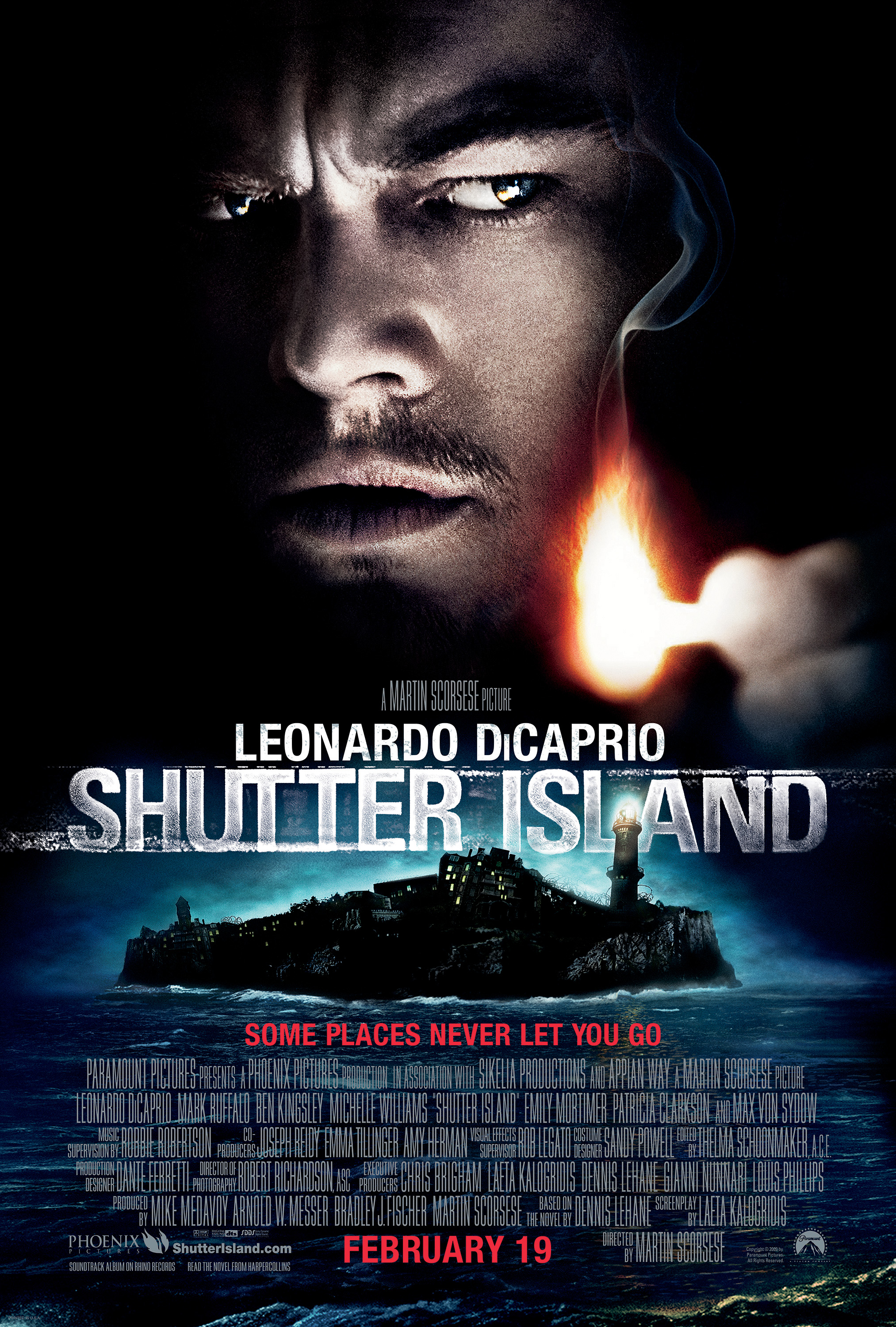
The gun and the match in *Shutter Island* are core devices symbolizing protagonist Teddy Daniels's unstable psychology and guilt. The act of borrowing a match to light a cigarette reflects his psychological state of dependence on others, always seeking 'permission' for his own actions; the gun functions as an instrument of 'punishment' he inflicts on himself, and as the ritual of a psychological salvation to end his guilt. These two symbols ceaselessly shake the boundary between the truth Teddy pursues and the hallucination he has created.
- arrow_outward
Names Linked by Anagram
The anagram structure of names — one of the key devices in *Shutter Island* — goes beyond mere coincidence and symbolizes that every truth Teddy Daniels pursues is not an external event but a projection of the guilt buried deep inside himself. The structural similarity of the names of major characters — Edward Daniels, Rachel Solando, Dolores Chanal — hints that every trauma and investigation Teddy experiences is ultimately a question directed at himself and his past.
- arrow_outward
The Dual Function of Shutter Island
Ashecliffe Hospital on Shutter Island is not merely a remote island but an enormous stage where physical confinement and psychological control are combined. It confines inmates under the guise of 'treatment' while simultaneously serving as the psychological prison onto which protagonist Teddy Daniels projects his guilt and trauma. Its closed nature ceaselessly asks the audience how ambiguous the boundary between truth and hallucination can be.
Back to the title
Shutter Island
13 deep dives in total