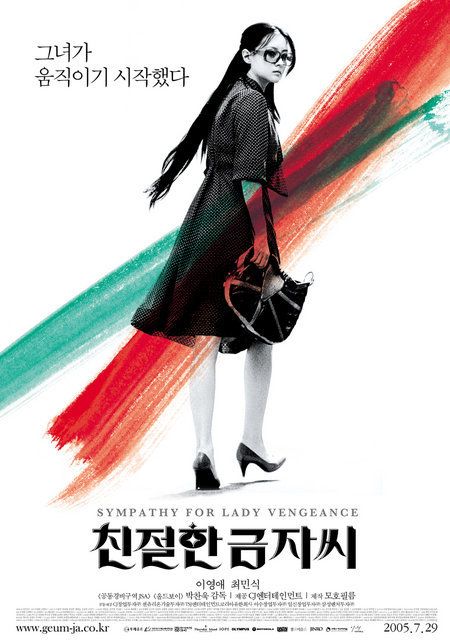
Prison Life and Her Nickname
The Dhammapada is not a simple Buddhist scripture — it is a central symbolic prop in the process of Lee Geum-ja preparing her revenge tools. The word 'Dhammapada' (법구경) itself is a meticulously designed setup device, carrying a double meaning that connects to the firearm term 'caliber' (구경) in Korean. This visually shows that Geum-ja is concealing her thirst for revenge behind the dual mask of religious atonement and a model image, and emphasizes that her very existence is a disguised performance.
The Dhammapada: The Convergence of the Image of Atonement and a Tool of Killing
The Dhammapada is one of the most intriguing and meticulously designed props in the film. On the surface it is the Buddhist scripture known as the 'Dhammapada' (법구경, literally 'Dhamma-verses'), but the core setup delight of this work lies in the fact that the word carries a double meaning — connecting phonetically in Korean to 'caliber' (구경), the firearm term. This setup functions as a device that intentionally fuses the image of religious atonement with the preparation of her revenge tools.
1. The Discovery of the Dhammapada and Its Symbolic Meaning
The Dhammapada is passed to Geum-ja by one of her helpers, Go Seon-suk. Go Seon-suk, apparently having discerned that Geum-ja harbors a grudge against someone, hands over this scripture with the meaningful words: 'For a comrade has her enemy to face…' This scripture becomes the decisive occasion for Geum-ja to obtain the information and resources needed to advance her revenge plan.
The emotion Geum-ja feels as she leafs through the Dhammapada is not simple religious awe. Within the form and content of this scripture she reads the blueprint for the 'lethal tool' she desires. This reflects Geum-ja's psychological state of trying to cover her thirst for revenge with the wrapping of 'a process of washing away sin.'
2. How It Operates as a Gun Blueprint
The process by which the Dhammapada transcends a simple symbol to connect to an actual weapon proceeds as follows:
- Recognition of the Blueprint: Geum-ja shows this Dhammapada to the Woo So-yeong couple, perceiving that it is not a simple religious book but a gun blueprint. In this process the double meaning of 'Dhammapada' (법구경) and 'caliber' (구경) is maximized.
- Commissioning the Manufacture: Based on this blueprint, Geum-ja asks the Woo So-yeong couple to manufacture a gun. In accordance with Geum-ja's request, Woo So-yeong makes the weapon to be used for revenge based on this blueprint. This weapon becomes the physical tool essential to Geum-ja executing her revenge plan.
- Additional Use: This gun blueprint is later used by Geum-ja in dealing with the Evangelist who was stalking her — demonstrating how meticulously and broadly the preparation of her revenge tools was carried out.
3. The Duality the Dhammapada Represents
The Dhammapada symbolizes Geum-ja's inner contradiction. Geum-ja shows a constant yearning for 'atonement' because of all the tragedy and guilt she has endured — seeking out Won-mo's parents and cutting off her own finger to beg forgiveness, becoming absorbed in religion. The Dhammapada is the medium that most perfectly embodies this image of atonement.
Yet this symbol of atonement ultimately transforms into the blueprint for the most lethal killing tool: a gun. This is the device that endlessly injects into the audience the idea that the 'kind and model inmate' Geum-ja appears to be on the outside was in fact a perfectly calculated performance, and that the purpose of that performance lay solely in the most violent act — 'revenge.'
Why It Matters
The Dhammapada setup is one of the most important meta-devices in this film. The work addresses the theme of 'revenge,' but emphasizes that the revenge is not a mere outpouring of anger but the product of 'performance' and 'planning.' The Dhammapada symbolizes the process by which Geum-ja disguises her own violence behind the most noble image — religious purity. That is: while Geum-ja tries to justify her violence through guilt and atonement, the moment the Dhammapada transforms into a gun blueprint, all those efforts of atonement fall into being the tool of a 'perfect hunter.' This setup proves that Geum-ja's revenge is not an emotional explosion but a meticulously calculated artistic act, and is the core element that adds intellectual depth to the film.
Other 설정 dives4
- arrow_outward
The Architecture of Geum-ja's Revenge Plan
The setup connecting Baek Han-sang's criminal motive to the material desire of 'buying a luxury yacht' gives this pleasure killer villain not emotional depth but a deflating, ironic reason instead. This blocks the audience from sympathizing with or fearing Baek Han-sang, degrading all his atrocities to the result of 'a supremely trivial desire' and maximizing the work's narrative irony.
- arrow_outward
The Border Between Revenge and Atonement
The 'kindness' of Sympathy for Lady Vengeance is not a simple character trait, but a survival strategy meticulously calculated through 13 years of prison life — the central tool of her revenge drama. This piece analyzes in depth how every kindness Geum-ja showed her fellow inmates was a performance for flawless intelligence gathering and the execution of her revenge plan, examining its psychological mechanism and cinematic significance.
- arrow_outward
Production Background and Acting Transformation
As the final installment in Park Chan-wook's 'Vengeance Trilogy,' Sympathy for Lady Vengeance philosophically probes human violence and the ambiguity of justice, going beyond simple retribution. The film expands the emotion of revenge from the realm of physical violence into the domain of psychological atonement and guilt, showing that every process the protagonist Lee Geum-ja undergoes is a journey not toward 'perfect revenge' but toward 'a life that knows the weight of sin' — the thematic culmination of the trilogy.

Back to the title
Sympathy for Lady Vengeance
15 deep dives in total