arrow_back
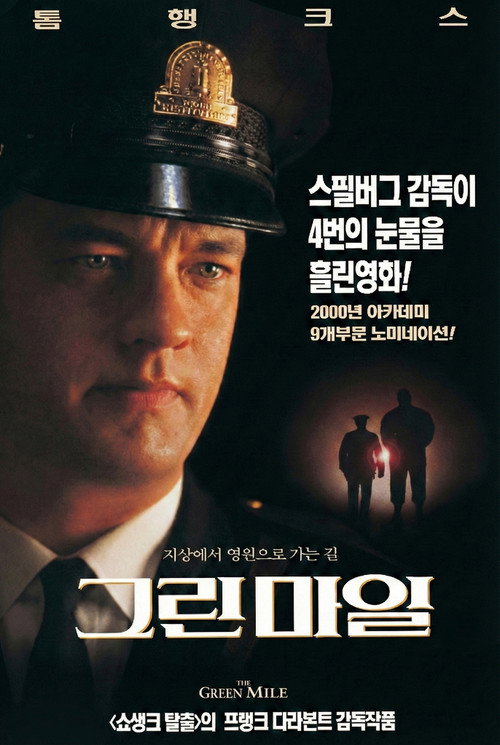
The Green Mile
Deep DiveQuote

When I die and I stand before God and He asks me why I killed one of His true miracles, what am I gonna say? That it was my job?

Paul Edgecomb's line goes beyond a simple confession of guilt — it poses a fundamental question about professional duty and the divine. Placed in the situation of having to kill, in the name of 'the system,' the miracle of death-row inmate John Coffey, Paul confronts a moral dilemma that runs through his entire life. The line symbolizes the deepest anguish of the human soul when justice collides with systemic prejudice, and serves as the climax that maximizes the film's core theme of 'guilt.'

The Context of the Line: Between Professional Duty and the Divine

This line is both a question Paul Edgecomb poses to himself — and simultaneously to the audience — on the night before John Coffey's execution. Paul devoted his life to the profession of guard. His life is founded on maintaining 'rules' and 'order.' John Coffey's existence was the very 'miracle' that cracked that order. John's healing power not only cured Paul's urinary infection but revived in Paul the sense of human compassion and justice he had been living without.

Paul poses this question because, despite being convinced of John's innocence, he was powerless before the enormous wall of deep-rooted racial prejudice and systemic bias in 1930s Louisiana. He had witnessed the healing power possessed by John's ability and knew the potential goodness of that power. But that power was destined to be crushed by the systemic violence of 'execution.' This line is the cry of a soul that must participate in the act of destroying a 'miracle' through its professional role.

Its Position in the Work: The Peak of Anguish and Hesitation

This line is an indicator that Paul's internal conflict has reached its apex. Paul made every effort to prove John's innocence, but ultimately the system led him to the execution chamber. After this line, on the day of the execution itself, Paul hesitates intensely at the moment the electric charge signal is given. His hesitation is not simply the reluctance of a single guard — it is a dramatic device showing how easily the 'law' he upheld his whole life can crush 'humanity.'

Paul realizes that his act of killing John is not simply ending one person's life — it is killing the very concept of 'justice' he had believed in. This guilt becomes a burden he must carry for life. The compassion he feels toward John has the power to collapse all the achievements and honors he gained through his profession as guard.

Audience and Fan Response: A Critical Gaze at the System

Through this line, audiences project a critical gaze that goes beyond Paul's personal moral failure to the structural sin of 1930s American society. John Coffey's story is not simply the tragedy of a 'Black death-row inmate.' It addresses the universal theme of 'an unjust execution resulting from the combination of social prejudice and insufficient evidence.'

Paul's anguish poses a question to audiences: if you were part of the system, how far would you sell your conscience to keep your job? This line collapses that boundary, forcing audiences to answer the philosophical question 'What is justice?'

Lasting Impact: A Lifelong Burden and Longevity

This guilt dominates the rest of Paul's entire life. He carries the guilt of not having been able to save John, and the guilt of having killed that miracle, for his entire life. In the source novel, the psychological suffering Paul endures after John's death means he is no longer a simple guard — he has become a wandering soul burdened with sin. His longevity and life of reminiscence are like a sentence he must serve, living forever with the brand of 'the one who killed the miracle.' This line is the decisive turning point that completes Paul's character arc.

Why It Matters

This iconic line proves that The Green Mile poses deep philosophical questions, not a simple prison thriller or drama. The collision between Paul Edgecomb's professional role and John Coffey's miraculous existence dramatically reveals the precariousness where 'law' and 'morality' — two axes — meet. Paul was the most faithful executor of the system, yet he becomes the figure who feels the greatest guilt because of the system's own violence. This line, by making audiences ask 'What is true justice, and how should the failures of the system be borne?' is the core device that completes the work's artistic depth.

Other Quote dives1

Back to the title

The Green Mile

15 deep dives in total

arrow_back