성장과 동화의 경계
위플래쉬의 핵심 주제는 '성장'이 외부의 압력에 의한 강요된 동화인지, 아니면 진정한 자아 발견인지에 대한 질문입니다. 앤드류 네이먼은 전설적인 스승 플레처의 가혹한 교육을 겪으며 실력을 극한으로 끌어올리지만, 이 과정에서 플레처가 추구하는 '완벽주의적 광기'라는 병적인 가치관을 내면화하게 됩니다. 영화는 위대함이라는 목표가 인간성을 파괴하는 경계에 서 있음을 보여주는 강렬한 서사시입니다.
성장과 동화의 경계: 앤드류 네이먼의 내면화 과정
앤드류 네이먼의 여정은 단순히 드럼 연주 실력의 향상으로만 해석될 수 없습니다. 이 영화가 던지는 가장 날카로운 질문은, '최고'가 되기 위한 과정에서 개인이 겪는 변화가 진정한 성숙인지, 아니면 특정 가치관에 대한 병적인 동화인지에 대한 것입니다.
1. 플레처의 '완벽'이라는 환상에 대한 매혹
플레처는 앤드류에게 '좋은 직장'이나 '안정적인 삶' 같은 평범한 가치를 경멸하며, 오직 '완벽한 예술'만이 존재할 가치가 있다고 끊임없이 주입합니다. 앤드류는 처음에는 플레처의 방식에 반항하고 저항하지만, 점차 플레처가 제시하는 '최고'라는 환상에 매료됩니다. 이 환상은 앤드류에게 일종의 목표 의식과 자아도취적인 에너지를 제공합니다.
- 자기 비하와 자아도취: 앤드류는 친척들과의 식사 자리에서 미식축구를 하는 사촌들을 비하하거나, 자신과 사귀는 여자친구 니콜에게까지 상처를 주는 등, 주변 사람들과의 관계에서 점차 거리를 두기 시작합니다. 이는 그가 외부의 인정이나 관계보다 오직 '예술적 성취'라는 고독한 가치에 자신을 몰두시키고 있음을 보여줍니다.
- 교육 철학의 내면화: 앤드류는 플레처의 가혹한 교육 방식을 견디는 것을 넘어, 그 방식 자체를 자신의 성공 공식으로 받아들이기 시작합니다. 그는 플레처가 추구했던 '최고의 예술'이라는 고독하고 병적인 가치관을 공유하게 되며, 이는 그가 플레처의 교육 철학에 동화되었음을 상징합니다.
2. '완벽'을 향한 광기: 플레처의 의도와 앤드류의 반응
플레처의 행동은 단순한 스승의 질책을 넘어선, 일종의 심리적 조작과 복수극의 성격을 띱니다. 특히 카네기 홀에서의 사건은 이 경계를 극명하게 보여줍니다.
- 복수와 교육의 혼재: 플레처가 앤드류를 곤경에 빠뜨리고 청중 앞에서 굴욕을 준 행위는 단순히 '교육'이라는 명분으로 포장하기에는 지나치게 사적이고 악의적입니다. 이는 앤드류의 재능을 극한으로 끌어내기 위한 수단이기도 하지만, 동시에 앤드류의 인생을 망칠 수만 있다면 기꺼이 감행하는 '개인적인 복수심'이 개입되어 있음을 보여줍니다.
- 결정적 순간의 역설: 앤드류가 각성하여 악보 없이 '캐러밴(Caravan)'을 연주하는 순간, 그는 플레처의 통제와 가혹함에서 벗어나 자신만의 방식으로 연주합니다. 이 연주는 앤드류가 스스로 발견한 '완벽'의 순간입니다. 그러나 마지막 장면에서 플레처가 미소를 짓는 것은, 그가 앤드류가 자신을 능가하는 '위대한 천재'라는 가장 이상적인 존재를 발견했다는 희열이자, 동시에 그 역시 타인과의 공감보다는 오직 '최고의 음악'에만 가치를 두는 고독한 광인임을 증명하는 아이러니한 순간입니다.
3. 결론: 성장의 대가로 치러야 하는 인간성
영화는 앤드류가 궁극적으로 '위대함'이라는 목표를 성취하는 것처럼 보이지만, 그 대가로 치러야 하는 것이 무엇인지 명확히 보여줍니다. 앤드류는 최고의 연주자가 되기 위해 자신의 인간적인 관계, 평범한 행복, 그리고 심지어 자신의 정신적 안정까지도 희생합니다. 결국 앤드류의 성장은 '자기 자신만의 가치'를 발견하는 과정이라기보다는, '최고'라는 병적인 강박에 자신을 완전히 바치는 과정에 가깝습니다. 이 모호함이야말로 영화가 관객에게 던지는 가장 깊은 질문입니다.
왜 파고들었나
이 해석은 위플래쉬가 단순한 음악 영화가 아닌, 인간의 욕망과 예술적 광기를 다루는 심리 스릴러임을 규정하는 핵심입니다. 앤드류의 성장을 '성공'으로만 해석한다면 플레처의 폭력성이 정당화될 위험이 있습니다. 하지만 이 항목은 앤드류가 플레처의 가치관을 내면화하는 과정을 추적함으로써, 위대함이라는 것이 얼마나 위험하고 고독하며, 결국 인간성을 희생시키는 대가로 얻어지는 것인지를 역설적으로 보여줍니다. 이 경계에 대한 질문이야말로 영화의 모든 폭력적 장면과 긴장감을 관통하는 주제 의식입니다.
다른 해석 심화1
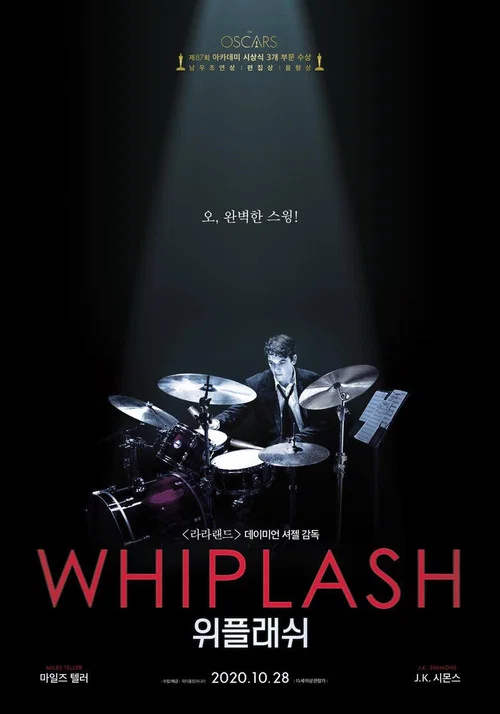
작품으로 돌아가기
위플래쉬
총 14편의 심화가 있습니다