Ed Bloom (senior)
Ed Bloom (senior) is a dying father and a storyteller seeking to complete his life as one grand narrative. He tells his son extraordinary tales beginning with ‘Back in my day...’ — stories that are not mere lies but the most beautiful way of defining one person’s existence and love. His stories dissolve the boundary between truth and fiction and serve as the core device for exploring the meaning of life.
‘Back in My Day...’: The Role of a Storyteller Facing Death
Ed Bloom (senior)’s existence is the most powerful narrative engine in Big Fish. As a figure who has reached life’s end with a critical illness, he needs to settle his life and leave a legacy for son Will. The legacy he chooses is not material — it is ‘story.’
His adventure tales begin with the formulaic phrase ‘Back in my day...’ but their content is filled with fantastical elements: a house-sized giant, a destiny-seeing witch, a werewolf circus ringmaster. These stories are not mere time-passing boasts. They are a desperate attempt to compress the emotional density of every moment Ed Bloom has lived and convey the very concept of ‘the father’s life’ to his son.
1. The Structure of Sincerity Hidden in the Tall Tales
From Will Bloom’s perspective, the father’s stories endlessly reside in the domain of ‘exaggeration’ and ‘lies.’ Will tries to judge his father’s life by the standard of objective fact — ‘truth.’ But Ed Bloom’s narrative continuously dismantles that standard.
- The function of adventure: Fantastical figures like the giant and the witch are devices that vicariously satisfy the father’s emotional experiences — things he may not have literally lived but that he ‘felt.’ By creating in story the great adventures he failed to have, he tries to prove to himself and his son that his life was never shameful or ordinary.
- The function of romance: Romance is the most important axis in the father’s life story. His relationship with wife Sandra, and his encounters with other women, all converge on the universal emotion of ‘love.’ This love story is the ultimate destination of all his adventures and the warmest truth he wants to leave his son.
2. The Completion of Narrative: The Father as Fish
The climax of the film is the moment Ed Bloom incorporates his own death into the story. The father makes the process of facing death into the final chapter of his story.
The more Will tries to excavate the father’s truth, the more the father reconstructs that truth in the format of ‘story.’ In particular, the ambiguous foreshadowing that the father’s death is connected to water ultimately generates the metaphorical ending of the father himself swimming away like a great fish into the river.
This ending substitutes the single conclusion of physical death with the metaphor of narrative ‘transformation’ and ‘passage.’ Ed Bloom wants to make even the moment of his own disappearance part of the most magnificent and fantastical story. For him, ‘death’ is not an ending but a ‘turning point’ — a turn of the page to the next great story.
3. Passing the Narrative Responsibility to the Son
Ed Bloom (senior)’s most important role is to pass to his son the ‘responsibility of completing the story.’ Will initially laughs at his father’s stories and demands truth, but ultimately comes to realize — through encounters with his father’s old friends — that those stories were based on ‘partial truth.’
Will comes to acknowledge not just that his father’s stories were not lies but that his father’s stories had ‘value.’ What the father left behind is not a record of facts but a narrative blueprint — a vision of how to live. Ed Bloom leaves his son the most important lesson: ‘Your life, too, can be completed as a beautiful story like this.’
Why It Matters
Ed Bloom (senior) is more than a character — he is the ‘narrative device’ that embodies the film’s thematic consciousness itself. His existence poses questions to the audience about the nature of ‘truth’ and ‘memory.’ To love and remember someone is not to cling to their objective facts alone, but to create together the most beautiful and meaningful ‘story’ surrounding them. Ed Bloom’s life maximally shows the human instinctive desire — to the very last moment of life — to package oneself as one great narrative and create ‘one’s own mythology.’ Because of this, the film transcends simple family drama and achieves existential depth.
Other Character dives5
- arrow_outward
Ed Bloom (young)
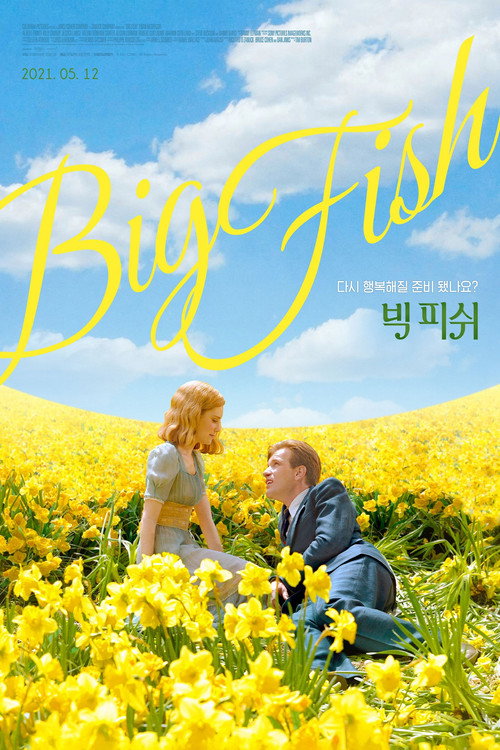
Ed Bloom (young) is a storyteller who has lived his whole life for adventure, with an extraordinary gift for wrapping his experiences in tall tales. Rather than simply recalling the past, he makes his very existence into one grand narrative. His legendary life poses for son Will the fundamental question of the boundary between ‘truth’ and ‘story,’ driving the film’s core themes.
- arrow_outward
Will Bloom
Will Bloom initially dismisses his father Edward Bloom’s extraordinary adventure tales as mere boasting and sets out to uncover the truth. But as his father’s death approaches and he meets old friends from the past, he comes to realize his father’s stories were not lies but ‘stories’ — the most beautiful packaging of every moment and act of love in the life his father lived. Will’s journey poses the profound question of which holds more value: ‘truth’ or ‘story.’
- arrow_outward
Sandra Bloom (mother)
Sandra Bloom is the central anchor of the family sustaining Ed Bloom’s life, and the most pivotal figure navigating the boundary between fantasy and reality. As the listener to her husband’s extraordinary adventure tales, she dismantles the criteria for ‘truth’ that son Will pursues and ultimately serves as the emotional anchor that assigns value to ‘story’ itself.
Back to the title
Big Fish
13 deep dives in total