Alison Lohman
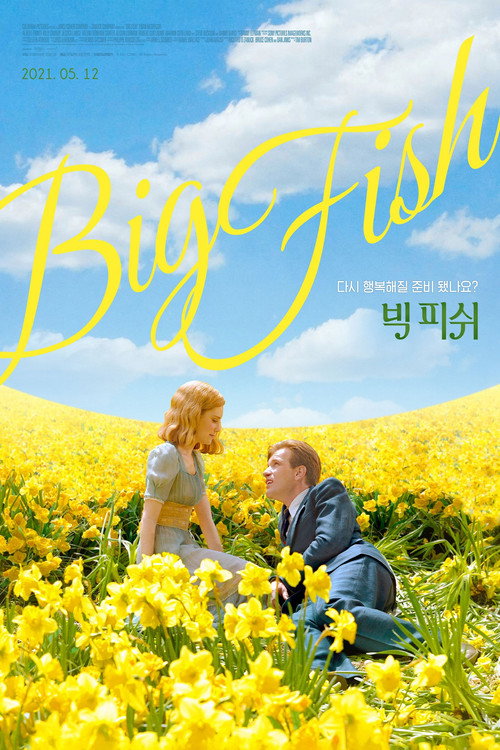
Alison Lohman appears in the past romance between Ed Bloom and Sandra as told in the father’s tales. More than a supporting character, she is the symbol of an ‘idealized past’ essential to Ed Bloom’s completion of his life as one grand narrative. Her presence embodies the most beautiful, flawless moment of love the father wishes to remember.
Alison Lohman: The Myth of an Unfulfilled Romance
Within the narrative structure of Big Fish, Alison Lohman appears as a figure deeply intertwined with the romance between Ed Bloom and Sandra Bloom. Rather than building an independent storyline, she performs the role of an indispensable ‘backdrop’ and ‘idealized memory’ in the process by which Ed Bloom reconstructs his life as a ‘story.’
1. The Character’s Functional Definition: The Projection of a Perfect Past
Alison is a device that leaps over the many realistic and complicated moments in Ed and Sandra’s relationship, capturing only the most brilliant and romantic ones. Ed Bloom’s adventure tales always present, alongside extraordinary events (giants, witches, ghost towns), a single romance threading through them all. Alison holds the heart of this romance section, symbolizing the most beautiful, flawless form of love the father wants to pass on to his son.
Her existence is closer to ‘narrative truth (Myth)’ — the story the father wants to tell his son — than to historical fact. This connects directly to the father’s attempt to elevate his life to the genre of ‘adventure.’
2. Narrative Role: The Completion of Romance
In Ed Bloom’s stories, romance is not a simple emotional event. It is the climax of adventure and the most powerful tool through which the father assigns meaning to his life. The romance narrative in which Alison Lohman appears serves the following roles:
- Providing the romantic peak: She gives the relationship between Ed and Sandra a fantastical quality of ‘fateful encounter,’ elevating their love beyond the ordinary to a mythic dimension.
- Voicing the father’s perspective: The romance seen through Alison projects the ‘most admirable image of himself as a father’ that Ed Bloom wants to show his son — she contributes to completing Ed Bloom’s image as an ideal husband.
- The intersection of truth and fiction: Alison’s story becomes the softest passage suggesting that not everything the father tells his son as story may be ‘true.’ Through her, the father secures the justification for telling ‘the most beautiful lie.’
3. Interpretation: The Editing of Memory and Artistic Reconstruction
All the figures in the adventure tales, including Alison Lohman, are born in the process by which Ed Bloom ‘edits’ his life. Human memory is imperfect, and memories connected to love in particular tend to be reconstructed in the most beautiful and dramatic form. Alison is a character who visually embodies this essential nature of human memory: the process of ‘beautification.’
Her story poses the following questions to the audience:
- Is the image of someone we love the person as they actually existed, or the person we want to remember?
- Is ‘truth’ one fixed fact, or a story that endlessly changes according to how each person interprets it?
Alison Lohman presents the most beautiful yet melancholy answer to these questions, functioning as a core element that maximizes the film’s thematic consciousness: the power of story.
Why It Matters
Alison Lohman carries meaning beyond a simple romantic counterpart. She symbolizes the artistic act itself — Ed Bloom’s effort to elevate his life into ‘narrative.’ The film’s core theme is the exploration of the ‘boundary between truth and story,’ and Alison’s existence demonstrates that boundary in the most romantic and enchanting way. Her story paradoxically proves that what the father passes on to his son is not ‘fact’ but ‘the way of telling stories,’ guiding the audience to redefine the meaning of life.
Other Character dives5
- arrow_outward
Ed Bloom (young)
Ed Bloom (young) is a storyteller who has lived his whole life for adventure, with an extraordinary gift for wrapping his experiences in tall tales. Rather than simply recalling the past, he makes his very existence into one grand narrative. His legendary life poses for son Will the fundamental question of the boundary between ‘truth’ and ‘story,’ driving the film’s core themes.
- arrow_outward
Ed Bloom (senior)
Ed Bloom (senior) is a dying father and a storyteller seeking to complete his life as one grand narrative. He tells his son extraordinary tales beginning with ‘Back in my day...’ — stories that are not mere lies but the most beautiful way of defining one person’s existence and love. His stories dissolve the boundary between truth and fiction and serve as the core device for exploring the meaning of life.
- arrow_outward
Will Bloom
Will Bloom initially dismisses his father Edward Bloom’s extraordinary adventure tales as mere boasting and sets out to uncover the truth. But as his father’s death approaches and he meets old friends from the past, he comes to realize his father’s stories were not lies but ‘stories’ — the most beautiful packaging of every moment and act of love in the life his father lived. Will’s journey poses the profound question of which holds more value: ‘truth’ or ‘story.’
Back to the title
Big Fish
13 deep dives in total