Alfredo's Mentorship and Growth
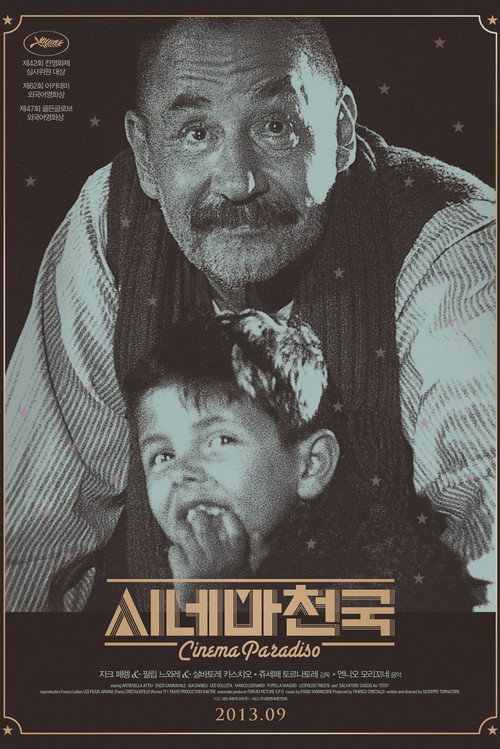
Alfredo's mentorship is more than a transfer of technical skill — it is the process of teaching protagonist Totò the most important value in life: 'independence.' From the turning point of the elementary school graduation exam, Alfredo instills in Totò the message encoded in 'Never come back' — and it becomes the driving force behind Totò's entire life.
Beyond Technical Transfer: The Message of 'Independence' in Alfredo's Mentorship
When Totò displays his fanatical passion for cinema, Alfredo at first seems to hold him back. He points out the real-world difficulty of life as a projectionist ('alone all the time, like a slave') and tries to suppress Totò's enthusiasm. But this conflict ultimately provides the very catalyst through which Totò can grow under his own power.
The Graduation Exam: Conditional Permission to Learn
When Totò is about to sit his elementary school graduation exam, Alfredo offers him 'conditional' help — teaching him the projection booth in exchange for taking the exam. This process becomes the decisive turning point at which Totò systematically learns the various crafts of filmmaking. Alfredo does not simply teach him how to thread a reel; he transmits the 'craftsmanship' and 'sense of responsibility' required to handle cinema as an art.
This sequence visually shows Totò moving beyond a child's perspective to establish his sense of self as a craftsman and artist.
The Most Important Teaching: 'Never Come Back'
After the craft has been transferred, Alfredo leaves Totò with the most important and most heartbreaking counsel of his life: 'Never come back — don't even write.' This advice does not simply mean farewell. It carries the message of 'independence' — that Totò must not settle into the 'safe and familiar sanctuary' of his hometown but must go out into the wider world and carve out his life by his own strength.
Alfredo acknowledges the talent and passion Totò possesses but delivers a realistic warning: that talent must not be confined to the romantic memories of the hometown. This counsel becomes the entire driving force behind Totò's success as a renowned director in the great city of Rome.
Memory Recovered: The Emptiness Thirty Years Later
Having become a successful director, Totò returns to his hometown with Alfredo's death notice and retraces memories from thirty years before. The ruined theater he faces, and the memories of a first love gone wrong, are all imprisoned in the time called 'the past.'
Alfredo's warning to 'never come back' forms the fundamental conflict that causes Totò to wander between the memories of his hometown and reality even after success. Totò enjoys the success earned through Alfredo's teaching, yet at the same time must carry for the rest of his life the 'distance' and 'sense of loss' that teaching imparts.
This structure shows that the film is not a simple exercise in nostalgia but a profound reflection on 'a life completed only by enduring the pain of growth and leaving'.
Why It Matters
Alfredo's mentorship is this film's most important philosophical pillar. Had Totò ignored Alfredo's counsel and stayed in his hometown, he could never have achieved success as a film director. This means that Alfredo's 'act of severance' is in fact the most profound act of love — a gift that enables the greatest growth.
Other 기타 dives6
- arrow_outward
The Film's Cultural Impact
Cinema Paradiso is celebrated not merely as a commercially successful film but as a work that contributed to redefining the identity and artistic value of Italian cinema in an era of decline — making it profoundly significant in cultural history. Jury Grand Prize at Cannes, Golden Globe, Academy Award, BAFTA: it swept the global film circuit.
- arrow_outward
Nostalgia and the Emotion of Longing
At the heart of Cinema Paradiso lies the philosophical theme of 'the preservation of memory,' beyond simple nostalgia. The ruined theater and the reels of film Totò receives from Alfredo embody the impulse to hold on to pure moments that resist the passage of time — crystallized into the most beautiful form.
- arrow_outward
Time and a Fateful Reunion
Totò and Elena's reunion in Cinema Paradiso transcends simple romance — it is a psychological journey through the great current of 'time' to unearth truths and misunderstandings buried beneath thirty years. The two people who face each other are not reconciling a romance; they are reckoning with the past.
Back to the title
Cinema Paradiso
13 deep dives in total