The Film's Cultural Impact
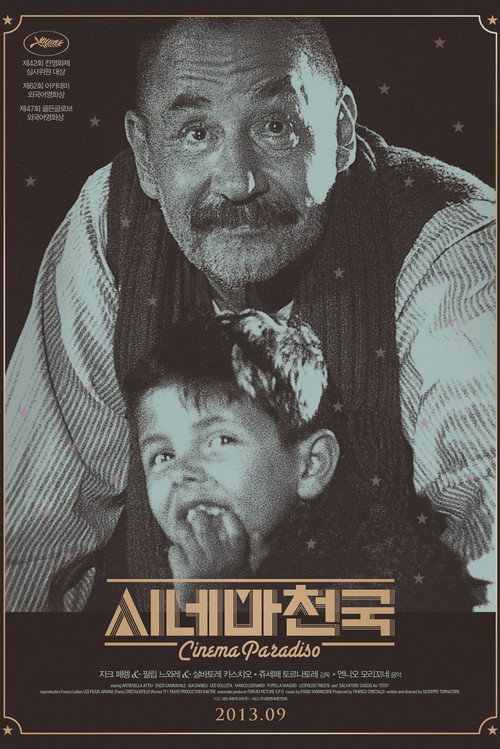
Cinema Paradiso is celebrated not merely as a commercially successful film but as a work that contributed to redefining the identity and artistic value of Italian cinema in an era of decline — making it profoundly significant in cultural history. Jury Grand Prize at Cannes, Golden Globe, Academy Award, BAFTA: it swept the global film circuit.
The Symbol of Italian Cinema's Rebirth
Cinema Paradiso is of enormous cultural-historical significance precisely because its success — opening in the 1980s — extended far beyond the box office to contribute to redefining the identity and artistic value of Italian cinema itself. Among Giuseppe Tornatore's works, this film is especially notable for drawing universal empathy from audiences worldwide while exploring the supremely private subject matter of deep personal nostalgia and memory, thereby elevating the standing of Italian cinema.
The Film's Stature as Seen Through Its Global Awards
The awards record this film accumulated is the most conclusive evidence of its artistic completion. These accolades show that Cinema Paradiso contains a profound reflection on universal human life and destiny — far beyond the genre frame of romance or reminiscence.
- 1989 Cannes Film Festival: Won the Jury Grand Prize, attracting international attention. This signified the film's recognition as art cinema rather than mere entertainment.
- 1989 Golden Globe: Won Best Foreign Language Film, earning recognition of its value even within mainstream Hollywood filmmaking circles.
- 1990 Academy Awards: Won Best Foreign Language Film, gaining the credibility of the Academy — at the pinnacle of the global film world.
- 1991 BAFTA: One of the most spectacular records in the film's story of success. Beyond Best Foreign Language Film, it swept multiple categories including Best Actor (Philippe Noiret), Best Supporting Actor (Salvatore Cascio), Best Screenplay, and Best Music — proving that every element of the film achieved perfect harmony.
🇮🇹 A Symbol of Cultural Revival
This string of awards cemented Cinema Paradiso not merely as a successful film but as a work that symbolizes the cultural revival of an era. In a period when the Italian film industry was suffering through stagnation in the 1980s, this film re-imprinted on audiences and critics alike the essential power that cinema possesses — 'the power to preserve memory and sustain life.'
The film's success was an event that proved Italian cinema's lyrical, deeply felt sensibility could find currency internationally, and it served as a great source of inspiration and confidence for subsequent generations of Italian filmmakers.
Why It Matters
The film's cultural impact is inseparable from its themes. The supremely personal and private emotions it explores — 'memory' and 'loss' — generated universal empathy among audiences worldwide. This proves that Italian cinema's lyrical and deeply felt sensibility can travel globally, and the film itself became an emblem of that proof.
Other 비화 dives6
- arrow_outward
Nostalgia and the Emotion of Longing
At the heart of Cinema Paradiso lies the philosophical theme of 'the preservation of memory,' beyond simple nostalgia. The ruined theater and the reels of film Totò receives from Alfredo embody the impulse to hold on to pure moments that resist the passage of time — crystallized into the most beautiful form.
- arrow_outward
Time and a Fateful Reunion
Totò and Elena's reunion in Cinema Paradiso transcends simple romance — it is a psychological journey through the great current of 'time' to unearth truths and misunderstandings buried beneath thirty years. The two people who face each other are not reconciling a romance; they are reckoning with the past.
- arrow_outward
Film Censorship and the Suppression of Art
In Cinema Paradiso, 'censorship' transcends a mere plot constraint — it is the most powerful external force threatening the very 'memory' that Totò and Alfredo have guarded, their pure artistic experience. This essay tracks how censorship recurs throughout the film, and how in the end it is transformed into the most beautiful form.
Back to the title
Cinema Paradiso
13 deep dives in total