Film Censorship and the Suppression of Art
In Cinema Paradiso, 'censorship' transcends a mere plot constraint — it is the most powerful external force threatening the very 'memory' that Totò and Alfredo have guarded, their pure artistic experience. This essay tracks how censorship recurs throughout the film, and how in the end it is transformed into the most beautiful form.
Censorship: The External Force That Edits Memory
In Cinema Paradiso, 'censorship' acts as the most powerful external force threatening not merely a plot-level restriction but the very 'memory' itself — the pure artistic experience that Totò and Alfredo have safeguarded. This censorship arises primarily from religious and moral viewpoints, and it attacks most sharply the themes of 'love' and 'passion' that the film explores.
The Planting: The Early Experience of Repression
At the film's opening, young Totò is filled with pure passion for cinema. This passion sometimes leads to dangerous behavior; the incident of nearly causing a fire while collecting film reels shows how difficult it is to control Totò's artistic desire. Through this process Alfredo teaches Totò the craft of projection, yet simultaneously witnesses the village priest's censorship. This scene poses to the audience the fundamental question — 'artistic expression is always subject to external checks' — and sows the seeds of every conflict to unfold afterward.
The Recovery: The Explosion of Suppressed Beauty
As time passes and Totò has left his hometown to become a successful director in Rome, he returns after receiving Alfredo's death notice and confronts the ruined theater. In this desperate situation, the reel Alfredo hands Totò at the very last moment reveals the conclusion of all that repression. This reel is assembled from the countless kisses and romantic scenes cut away by the priest's censorship. The scene delivers the most intense catharsis to its audience. The moments that 'had to disappear' due to censorship explode in their most beautiful form — symbolizing the moment when suppressed memories are at last reassembled into their complete shape.
The Foreshadowing Inventory: The Shadow of Censorship
Throughout the film the shadow of censorship recurs in multiple forms.
- Alfredo's warnings: Even as Alfredo teaches Totò the craft of cinema, he constantly warns about the commercial pressures and external control that come with it. This creates tension between the purity an artist must hold and the forces arrayed against it.
- The reunion with Elena: Traces of censorship are found even in the process of Totò meeting Elena again after thirty years. Elena went to the cinema to find Totò in the past, but Alfredo concealed that fact and Totò never saw the note — which is why they could not meet. This very fact shows that even a 'fateful meeting' can be distorted by external intervention or concealment.
- The ruined theater: The movie house itself, facing demolition, is a symbol of censorship. The fact that past glory and memory stand on the verge of physical erasure recalls the tragic reality that art and memory are not eternal.
Why Censorship Is Core to the Work's Identity
These devices of censorship prove that the film carries an 'art theory' beyond a simple exercise in nostalgia. The film does not merely look back at the past — it poses the question 'how should we remember?' Censorship is the command to 'forget,' and the film is a record of resistance shouting back 'remember' against the force of forgetting.
Why It Matters
The theme of censorship is the most important philosophical axis running through the identity of *Cinema Paradiso*. The film does not simply portray the beautiful landscape of Italy or a romantic first love. It poses the question: **'How should we remember?'** Censorship is the command to 'forget,' and the film is a record of resistance that shouts back 'remember' against that forgetting force.
Other 떡밥 dives6
- arrow_outward
The Film's Cultural Impact
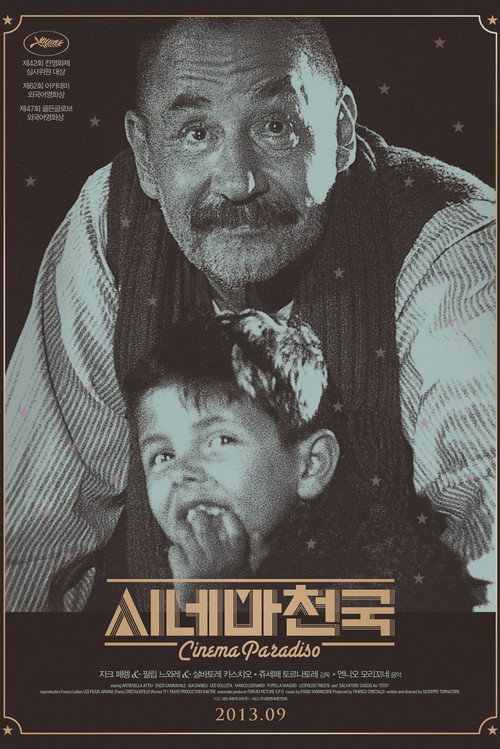
Cinema Paradiso is celebrated not merely as a commercially successful film but as a work that contributed to redefining the identity and artistic value of Italian cinema in an era of decline — making it profoundly significant in cultural history. Jury Grand Prize at Cannes, Golden Globe, Academy Award, BAFTA: it swept the global film circuit.
- arrow_outward
Nostalgia and the Emotion of Longing
At the heart of Cinema Paradiso lies the philosophical theme of 'the preservation of memory,' beyond simple nostalgia. The ruined theater and the reels of film Totò receives from Alfredo embody the impulse to hold on to pure moments that resist the passage of time — crystallized into the most beautiful form.
- arrow_outward
Time and a Fateful Reunion
Totò and Elena's reunion in Cinema Paradiso transcends simple romance — it is a psychological journey through the great current of 'time' to unearth truths and misunderstandings buried beneath thirty years. The two people who face each other are not reconciling a romance; they are reckoning with the past.
Back to the title
Cinema Paradiso
13 deep dives in total