arrow_back
Once Upon a Time in America
Film

Once Upon a Time in America

Once Upon a Time in America

Directed by Sergio Leone · 1984-05-23 · 229 min · Embassy International Pictures

This film transcends the gangster genre to become a sweeping epic about time, memory, and the illusion of the American Dream. From the slums of 1920s New York, the arc of friendship and crime stretches all the way to a glittering Hollywood party in the 1960s, spanning thirty years of human experience. Every event that protagonist Noodles endures unfolds across two axes—flashback and reality—and this very structure poses a fundamental question to the audience: what is the truth? The music composed by Ennio Morricone, combined with Sergio Leone's direction, creates an unforgettable nostalgia and a profound sense of tragic destiny that holds you captive long after the credits roll.

Synopsis

In the slums of 1920s New York, Noodles spends his youth with a group of friends committing every manner of crime—from bootlegging to petty theft. During this time he forms a deep bond with his first love, Deborah, yet he becomes ever more entrenched in the criminal world. He ultimately betrays his companions to the police and is sent to prison, suffering that tragedy for years. Decades later, stripped of everything, he drifts until he is reunited with friends from his past. They remain trapped in the cycle of crime, and Noodles, confronting his own history, begins painstakingly retracing memories he had tried to forget. The film grandly depicts the obsessive desire these men harbored to reach the top—and the inevitable ruin that desire brings.

Cast5

N

Protagonist; a Jewish-American gangster from New York · Robert De Niro

The central figure who drives the film's temporal flow. Amid the fragments of guilt and memory, he looks back on his own life and the fate of his friends. His life symbolizes both the achievement and collapse of the American Dream.

M

Noodles's friend and a fiercely ambitious criminal associate · James Woods

Noodles's closest friend and rival. He led their gang with extraordinary business acumen and ambition, yet that very ambition reveals a psychopathic streak that ultimately brings about betrayal and destruction.

D

Noodles's first love; a woman with dreams of becoming an actress · Elizabeth McGovern

A figure who embodies the purity of Noodles's early emotions. Her life, set against the glamour of Hollywood, leaves Noodles with an unforgettable wound and a treasure of bittersweet memories.

F

A criminal associate connected to the New York Mafia · Joe Pesci

He cultivates a relationship with Max's growing gang by feeding them assignments, helping them expand their reach. A ruthlessly calculating figure who does not hesitate to betray when it suits his interests.

C

Max's girlfriend and a member of the gang · Tuesday Weld

She reveals complex emotions in her relationship with Noodles, playing a role that stirs conflict among the friends. Her choices ultimately lead to tragic consequences.

Credits

Screenplay
Sergio Leone · Enrico Medioli · Piero De Bernardi · Franco Arcalli · Leonardo Benvenuti · Franco Ferrini
Music
Ennio Morricone
Production
Embassy International Pictures · PSO · The Ladd Company · Rafran Cinematografica
Chapter 02

Dig Deeper

Dig Deeper
Cardarrow_outward

Non-Linear Structure and Flashback

The core of Once Upon a Time in America lies in its non-linear temporal structure. The film unfolds by constantly cross-cutting among three timeframes: the pure youth of the 1920s, the corrupt young adulthood of the 1930s, and the recollections of the 1960s. This structure is the device that visually proves that all the betrayal and ruin Noodles endures constitutes an inescapable pattern of human fate—a cycle that repeats no matter how much time has passed.

Cardarrow_outward

New York's Slums and the History of Crime

The Jewish slums of 1920s–30s New York that serve as the film's backdrop are more than a mere setting; they are the primal stage where the protagonists' pure friendship and corrupted desire intersect. These slums reflect an era when immigrant communities survived with crime as their cultural mode of survival, and they are the narrative origin point that maximizes the raw, primal emotions of the characters.

Characterarrow_outward

Deborah (Deborah Gelly)

Deborah is not merely Noodles's first love; she is the figure who symbolizes 'lost innocence' and 'an unreachable dream' throughout the entire film. Her life, against the glamorous backdrop of Hollywood—born of her dream of becoming an actress—simultaneously shows the light and shadow of the American Dream, leaving Noodles with unforgettable wounds and memories.

Readingarrow_outward

The Subjectivity of Memory and Time

This film is more than a crime saga; it is a vast structural experiment exploring the subjectivity of memory and time. The past that protagonist Noodles experiences is not an objective historical record but an 'edited version of memory,' endlessly reconstructed by present-day guilt and loss. Through its non-linear temporal structure, the film poses a fundamental question—how subjective and fragile is the 'truth' we believe in?—and grandly portrays how human memory functions as a tool of self-consolation.

Characterarrow_outward

Carol (Carol)

Carol plays a role beyond a mere girlfriend—she is the catalyst of tragic fate. She appears in the gang's secret space and symbolizes their corrupt desire and ambition. Most notably, the scene in which she urges Noodles to tip off the police when Max plans the Federal Reserve robbery is the decisive trigger that shatters the trust among friends and ultimately sets everything on a path to ruin.

Cardarrow_outward

The Illusion and Fall of the American Dream

In Once Upon a Time in America, 'the illusion and fall of the American Dream' is not mere background; it is the tragic theme running through the entire work. All the success, honor, and dreams the protagonists pursued are metaphorized as a process of being discarded like garbage, presenting the tragic conclusion that the humanity lost in pursuit of material success is irrecoverable.

Readingarrow_outward

The Tragic Cycle of the American Dream

Once Upon a Time in America transcends a mere gangster film to become an epic that anatomizes—through the eyes of gangsters—how the great myth of the American Dream operates and how it collapses. The success and glory the protagonists pursue is not a matter of reaching the top; it is merely the repetition of an emotional cycle of betrayal and guilt, carrying the nihilistic metaphor of a pinnacle of material success ultimately discarded as waste.

Characterarrow_outward

Noodles (David 'Noodles' Aaronson)

Noodles (David 'Noodles' Aaronson) is not a mere gangster but the incarnation of a soul trapped in time and guilt. His life begins in the slums of 1920s New York, passes through the golden age of friendship and crime, endures the tragedy of betrayal and prison, and drifts for thirty years—a journey through time itself. Through his recollections, the film grandly depicts the illusion of the American Dream and the inescapable cycle of fate.

Characterarrow_outward

Frankie Monaldi (Frankie Monaldi)

Frankie Monaldi is a figure who symbolizes 'capital' and 'order' in the criminal world the protagonists inhabit. As an associate connected to the New York Mafia, he places profit above all else—above personal emotion or friendship. His presence is the critical device that reveals how the desire for the 'top' that Noodles's gang pursues is ultimately traded and betrayed within the vast system of organized crime.

Cardarrow_outward

The Symbolic Meaning of the Frisbee and the Money Bag

The frisbee and the money bag are the core devices in Once Upon a Time in America that symbolize the flow of time and the cycle of memory. The frisbee is the medium that constantly carries protagonist Noodles between his present and his past, while the money bag symbolizes the history of the crimes they built together and the innocence they lost. These two symbols, transcending mere props, visually embody the inescapable bonds of fate and the hollow cycle of the American Dream.

Cardarrow_outward

The Role of Music and Soundtrack

The soundtrack built by Ennio Morricone transcends mere background music to serve as the core narrative device running through the film's temporal structure and the tragic fate of the protagonists. From the spirited swing jazz of the 1920s to melodies steeped in nostalgia, the music constantly reminds the audience—as it moves between the two axes of 'flashback' and 'reality'—of the flow of time and the incompleteness of memory.

Characterarrow_outward

Max (Maximilian 'Max' Bercovicz)

Max Bercovicz is more than just a friend; he is Noodles's closest rival and a figure who symbolizes the hollow desire of the American Dream. He led their gang with extraordinary business acumen and ambition, yet the wealth and power he ultimately attained brought about betrayal and ruin—serving as the critical catalyst that drives Noodles and their friendship toward a tragic fate.
Things worth knowing5

Non-Linear Structure and Flashback

The film unfolds across the 1920s through the 1960s, moving between the present (the 1960s) and the past (the 1920s–30s) through Noodles's recollections. This structure interweaves memory and reality, adding depth to the narrative.

The film's narrative architecture is itself circular—a frame-and-recall structure that constantly revisits the same moment of departure. This mirrors the film's central message: that the betrayal, death, and corruption Noodles experiences are locked in an inescapable pattern no matter how many times he tries to turn back the clock. The device makes that repetition visible.

Foreshadowingarrow_outward
The Illusion and Fall of the American Dream

The desire of the film's characters to 'rise to the top' leads inevitably to ruin. The image of Max's fate—swallowed by a garbage truck—and Noodles's final expression as he bites down on opium and seems to laugh suggest that the American Dream was ultimately a worthless illusion.

The garbage truck is more than a mechanism of physical disposal; it stands as a metaphor for the way every success, honor, and value that the protagonists spent a lifetime accumulating is treated as social refuse and discarded. This leads to the tragic conclusion that the humanity lost in pursuit of material success was never recoverable.

Key Scenearrow_outward
The Symbolic Meaning of the Frisbee and the Money Bag

In a scene where an elderly Noodles walks while carrying a money bag, a frisbee suddenly flies in and someone snatches it—and in that instant the film cuts to a flashback of young Max snatching Noodles's bag as he is released from prison. The frisbee is both a bridge between past and present and a symbol of the protagonist's inescapable cycle of fate.

This cross-cutting expresses the recurring bond of ill-fate with Max, who has eroded both Noodles's present and past. The frisbee is interpreted not as a mere prop but as a device symbolizing unforgettable memory and an unavoidable, fated encounter.

New York's Slums and the History of Crime

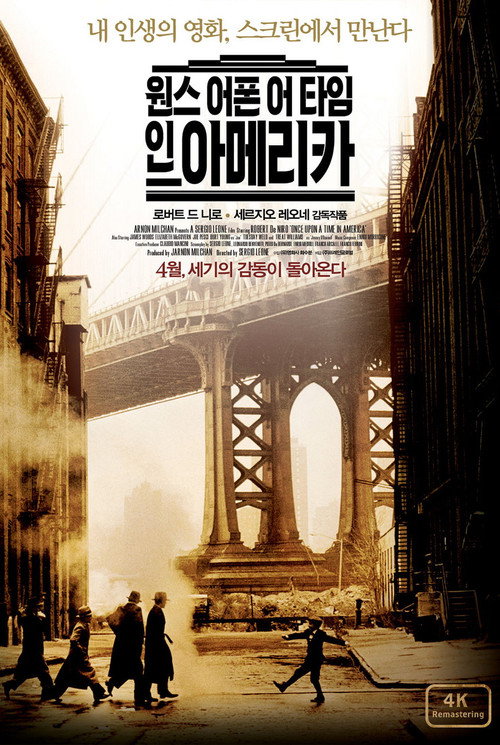
The film is set in the Jewish slums of New York and under the Brooklyn Bridge in the 1920s–30s. This was the space where the protagonists survived by committing every manner of crime, and it is the origin point of both their friendship and their criminal lives.

The era reflects a time when immigrant communities roamed the streets scraping by, and crime had taken root not merely as individual deviance but as a cultural mode of survival. This setting maximizes the raw, primal emotions of the characters.

The Role of Music and Soundtrack

The soundtrack composed by Ennio Morricone dominates the atmosphere of the film. 'Deborah's Theme' in particular recurs whenever Deborah appears, intensifying the film's pervasive sense of nostalgia.

The pan-flute melody played by Noodles's friend Cockeye also runs throughout the film as a recurring motif. The full soundtrack blends orchestral arrangements with 1920s–30s swing jazz, giving vivid, three-dimensional life to the historical backdrop.

Chapter 03

Aftermath

Aftermath

Legacy

Regarded as Sergio Leone's final work and a film that elevated the narrative depth of the gangster genre to a new level. Its treatment of temporal flow and psychological characterization exerted a profound influence on later noir and gangster films. What sets it apart is its focus not merely on the enumeration of crimes but on 'fate' and 'the weight of time.'

Trivia2