The Illusion and Fall of the American Dream
In Once Upon a Time in America, 'the illusion and fall of the American Dream' is not mere background; it is the tragic theme running through the entire work. All the success, honor, and dreams the protagonists pursued are metaphorized as a process of being discarded like garbage, presenting the tragic conclusion that the humanity lost in pursuit of material success is irrecoverable.
The Waste of the American Dream: The Metaphor of the Garbage Truck and Opium
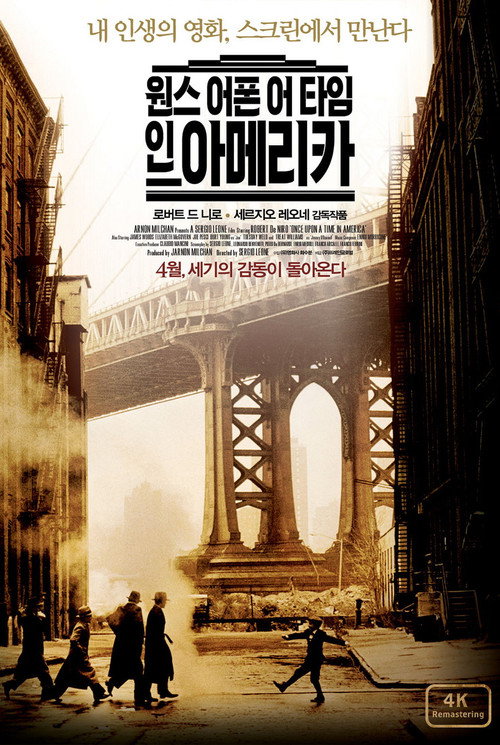
Once Upon a Time in America is an epic of youthful crime that begins in the slums of 1920s New York. The desire of the characters for "the top" clearly takes the archetypal form of the American Dream: escaping poverty, making money, gaining social status. Yet Sergio Leone brutally demonstrates that this entire process was nothing but a vast garbage disposal operation.
1. Physical Disposal: The Symbolism of the Garbage Compactor
The most explicit symbolic device is the fate of Max (Maximilian "Max" Bercovicz). Max is the character who symbolizes ambition and greed, and in the film he is depicted as the most successful and most corrupt figure. He transforms into prominent politician Christopher Bailey, reaching the top of society. But his end is not a glamorous prison or a gunfight; he is completed by being disposed of inside a garbage truck.
- The Meaning of the Garbage Truck: The garbage truck goes beyond physical disposal to serve as a metaphor for the process by which all the success, honor, and "value" the protagonists spent a lifetime accumulating through crime is treated as social refuse and discarded. Their lives themselves were, in the eyes of the system, nothing but useless debris.
- The Completion of Ruin: The scene of Max disappearing into the garbage truck presents the tragic conclusion that even a figure who has accumulated the most enormous crime and corruption is rendered powerless and erased before the vast flow of the system (the garbage truck). This shows how fragile and temporary the success provided by the American Dream truly is.
2. Mental Disposal: The Aesthetics of Opium and the Sardonic Smile
The final scene of the film digs even deeper into this theme. The appearance of elderly Noodles in a Chinese theater biting down on opium with an expression that seems to mock the world implies that—even though everything he experienced was not a hallucination—all of it was ultimately a "worthless illusion."
- The Boundary Between Hallucination and Reality: Noodles endlessly moves between his memory and reality trying to find the truth, but the opium he takes at the end symbolizes that everything he endured has reached the state of crumbling under the weight of reality—like a hallucination.
- The Meaning of the Sardonic Smile: The sardonic smile he wears is both despairing and liberating. He has realized that everything he pursued—love, friendship, money, honor—was ultimately nothing more than an ephemeral illusion, intoxicating as opium. This is the ultimate nihilistic resistance against the great myth of the American Dream.
3. The Repeating Cycle: The Circulation of Memory and Fate
The very narrative structure of the film supports this theme. Noodles's life unfolds across two axes—flashback and reality. This structure goes beyond simply showing the passage of time to emphasize that human fate is an inescapable shackle.
- The Symbolism of the Frisbee: In the film, the frisbee is both a medium connecting past and present and a symbol of repeating memory. Whether Noodles recalls the past or lives in the present, he ultimately repeats the same pattern: betrayal, death, and corruption. The inescapable repetition of fate, no matter how hard one tries.
- Youth vs. Young Adulthood: If youth was the "era of trust" governed by pure friendship and loyalty, young adulthood was the "era of corruption" governed by greed and betrayal. This stark contrast shows how easily human nature can be transformed by external circumstances—money and power—and demonstrates how the material rewards of the American Dream corrode humanity.
Why It Matters
This theme elevates Once Upon a Time in America from a simple gangster film to a grand tragic reflection on American society in the twentieth century. The film poses a fundamental question to the audience: 'What is the truth?' All the events Noodles experiences convey the nihilistic message that the success and happiness we dream of is in fact nothing but a temporary, disposable illusion manufactured by a vast system. It is precisely this nihilistic conclusion, combined with Ennio Morricone's grand and tragic music, that delivers to the audience the film's unforgettable nostalgia and deep catharsis—its essential identity.
Other 떡밥 dives4
- arrow_outward
Non-Linear Structure and Flashback
The core of Once Upon a Time in America lies in its non-linear temporal structure. The film unfolds by constantly cross-cutting among three timeframes: the pure youth of the 1920s, the corrupt young adulthood of the 1930s, and the recollections of the 1960s. This structure is the device that visually proves that all the betrayal and ruin Noodles endures constitutes an inescapable pattern of human fate—a cycle that repeats no matter how much time has passed.
- arrow_outward
New York's Slums and the History of Crime
The Jewish slums of 1920s–30s New York that serve as the film's backdrop are more than a mere setting; they are the primal stage where the protagonists' pure friendship and corrupted desire intersect. These slums reflect an era when immigrant communities survived with crime as their cultural mode of survival, and they are the narrative origin point that maximizes the raw, primal emotions of the characters.
- arrow_outward
The Symbolic Meaning of the Frisbee and the Money Bag
The frisbee and the money bag are the core devices in Once Upon a Time in America that symbolize the flow of time and the cycle of memory. The frisbee is the medium that constantly carries protagonist Noodles between his present and his past, while the money bag symbolizes the history of the crimes they built together and the innocence they lost. These two symbols, transcending mere props, visually embody the inescapable bonds of fate and the hollow cycle of the American Dream.
Back to the title
Once Upon a Time in America
12 deep dives in total