New York's Slums and the History of Crime
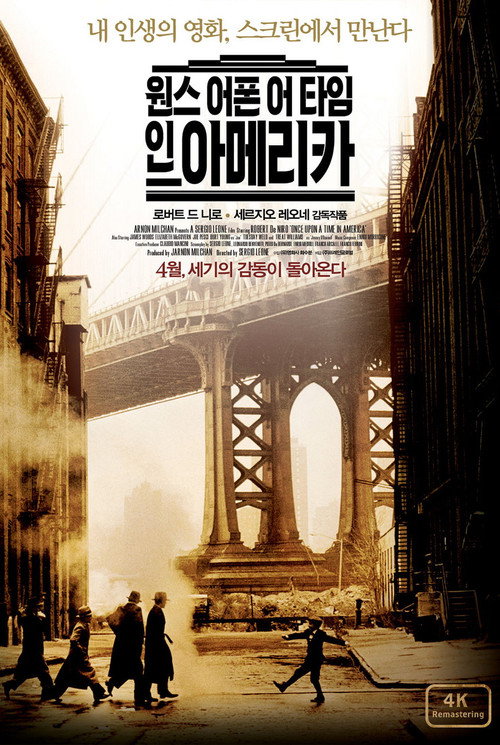
The Jewish slums of 1920s–30s New York that serve as the film's backdrop are more than a mere setting; they are the primal stage where the protagonists' pure friendship and corrupted desire intersect. These slums reflect an era when immigrant communities survived with crime as their cultural mode of survival, and they are the narrative origin point that maximizes the raw, primal emotions of the characters.
Defining the Setting: The Origin Point Where Survival and Crime Coexisted
The Jewish slums of 1920s–30s New York and the area under the Brooklyn Bridge—the film's backdrop—were the space where the protagonists operated not merely as criminals but as survivors. This setting reflects an era when immigrant communities roamed the streets scraping by, and crime had taken root not merely as individual deviance but as a kind of "cultural mode of survival."
These streets were the stage where the characters' primal emotions were expressed most dramatically: pure friendship, betrayal, and the greed to climb higher. The secret speakeasy in the back of Fat Moe's restaurant—the gang's primary hideout—was also a part of this vast slum survival system.
How It Functions in the Film: The Genesis of Friendship and the Trajectory of Corruption
This slum plays a decisive role in shaping the characters' relationships and destinies. At first, they commit petty crimes—pickpocketing, smuggling—forming a communal consciousness as a "gang." Crime in this period was a means of survival, so the characters lean on each other and build a strong bond.
But this space is also where their moral boundaries collapse. A minor dispute among friends escalates into a collision with Bugsy, culminating in the tragedy of Noodles killing Bugsy and being arrested. In this process, "survival crime" mutates into the greater shackle of "betrayal and violence." In other words, the slum is the psychological backdrop that makes the characters live simultaneously with "memories" of their innocent past and the "guilt" that ultimately leads them to ruin.
A Collection of Related Scenes: The Formation of Primal Bonds
- The Forming of the Gang: Boys—Noodles, Max, Cockeye, Patsy, and the others—gather around Fat Moe's restaurant to pick pockets from drunks or commit theft, forming a "gang" with a shared purpose. These early crimes are like primal rites that solidify their bond.
- Meeting Deborah: The scene in which Deborah meets Noodles in these slums and they share their first kiss symbolizes the most purely emotional moment before they set foot in the criminal world.
- The Collision with Bugsy: When Bugsy moves to kill Dominic, the enraged Noodles kills Bugsy—a decisive turning point announcing that they are no longer mere survivors but have entered the realm of violent "criminals."
- Reunion in the Speakeasy: Ten years later, the scene in which the released Noodles reunites with his friends at the speakeasy shows that they are still living under the gravitational pull of this slum. This place is the frozen point in time where their past has come to a standstill.
Impact Beyond the Work: The Shadow of the American Dream
The slums of New York and the history of crime at the film's heart cast the shadow of the great myth of the "American Dream" far beyond a mere gangster backdrop. The American Dream is the belief that "hard work brings success," but in the film this dream is depicted as an illusion ultimately consumed by greed, betrayal, and the garbage truck. Crime that began in the slums mutates into desire to reach the top (Max's proposal to rob the Federal Reserve), and its end is always tragic ruin. This backdrop can therefore be interpreted as a profound nihilistic metaphor for modern capitalist society's pursuit of material prosperity.
Why It Matters
This slum backdrop is both the film's narrative foundation and the vessel that holds the characters' souls. The crime that began here is not mere action; it is the process of searching for answers to the fundamental question: 'How do we survive?' All of Noodles's guilt and nostalgia arise from this rough backdrop. Without this space, their friendship would have been nothing more than a fleeting encounter, and the film's thematic consciousness—the 'repeating shackle of past and present'—would itself be difficult to sustain. This setting is the core device that elevates the film from a simple gangster drama to a grand tragic epic dealing with time and memory.
Other 설정 dives4
- arrow_outward
Non-Linear Structure and Flashback
The core of Once Upon a Time in America lies in its non-linear temporal structure. The film unfolds by constantly cross-cutting among three timeframes: the pure youth of the 1920s, the corrupt young adulthood of the 1930s, and the recollections of the 1960s. This structure is the device that visually proves that all the betrayal and ruin Noodles endures constitutes an inescapable pattern of human fate—a cycle that repeats no matter how much time has passed.
- arrow_outward
The Illusion and Fall of the American Dream
In Once Upon a Time in America, 'the illusion and fall of the American Dream' is not mere background; it is the tragic theme running through the entire work. All the success, honor, and dreams the protagonists pursued are metaphorized as a process of being discarded like garbage, presenting the tragic conclusion that the humanity lost in pursuit of material success is irrecoverable.
- arrow_outward
The Symbolic Meaning of the Frisbee and the Money Bag
The frisbee and the money bag are the core devices in Once Upon a Time in America that symbolize the flow of time and the cycle of memory. The frisbee is the medium that constantly carries protagonist Noodles between his present and his past, while the money bag symbolizes the history of the crimes they built together and the innocence they lost. These two symbols, transcending mere props, visually embody the inescapable bonds of fate and the hollow cycle of the American Dream.
Back to the title
Once Upon a Time in America
12 deep dives in total